
24/7 Customer Support

Free returns

Same-day & Next-day Delivery

Quality Guaranteed

Unlock Your Welcome Offers: FREE Delivery | Up to 80% OFF | Free 30-day JoyPlus trial
Download the APP
In an age where we rely on multiple devices, from our phones and tablets to our laptops, the humble charging cable has become an essential, yet often frustrating, accessory. A slow charge, a frayed wire or a drawer overflowing with different connectors are common annoyances. Choosing the right USB-C charging cable isn't just about getting power; it's about efficiency, durability and compatibility.
This guide is designed to cut through the technical jargon and help you understand what to look for. We will outline the key features that matter and present a few carefully selected options to suit different needs, whether you're powering a MacBook at your desk or charging your iPhone on the go.
Before you add a cable to your basket, considering a few key factors can ensure you get a product that performs well and lasts.
Not all cables are created equal when it comes to speed. The key technology to look for is USB Power Delivery (PD). This standard allows for much higher power transfer than older USB ports. A cable's power rating, measured in watts (W), determines how quickly it can charge a compatible device.
The universal adoption of USB-C has simplified things, but there are still important distinctions to make.
A cable is only as good as its construction. A durable charging cable will save you money and frustration in the long run. Look for features like reinforced connector joints, which are the most common point of failure. Materials also play a big role; soft-touch silicone offers excellent flexibility and tangle resistance, while braided nylon provides superior protection against abrasion and fraying. Many manufacturers provide a "bend lifespan" rating (e.g., 5,000+ bends), which can be a useful indicator of longevity.
Based on features, compatibility and user needs, here are our recommendations for your consideration.
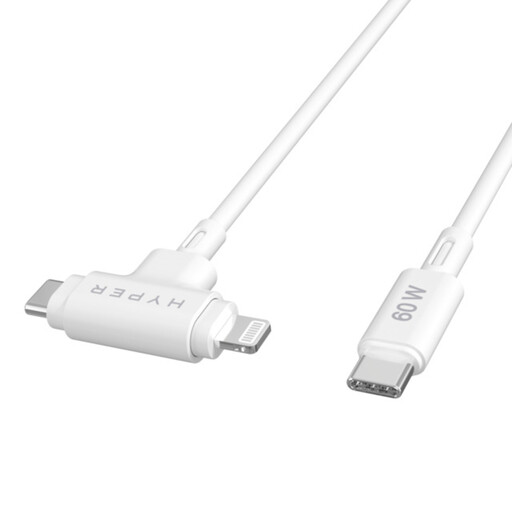
Why It Stands Out: This cable’s standout feature is its innovative 2-in-1 hybrid connector. It cleverly integrates both USB-C and Lightning into a single head, eliminating the need to carry multiple cables.
Pros:
Who is it for? This cable is ideal for the tech user who juggles devices across different ecosystems, such as an iPhone and a Windows laptop, or a MacBook and an Android tablet. It’s a perfect travel companion for minimising clutter.
View the Hyper HyperJuice Cable on Joybuy
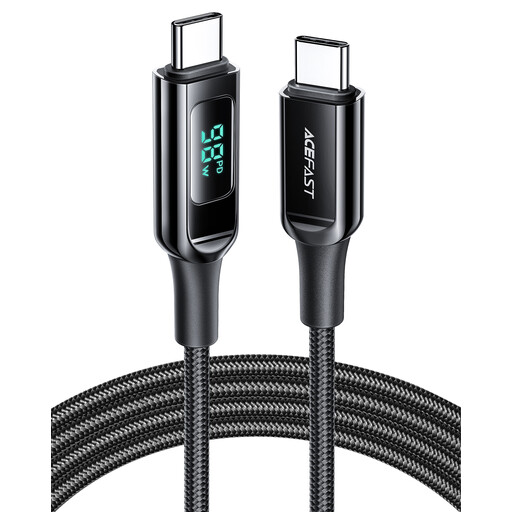
Why It Stands Out: The ACEFAST cable is built for pure power. Its 100W capability can handle the most demanding laptops, and the integrated digital display shows you the real-time charging wattage, so you always know your device is charging at its optimal speed.
Pros:
Who is it for? This is the cable for power users. If you own a modern, high-performance laptop like a MacBook Pro or a gaming notebook and want to ensure you are getting the fastest possible charge, this USB C to USB C cable is an excellent choice.
Explore the ACEFAST 100W Cable on Joybuy
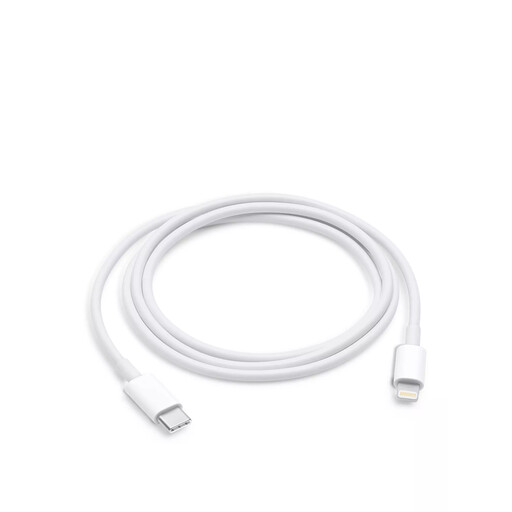
Why It Stands Out: For those who prefer to stay within the Apple ecosystem, the official Apple cable offers peace of mind. It is designed to work flawlessly with your devices, providing the performance and safety you expect from a first-party product.
Pros:
Who is it for? This is the go-to choice for dedicated Apple users who prioritise guaranteed compatibility and reliability. If you want a no-fuss USB C to Lightning cable that you know will work perfectly with your iPhone, iPad or AirPods, this is it.
Find the Apple USB-C to Lightning Cable on Joybuy
If these specific models don't quite meet your needs, or you're curious about other lengths, materials or power ratings, we have a broader collection.
Explore our full range of high speed USB cables to find the perfect match for your devices.
Often, a higher price correlates with better materials, more robust construction, higher power delivery capabilities and official certifications like MFi. While a basic cable will charge your device, investing in a quality cable can offer faster charging, better durability and greater protection for your expensive electronics.
Yes, you can. The USB Power Delivery (PD) standard includes a communication protocol between the charger, cable and device. A 100W cable is simply rated to handle up to that amount of power. When connected to a phone that only requires 20W, the system will automatically negotiate and deliver only the safe, appropriate amount of power. Using a higher-rated cable is perfectly safe and can be a good way to "future-proof" your purchase.
MFi stands for "Made for iPhone/iPad/iPod." It is a licensing programme from Apple that ensures third-party accessories meet their strict performance and safety standards. An MFi certified cable contains a small chip that communicates with your Apple device to ensure a safe, stable charge and prevent issues like overheating, slow charging or warning messages.