Buy for the gap in your actual desk setup: pair a raised laptop with a separate keyboard and mouse for prolonged use, consider a monitor when screen space is the constraint, and consider a hub or dock when you repeatedly connect peripherals. Before choosing a display or connection accessory, check what your laptop’s ports and graphics system support; if the equipment is for routine work, check your employer’s equipment process too.
Who these setups suit
The useful starting point is how often you work at a desk, whether the equipment travels with you, and what you reconnect each time.
Regular laptop desk workers
If you spend prolonged periods working on a laptop at home, assess screen position and input together. The Health and Safety Executive advises using a separate keyboard and mouse when elevating a laptop screen; an external display is a separate choice if the laptop screen does not give you enough working area.
Hybrid workers who pack up often
If you move between home and an office, consider what you are willing to carry and reconnect. A stand with separate input devices addresses screen position; a compact hub addresses a limited set of connections, provided it works with your laptop’s port.
Multi-peripheral desk users
If you regularly connect displays, storage, a wired network and input devices at one desk, compare a dock with a simpler hub. Microsoft Support, Kensington and CalDigit all identify host-device capability as a condition for connection or dock functions, so check the exact laptop and intended display arrangement.
What to check before buying
Choose the accessory that addresses your primary workstation problem, then check whether it can work with the laptop and desk you already use.
| Concern |
What to check |
Who this matters to |
| Screen position and input |
Check that a stand supports your laptop and offers a usable height; plan for a separate keyboard and mouse when raising the screen for prolonged work, as the Health and Safety Executive advises. |
If I work at a laptop desk for long stretches, I need to position the screen without relying on its raised keyboard and trackpad. About 36% of consumers put screen position and separate input first. |
| More display space |
Check the laptop’s video output, the monitor’s input and the supported number of independent external displays. |
When I need to see more documents or applications at once, extra screen area matters more than extra ports. For about 29% of consumers, a larger visual workspace is the primary need. |
| Connections and charging |
Compare the laptop’s USB-C, USB4 or Thunderbolt capabilities with the exact hub or dock; check display support and laptop charging requirements separately. |
At a desk where I repeatedly attach peripherals and power, I want fewer connection steps without losing a function I use. Consolidating ports and charging comes first for about 21% of consumers. |
| Meeting setup |
Check camera mounting and framing, microphone or headset needs, connection type and workplace device rules before choosing a webcam or lighting. |
If regular calls are the problem, I need a camera and audio arrangement that fits my desk or shared space, rather than another display. That is the leading need for about 14% of consumers. |
Buying mistakes to avoid
-
Assuming every USB-C port can run a dock
A matching connector does not establish video output, laptop charging, USB4 or Thunderbolt support. Kensington’s docking guidance distinguishes the USB-C connector from the functions a manufacturer implements.
Compare the laptop manufacturer’s port specification with the exact hub or dock requirements, including the display connection, charging input and required cable.
-
Buying a stand without planning for input devices
Raising the laptop screen also raises its built-in keyboard and trackpad. For prolonged laptop use, the Health and Safety Executive advises a separate keyboard and mouse so screen and input can be positioned independently.
Assess the stand, keyboard and mouse as one desk setup, including what you would need to carry between locations.
-
Counting display sockets as independent screens
The laptop and connection method can limit extended displays. Microsoft Support explains that a display splitter duplicates a signal rather than creating two independent signals.
Before buying for multiple monitors, confirm the laptop’s supported external-display arrangement and the adapter or dock’s display mode for your system.
-
Buying routine work equipment before checking the workplace process
An individual workstation assessment can identify what equipment is needed. Acas advises employers and staff to agree who provides or pays for homeworking equipment and related support.
Check your employer’s equipment, expenses and IT-security arrangements before purchasing an accessory for routine work use.
Relevant brands to consider
Compare individual products and their stated host requirements rather than treating a brand’s range as a compatibility guarantee.
Kensington
Kensington’s UK range covers docks and workstation-positioning accessories for desks with different connection needs.
- Its docking guidance explains why a USB-C connector alone does not establish speed, video or power capability.
- Match an individual dock to the laptop port and intended display arrangement; capabilities vary by dock and host.
Anker
Anker’s UK range includes compact USB-C hubs and larger connection accessories.
- A compact hub is worth considering when only a limited set of connections needs to travel.
- Anker’s hub documentation directs buyers to check laptop DisplayPort support; check each port’s stated function too.
CalDigit
CalDigit offers Thunderbolt and USB-C docking equipment for desks with multiple peripherals.
- Its TS4 is an example to compare when a fixed desk calls for numerous connections.
- CalDigit states that functionality depends on the connected host computer or tablet.
Logitech
Logitech offers keyboards, mice and webcams relevant to separate input and video-call setups.
- Its webcam range includes different resolution categories for comparing meeting accessories.
- Choose an individual webcam by connection, mounting and privacy needs, not resolution alone.
Joybuy workstation accessory options
For a home or hybrid desk where the priority is more display space, consolidated connections or a dedicated meeting camera, these products offer different starting points. Check laptop compatibility and your work arrangement before choosing one.
 Image unavailable
AOC Q32V4 31.5-inch 2K IPS monitor
Consider this monitor if more display area is the priority at a desk that can accommodate a 31.5-inch screen. The product name lists HDMI, DisplayPort and built-in speakers; confirm that your laptop can drive the intended external-display arrangement before buying.
View on Joybuy
 Image unavailable
MOVESPEED DK5A1 10-in-1 USB-C docking station
Consider this connection accessory if you repeatedly attach a display and several peripherals at one desk. Its name lists HDMI with 4K 60Hz output, USB-A and USB-C connections, SD/TF card slots and 3.5mm audio. Check what your laptop’s host port supports; the listed connections alone do not establish laptop charging.
View on Joybuy
 Image unavailable
V7 V7UC-U3CRJ45HDVG-BLK USB-C adapter
Consider this adapter when wired networking and USB peripherals matter alongside a display connection. Its name lists HDMI, VGA, Gigabit Ethernet, dual USB 3.0 ports and 100W Power Delivery. Confirm your laptop’s video-over-USB-C support, intended display arrangement and charging requirements rather than assuming every listed connection can operate as needed.
View on Joybuy
 Image unavailable
ASUS ZenScreen MB166C 15.6-inch portable monitor
Consider this portable display if you want additional screen area at more than one work location. Its name specifies a 15.6-inch Full HD IPS screen and USB Type-C connectivity. Check that your laptop supports the required video connection and the monitor’s power arrangement before relying on it away from a fixed desk.
View on Joybuy
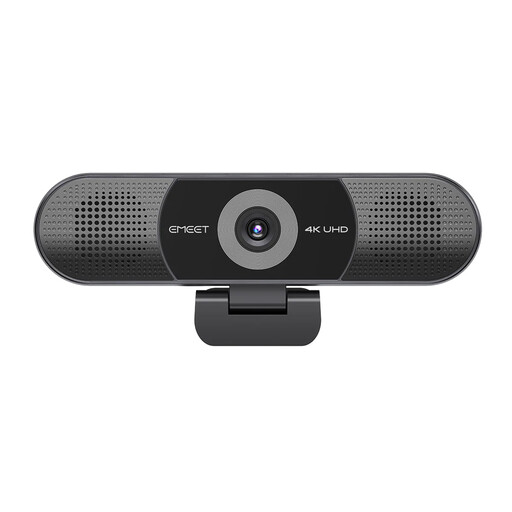 Image unavailable
EMEET All-in-One 4K USB webcam with Sony Sensor
Consider this dedicated camera if regular meetings, rather than screen area or desk connectivity, are your main concern. Its name lists four microphones, dual speakers, fixed focus and a 98° adjustable field of view. Check its USB connection and whether your workplace meeting setup permits the device.
View on Joybuy
Questions about home laptop setups
Should I ask my employer before buying equipment for regular homeworking?
Yes, if the equipment is intended for routine work, check the workplace process before buying it personally. The Health and Safety Executive says an individual display-screen-equipment assessment can identify additional equipment needs, while Acas advises agreeing who provides or pays for homeworking equipment and support.
Will any USB-C dock charge my laptop and run a monitor?
No: USB-C describes the connector, not guaranteed charging or video functions. Kensington’s docking guidance makes that distinction; compare your laptop’s port, charging input and supported display output with the exact dock and cable before purchasing.
Can an HDMI splitter create two separate extended displays?
A splitter that duplicates one signal cannot create two independent extended displays, as Microsoft Support explains. For two separate external desktops, check the laptop’s graphics support and the specified display arrangement of the adapter or dock.
Is a laptop stand enough for prolonged desk work?
Plan for a separate keyboard and mouse if you raise the laptop screen for prolonged use. The Health and Safety Executive advises separating input devices from the laptop so the screen can be elevated while the keyboard and mouse remain usable at the desk.


