For prolonged laptop work, choose accessories around screen position, desk space and the connections your laptop supports. The Health and Safety Executive advises using a separate keyboard and mouse when elevating a laptop screen; if one external display is your main need, a compatible direct cable or adapter may suffice. Consider a dock when you also need several peripherals, charging or multiple displays, but check the exact laptop’s display, port and power capabilities first.
Who needs which setup?
Start with how long you work at the desk and what you reconnect each time you sit down.
Home workers using a laptop for long screen sessions
If the laptop is your regular desk computer, consider how to position its screen without leaving the built-in keyboard and trackpad at an awkward height. The Health and Safety Executive’s laptop guidance pairs an elevated screen with a separate keyboard and mouse.
Hybrid workers using desks in two places
Choose between accessories you can carry and connections you can leave in place at each desk. Check that any display cable, adapter or dock suits your exact laptop ports and supported external-display count; Apple Support notes that these limits depend on the Mac model.
Laptop users with several desk peripherals
A fixed setup with displays, USB devices, wired networking and charging may make a dock worth considering. Its advertised ports are only part of the decision: the laptop must also support the intended video connections and power arrangement.
What should you check before buying?
Decide where the screen and input devices will go, then check the laptop’s connections before choosing an adapter or dock.
| Priority |
What to check |
Your needs |
| Screen and input position |
Check whether the laptop screen needs elevating and whether there is room for a separate keyboard and mouse. The Health and Safety Executive recommends those separate input devices when using a riser for prolonged laptop work. |
I work at the laptop for long periods and need to position its screen without having to type on a raised keyboard. |
| External-display compatibility |
Check the exact laptop model’s supported display count, video ports and required cable or adapter. Apple Support and Microsoft Support note that display capability depends on the computer and connection method; a dock can also affect available resolution and refresh rate. |
A larger or additional screen matters to me, but I need the connection to work at the display setting I intend to use. |
| Direct connection or dock |
For one display, check whether a direct cable or compatible adapter covers the job. For several desk devices, check dock ports, the host connection and whether its power delivery meets the laptop’s charging requirement. |
One screen may be enough for my desk. If I repeatedly connect USB devices, networking and power as well, I want to know whether a dock simplifies that setup. |
| USB-C and software support |
Confirm whether the laptop’s USB-C port supports the video and power functions you need; Kensington notes that the connector alone does not guarantee them. For a DisplayLink device, check operating-system support, software installation and any work-device restrictions. |
My laptop has a USB-C port, but I need to establish what that particular port can do before choosing a display adapter or software-dependent dock. |
| Desk space |
Measure the space for the laptop or riser, keyboard, pointing device and cables. Check a riser’s stated laptop size and weight limits; if mouse movement space is tight, consider whether a trackball’s stationary body suits you. |
There has to be room to use the keyboard and pointing device, not just space to place the screen. |
| Work calls |
Check whether the laptop’s existing camera and audio meet your call requirements. Before adding a headset or webcam, confirm its connector and compatibility with your computer and call software. |
Calls are a regular part of my work, so a separate microphone, headset or camera could be useful alongside—not instead of—the main desk setup. |
Which buying mistakes matter?
-
Buying a riser without planning for input devices
Elevating the laptop also raises its built-in keyboard and trackpad. The Health and Safety Executive’s prolonged-use guidance describes using a separate keyboard and mouse so the screen can be elevated independently.
Measure the usable desk area for the riser, keyboard, mouse and charging cable as one arrangement.
-
Assuming every USB-C port supports the same functions
Kensington notes that video, data-speed and power-delivery capabilities depend on how the laptop manufacturer implements USB-C. A matching connector shape does not settle display or charging compatibility.
Identify the exact laptop model and port capabilities, then match the adapter or dock to the monitor input and charging requirement.
-
Choosing a dock by its maximum display specification
The number of displays and their available resolution or refresh rate can depend on the host laptop and connection method. CalDigit also states that its TS4 offers reduced functionality with USB-C hosts compared with supported Thunderbolt hosts.
Check the laptop maker’s display limits and the dock’s support information for your host type, operating system and intended screens.
-
Assuming a dock will work on a managed work laptop
DisplayLink-based connections depend on compatible software and drivers. A managed laptop may also restrict software installation or peripheral use.
Before selecting a DisplayLink device, check operating-system compatibility and whether your workplace permits the required installation.
Relevant brand references
These examples show why model-level specifications matter; a brand name alone does not establish compatibility with your laptop.
Dell
Dell’s Pro Thunderbolt 4 Dock WD25TB4 is an example of a dock for a fixed laptop workstation.
- Dell UK lists Thunderbolt 4 and power delivery of up to 130W for Dell systems or 96W for non-Dell systems on the WD25TB4.
- Its stated display modes and charging figures are model-specific; check them against the host laptop rather than assuming every system can use the maximum.
CalDigit
The TS4 Thunderbolt Station 4 illustrates a port-rich option for a desk with several connections.
- CalDigit lists 18 ports and up to 98W power delivery for the TS4.
- CalDigit specifies host-dependent display support, reduced functionality on USB-C hosts and no dual external displays through the Thunderbolt port on original Apple M1 computers.
Kensington
Kensington offers laptop risers and docks that address different parts of a workstation.
- Its SmartFit Laptop Riser has four height settings and is specified for laptops up to 15.6 inches and 7.7 lb.
- Check the riser’s fit for your laptop and desk. For a Kensington dock, check the laptop’s actual USB-C capabilities rather than relying on the connector alone.
Logitech
Logitech’s keyboard and pointing-device range is relevant when a laptop needs separate input devices.
- Logitech includes vertical mice, trackballs and ergonomic keyboards in its UK range; a trackball can be considered where there is little room to move a mouse.
- Check each device’s shape, connection and operating-system compatibility for your own setup.
Joybuy options for connections and calls
These options cover display and peripheral connections, plus accessories for work calls. Choose the workstation arrangement your laptop and desk can accommodate before deciding whether one of these devices fits it.
 Image unavailable
V7 V7UC-U3CRJ45HDVG-BLK USB-C Adapter
Consider this adapter for one external display alongside wired networking or USB peripherals. Its listing names 4K HDMI, VGA, Gigabit Ethernet, 100W power delivery and two USB 3.0 ports. Video is specified for a single display, so do not assume HDMI and VGA will run two screens at once; check that your laptop supports the required USB-C video mode and that the charging arrangement suits it.
View on Joybuy
 Image unavailable
MOVESPEED DK5A1 10-in-1 USB-C Docking Station
This dock is an option for a desk needing an HDMI display connection, USB devices, SD/TF cards and audio through a USB-C host connection. The product name lists 4K 60Hz HDMI and 10Gbps and 5Gbps USB connections. Check the laptop’s video support for the intended display; confirm laptop-charging capability separately, as the product descriptions give conflicting charging information.
View on Joybuy
 Image unavailable
Logitech 960 Wired USB Headset
For regular work calls, this headset provides a separate microphone and wired audio rather than changing the display setup. Its description specifies USB-A, an adjustable microphone and inline mute and volume controls. Check for an available USB-A port and compatibility with your call software; fit is a separate personal consideration.
View on Joybuy
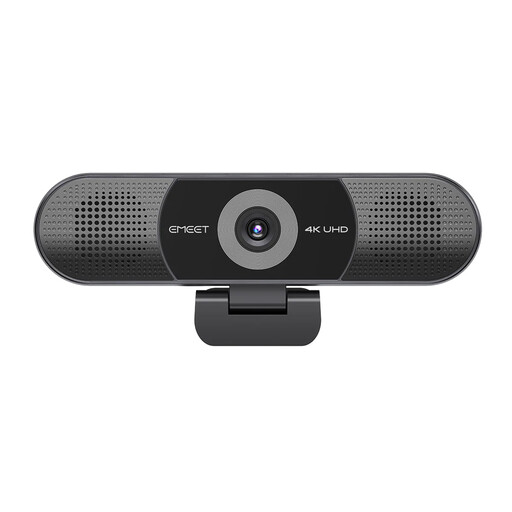 Image unavailable
EMEET All-in-One 4K Webcam with Sony Sensor
Consider this separate camera if work calls require one alongside the main workstation. The product description lists a four-microphone array, speakers and an adjustable 98° field of view; these are listing specifications, not measured call performance. Confirm its connector and compatibility with your laptop and conferencing setup before buying.
View on Joybuy
Common questions
Do I need a separate keyboard and mouse with a laptop stand?
For prolonged laptop use with its screen elevated, the Health and Safety Executive recommends a separate keyboard and mouse. Plan enough desk space for both devices as well as the stand and laptop.
Will any USB-C laptop port work with an external monitor?
No. Kensington explains that USB-C identifies the connector, while video and other capabilities depend on the laptop’s implementation. Check the exact laptop model, its supported external displays and the cable or adapter required for your monitor.
When is a display adapter enough instead of a dock?
A compatible direct cable or adapter may cover a setup that needs only one external display. Consider a dock when you also need to reconnect several peripherals, wired networking or laptop power, then check its ports and charging specifications against the laptop.
Will a dock give every Mac or Windows laptop two external displays?
No. Apple Support says external-display support depends on the Mac’s specifications, and CalDigit states that its TS4 has different display support by host type; original Apple M1 computers do not support two external displays through the Thunderbolt port. Check your exact laptop model and the dock’s host-specific display conditions.
What should I check about dock warranty and support?
Check the terms for the exact model alongside its compatibility and power documentation. Dell UK lists a three-year warranty for the WD25TB4, but that model-specific term should not be assumed for other docks.


