For a regular home desk, consider an external monitor with separate input devices; choose a dual-display dock only after checking that your exact laptop and operating system support the intended extended screens. If you regularly move between locations, a compact hub or portable display may suit your routine, provided the laptop supports the required video connection and charging arrangement. For workers covered by display screen equipment (DSE) requirements, start with the employer’s individual workstation assessment: the Health and Safety Executive says that, in Great Britain, workers cannot be charged for equipment the assessment identifies as necessary.
Who needs which setup?
Fixed-desk laptop workers
If you work for sustained periods at one home desk, an external screen and separate input devices may address needs that a laptop-only arrangement does not. Where DSE requirements apply, follow the individual assessment rather than assuming a particular equipment package is required.
Dual-screen workflow users
If your work calls for two independently extended external displays, check the exact laptop’s display limit, operating system and proposed dock’s video method before choosing a dock. Apple, for example, specifies external-display support by Mac model and display settings.
Travel-heavy hybrid workers
If you change work locations frequently, a compact connection arrangement can reduce what you reconnect at each desk. Confirm video output, peripheral connections and charging against the laptop’s documented ports; a USB-C connector alone does not establish all three capabilities.
What should you check before buying?
Start with the workstation need that would determine your choice, then match the display and connections to your work laptop.
| Concern |
What to check |
Who this matters to |
| Assessment-led equipment |
For a covered DSE user, check the individual assessment outcome and whether the employer will provide an identified item before buying it personally. |
If I spend long periods working at one desk, I need equipment that fits my assessed workstation rather than a generic desk arrangement. About 33% of consumers put this assessment-led need first. |
| Portable connections |
Match the laptop port’s video capability and charging input to the proposed hub, monitor and cable. |
Moving between work locations makes a repeatable connection my priority, but I still need the display and power connections to work with my laptop. That is the main concern for about 25% of consumers. |
| Two extended displays |
Check the exact laptop’s external-display count and the dock’s video method, including any operating-system or driver requirements. |
If I regularly keep separate workstreams on two external screens, mirrored output will not meet that need. About 25% of consumers place independent dual-display support first. |
| Calls and input devices |
Check the available USB, Bluetooth or audio connections and any workplace restrictions on peripherals. |
When typing, pointing and work calls matter more to me than another screen, I want compatible separate devices for those tasks. Around 17% of consumers make these peripherals their primary concern. |
Common setup mistakes
-
Assuming every USB-C port carries video
A connector can fit a monitor or dock without supplying the video signal that device requires. Plugable Technologies notes that USB-C functions vary by host and port.
Check the exact laptop port’s documented video capability, then compare it with the monitor, dock, adapter and cable requirements.
-
Choosing a dock by its video-port count
Two video sockets do not establish that a particular laptop can run two independently extended displays. The host’s display limit, operating system and dock video method all affect the arrangement.
Check the laptop’s supported display count and intended resolution and refresh rate. Identify whether the dock uses native video, MST or a driver-based method, and whether required software is permitted on the work device.
-
Buying assessed DSE equipment personally
For covered workers in Great Britain, the Health and Safety Executive says an individual workstation assessment determines whether action such as providing equipment is needed; workers cannot be charged for equipment identified as necessary.
Check the employer’s assessment process and its outcome before purchasing an item intended to meet that workstation need.
-
Reading a dock’s power figure as laptop charging power
A stated power-supply or pass-through figure does not, by itself, confirm what a particular laptop will receive. Microsoft notes that insufficient power can reduce some functions of its Surface USB4 Dock.
Compare the dock’s stated output to the host with the laptop’s supported charging input, including any requirements for the power supply.
Brands to consider
Dell
Dell offers USB-C monitors and docks worth comparing for a fixed laptop desk.
- Dell publishes model-specific details for features such as DisplayPort Alt Mode and Power Delivery.
- Check the exact port and charging specification: a USB-C connection on one model does not establish the same functions on another.
Lenovo
Lenovo’s ThinkVision docking monitors and laptop docks are relevant when a compatible connection needs to serve a display and peripherals.
- Its range includes USB-C and Thunderbolt docking-monitor options.
- Verify the host interface, operating system, display count and charging against the particular model; the brand alone does not establish compatibility.
Targus
Targus offers travel hubs and docks using different approaches to external displays.
- Targus distinguishes DisplayPort Alt Mode products from driver-based DisplayLink options in its product information.
- Check each model’s host requirements. Targus specifies that its DOCK430EUZ requires host MST support for dual-display use.
Logitech
Logitech is relevant when keyboards, mice, webcams or headsets are the next addition to a laptop workspace.
- Its work range includes separate input and call devices, as well as bundles.
- These peripherals do not change the laptop’s external-display limit or establish dock-video compatibility.
Joybuy products for laptop workspaces
These monitors, a dock and separate input and call devices address different parts of a home or hybrid laptop setup. Choose the part that fits your work pattern and check its connection requirements against your laptop; where a DSE assessment applies, check its outcome first.
 Image unavailable
ASUS ZenScreen MB166CR FHD
Consider this external monitor if you need another screen when working across locations. Check the exact laptop and intended connection before buying; in particular, confirm the required video output rather than relying on the connector shape.
View on Joybuy
 Image unavailable
ASUS ProArt PA278CV IPS WQHD
Consider this external monitor for a regular laptop desk where a separate display is the priority. Its model name identifies an IPS WQHD variant. If you intend to use one connection for both display and laptop charging, check the exact video and power requirements of both devices first.
View on Joybuy
 Image unavailable
Targus USB-C Universal Dual HDMI 4K Docking Station, 100W Power Delivery Pass-Thru
Consider this dock if you need to connect a laptop to HDMI displays and other desk devices. The title specifies dual HDMI and 100W Power Delivery pass-through, but neither establishes two independent extended screens or adequate charging for your laptop. Check its display limit, operating system, dock video method, power supply and charging requirements.
View on Joybuy
 Image unavailable
HP 680 CFT Dual-Mode Keyboard and Mouse Combo
Consider this keyboard-and-mouse set when separate input devices are the priority rather than another display. Confirm how its dual-mode connection works with your exact work device and whether your employer permits the required wireless connection.
View on Joybuy
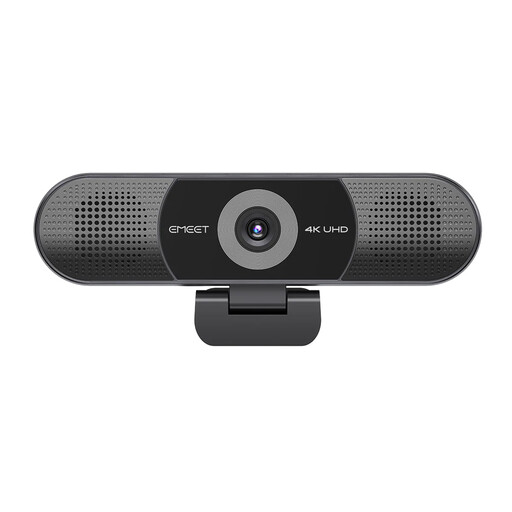 Image unavailable
EMEET All-in-One 4K Webcam with Sony Sensor and 4-Mic Array
Consider this webcam when work calls, rather than display expansion, drive your next purchase. Its title also specifies built-in speakers, fixed focus and an adjustable 98° field of view. Check its USB and operating-system requirements and whether your workplace permits the device.
View on Joybuy
Frequently asked questions
Do home workers have to buy their own monitor or dock?
Not automatically. For workers covered by DSE requirements in Great Britain, the Health and Safety Executive says an individual workstation assessment determines what action is needed, and workers cannot be charged for equipment it identifies as necessary. Northern Ireland has separate guidance from the Health and Safety Executive for Northern Ireland; follow your employer’s assessment arrangements.
When is a home-working DSE assessment relevant?
The Health and Safety Executive says employers in Great Britain must assess workstations for workers who use display screen equipment daily as part of normal work for continuous periods of an hour or more. Its home-working guidance also addresses permanent, long-term and routine hybrid arrangements. Confirm how the employer’s process applies to your actual work pattern.
Will any USB-C dock connect my laptop to a monitor?
No: USB-C describes the connector, not a guarantee of video output. Plugable Technologies advises checking the exact laptop port for the video method a dock requires, alongside the operating system, display requirements and cable.
Can a dual-HDMI dock give my laptop two independent screens?
Only if the complete laptop-and-dock arrangement supports two extended external displays. Check the laptop maker’s display limits at the intended resolution and refresh rate, then check the dock’s video method and any operating-system or driver requirements. Apple specifies display support by Mac model; Plugable Technologies notes that MST and driver-based approaches have different compatibility conditions.
Can I rely on a dock to charge my work laptop?
Check the power the dock can deliver to the host against the laptop’s supported charging input and the dock’s power-supply requirements. A pass-through figure alone does not confirm the power your laptop will receive; Microsoft notes that insufficient power can reduce some functions of its Surface USB4 Dock.


