
24/7 全天候客户支持

免费退货

当日/次日达

品质保障

开启新人专享福利: 全场免邮 | 低至 2 折 | 免费试用 30 天 JoyPlus 会员
下载 Joybuy
Navigating the market for a USB C fast charger can feel overwhelming. With countless options all promising rapid power, it's easy to end up with a product that underperforms, or worse, poses a risk to your expensive devices. Many chargers fail to live up to their claims, leaving you with slow charging speeds or a drawer full of incompatible plugs.
As a Joybuy Product Recommendation Officer, my role is to help you sidestep these issues. This guide cuts through the marketing clutter, focusing on the practical details that matter. We will look at the common traps UK consumers fall into and highlight the essential features to check before you buy, ensuring you get a charger that is safe, efficient and perfectly suited to your needs.
Before you add any charger to your basket, be aware of these frequent purchasing mistakes.
To ensure you choose a reliable and effective charger, focus on these three key parameters.
The single most important feature of a modern USB C fast charger is its support for Power Delivery (PD). This is a charging standard that allows a charger and a device (like your phone or laptop) to communicate and negotiate the optimal charging speed. Without PD, you won't get true fast charging.
You will increasingly see GaN charger on product descriptions. Gallium Nitride is a material used in semiconductors that is more efficient than traditional silicon. In practical terms, a GaN charger can be significantly smaller, run cooler and waste less energy than a non-GaN charger with the same power output. For a powerful multi-port USB charger or a compact travel adapter, GaN technology is a significant advantage.
Consider how many devices you need to charge at once. A multi-port USB charger with a mix of USB-C and older USB-A ports offers great flexibility.
When using multiple ports simultaneously, remember that the total wattage is shared between them. A 65W charger might deliver the full 65W to one device, but split it (e.g., 45W and 20W) when two are connected.
Here are a few options that align with different user needs, selected based on their specifications and ability to solve common charging problems.
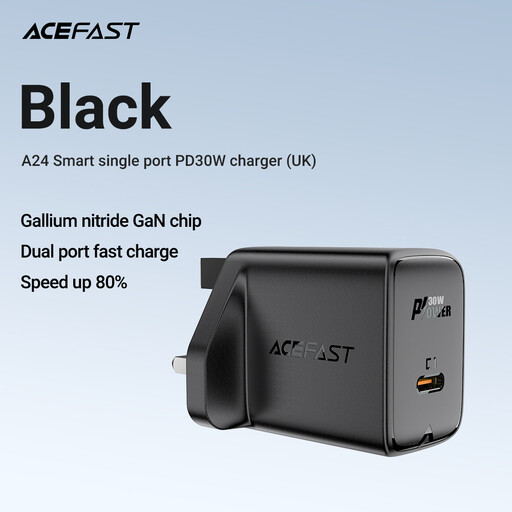
Why This Fits Their Persona: This is a no-fuss, dedicated charger for someone who primarily needs to fast-charge their smartphone at home or in the office. It's compact, simple and delivers the right amount of power without unnecessary features.
It avoids the "wattage myth" by providing exactly what most phones need: 20W with Power Delivery. You are not paying for excess power you cannot use.
Made from flame-retardant PC material for safety. Its single-purpose design ensures it delivers a consistent 20W for optimal phone charging.
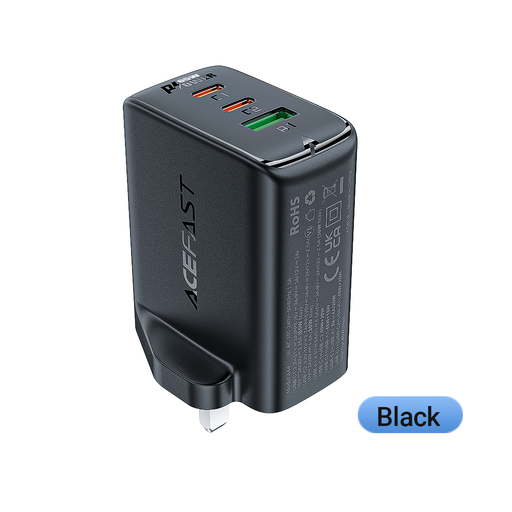
Why This Fits Their Persona: Ideal for the user juggling a laptop, phone and tablet. This charger consolidates the need for multiple power bricks into one compact unit, perfect for a tidy desk or a packed work bag.
It sidesteps the "underpowered universal charger" trap by offering a genuine 65W output, sufficient for many USB-C laptops, while also providing ports for other devices.
Features GaN technology for a smaller size and better efficiency. The combination of two USB-C ports and one USB-A port offers excellent versatility.
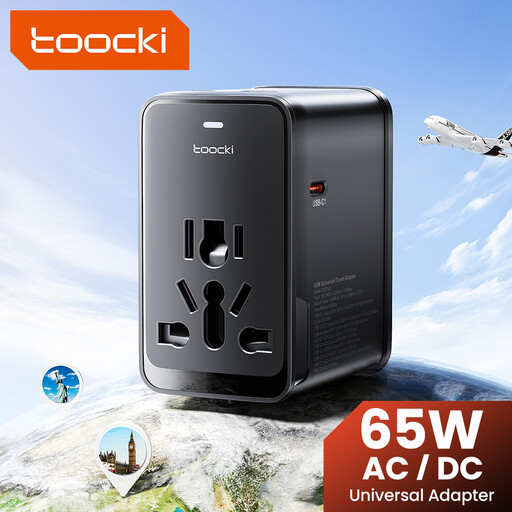
Why This Fits Their Persona: This is the ultimate tool for anyone who travels abroad. It replaces a bag full of adapters and chargers with a single, powerful unit that works in the UK, EU, US and Australia, while charging up to four devices.
This is a true all-in-one solution. It's not just a plug adapter; it's a powerful 65W GaN charger, ensuring you can power a laptop and other devices without compromise, wherever you are.
Features integrated, retractable plugs for major regions. Its four ports (3x USB-C, 1x USB-A) and high power output make it an exceptionally capable travel adapter.
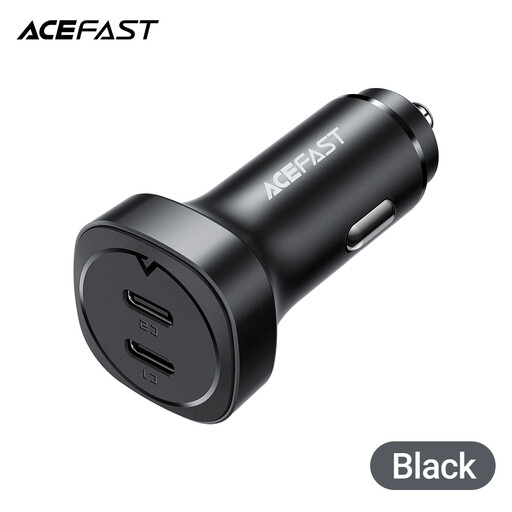
Why This Fits Their Persona: For commuters or anyone who spends significant time in their vehicle, this charger ensures that travel time is productive. It can fast-charge two modern devices simultaneously, like a phone and a tablet.
Unlike cheap car chargers that barely maintain your battery level, this fast car charger provides a substantial 72W total output, delivering a true fast charge that keeps up with power-hungry devices.
Features two high-power USB-C ports (36W each) and supports multiple fast-charging protocols (PPS, PD and QC 3.0) for wide compatibility. The build includes V0 fire protection for safety.
We have compiled a complete, real-time list of products that fully satisfy these strict selection criteria and UK safety regulations.
Yes, you can. A key benefit of the Power Delivery (PD) standard is that the charger and your device communicate to determine the correct amount of power. The 65W charger will only supply the 20W that your phone requests, making it completely safe to use. It will not damage your device's battery.
A GaN charger uses Gallium Nitride instead of traditional silicon for its internal components. This makes it more power-efficient, allowing it to be much smaller and generate less heat than a silicon charger of the same wattage. It is particularly worthwhile for high-power or multi-port USB charger models, where the size and heat reduction are most noticeable.
Yes, the cable is just as important as the charger. To get the full benefit of a USB C fast charger, you need a USB-C cable that is rated to handle the power. For charging a laptop with a 65W USB C charger, you will need a cable rated for 65W or 100W. Using an older, lower-rated cable will limit the charging speed to what the cable can safely handle.