
24/7 Customer Support

Free returns

Same-day & Next-day Delivery

Quality Guaranteed

Unlock Your Welcome Offers: FREE Delivery | Up to 80% OFF | Free 30-day JoyPlus trial
Download the APP
Navigating the world of charging accessories can feel unnecessarily complicated. With every new device comes a new set of power requirements, and the market is flooded with options all claiming to be the fastest or most efficient. If you're looking to buy a new USB-C fast charger, you've likely noticed the confusing jargon and ambitious marketing. The goal is simple: to power your devices quickly and safely without cluttering your desk or bag.
As the Joybuy Product Recommendation Officer, my role is to help you sidestep the common purchasing traps. Many UK consumers end up with chargers that are either underpowered, oversized or simply incompatible with their daily needs. Before you spend your money, let's look at the most frequent pitfalls.
To make an informed choice, you only need to understand a few core parameters. Forget the marketing fluff and focus on these technical details.
Wattage measures the power output. Different devices have different needs:
The key technology here is Power Delivery (PD). A PD wall plug intelligently communicates with your device to deliver the optimal amount of power safely. Always ensure your charger supports the PD protocol, especially for Apple and other modern devices.
You will see "GaN" mentioned frequently. A GaN charger uses gallium nitride instead of traditional silicon. The practical benefit for you is simple: GaN chargers are significantly smaller, lighter and more power-efficient than their silicon counterparts. They generate less heat, allowing manufacturers to pack more power into a compact design, making them ideal for a powerful laptop power adapter or a portable travel charger.
Consider the devices you own. While USB-C is the modern standard for everything from an iPhone fast charger to laptops, you may still have older devices that use USB-A.
Instead of a generic list, we've matched specific chargers to different user needs. This helps ensure you get a product that fits your lifestyle, not just one with the highest numbers on the box.
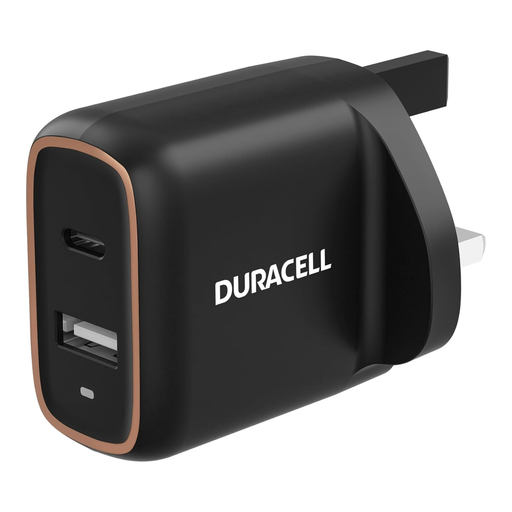
Why This Fits Their Persona: This is a straightforward, reliable solution for charging a smartphone and a secondary accessory like headphones. The 20W USB-C port provides ample speed for most modern phones, and the USB-A port adds useful flexibility.
It avoids the "maximum wattage" trap by providing exactly what's needed for fast-charging a phone without the extra cost of an overpowered charger.
Dual-port versatility (USB-C and USB-A) from a reputable brand known for reliability. Compact and durable build.
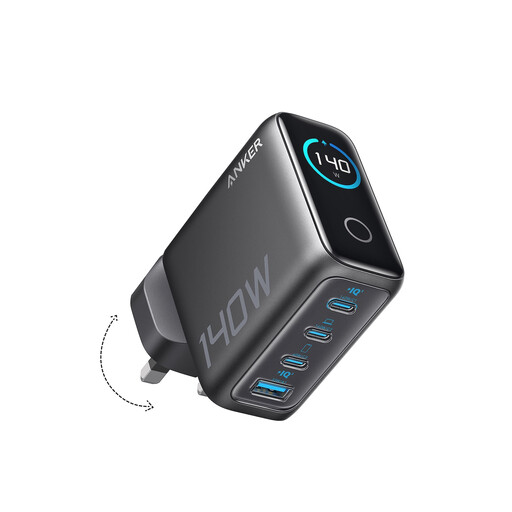
Why This Fits Their Persona: For the professional or tech enthusiast juggling a laptop, phone, tablet and more. This charger offers a massive 140W total output, capable of powering a high-performance laptop and other devices simultaneously without compromising on speed.
It directly addresses the power distribution problem. With two high-speed USB-C ports, it can deliver up to 140W to a single device, ensuring even demanding laptops get the power they need.
High total output (140W) and four ports to consolidate all your charging needs. Features advanced GaN technology for a compact size despite its power.
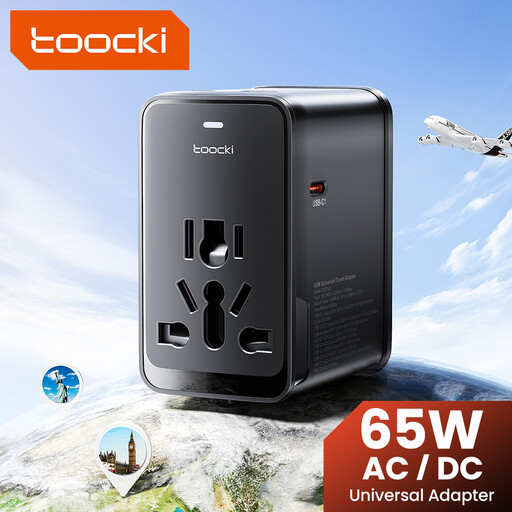
Why This Fits Their Persona: This is the ultimate all-in-one solution for anyone who travels internationally. It combines a powerful 65W GaN charger with a universal plug adapter, covering the UK, EU, US and AUS. It replaces multiple chargers and adapters with a single, compact unit.
It prevents the clutter and confusion of carrying multiple adapters. The 65W PD output is sufficient for most travel laptops, and the multiple ports ensure all your devices can be charged from one socket.
An integrated international travel adapter with powerful 65W PD charging. Features three USB-C ports and one USB-A port for maximum connectivity.
We have compiled a complete, real-time list of products that fully satisfy these strict selection criteria and UK safety regulations.
For most people, yes. The benefits of a GaN charger are tangible: they are noticeably smaller and lighter than traditional chargers with the same power output. This makes them much more convenient for travel and helps reduce desk clutter. They also run cooler, which can contribute to a longer lifespan.
Yes, it is safe. Modern chargers with Power Delivery (PD) technology are smart. The charger and your phone will communicate to determine the correct amount of power. Your phone will only draw the 20W it needs, so there is no risk of damage. However, you would be paying for 80W of power capability that you are not using.
Always check for the UKCA (UK Conformity Assessed) marking on the product or its packaging. This indicates that the product meets UK safety, health and environmental protection standards. The CE mark is also widely recognised. Avoid purchasing any charger that lacks these essential certifications, especially from unfamiliar online sellers.