
24/7 Customer Support

Free returns

Same-day & Next-day Delivery

Quality Guaranteed

Unlock Your Welcome Offers: FREE Delivery | Up to 80% OFF | Free 30-day JoyPlus trial
Download the APP
In an age where we rely on everything from smartphones and tablets to laptops for work, study and leisure, keeping them all powered up can be a challenge. The standard-issue plugs that come with our devices are often slow, bulky or only have a single port. This can lead to a tangle of cables, a constant search for free sockets and the frustration of a battery draining faster than it charges.
If you're looking for a single, efficient solution, a modern USB C fast charger is the answer. This guide will walk you through the key features to consider when choosing a new USB C wall plug and provide some practical recommendations to help you find a charger that fits your needs in the UK.
Navigating the specifications of modern chargers can seem complex. Here are a few key points to focus on to ensure you get a charger that performs well and is suited to your devices.
The most important factor in a fast charger is its power output, measured in watts (W). Different devices require different amounts of power to charge at their maximum speed.
Look for a charger that supports Power Delivery (PD). This is a charging standard that allows the charger and your device to communicate, ensuring the fastest and safest possible charge. A Power Delivery adapter is essential for fast-charging most modern Apple, Samsung and Google devices.
Many newer chargers use Gallium Nitride, or GaN, instead of traditional silicon. A GaN charger offers significant advantages: it can handle higher voltages and runs more efficiently, meaning less energy is lost as heat. This allows manufacturers to create chargers that are much smaller, lighter and more powerful than their silicon-based counterparts—ideal for a tidy desk or a packed travel bag.
Why carry three separate plugs when one will do? A dual port USB charger or even one with three or four ports, can charge multiple devices simultaneously from a single wall socket. Many models offer a mix of USB-C and USB-A ports, making a USB C and USB A charger a versatile choice for powering both new and older gadgets.
For those who travel frequently, a foldable travel charger is a practical feature. The prongs fold into the body of the charger, preventing them from snagging or scratching other items in your bag.
Here are a few options that stand out for their performance, features and versatility.
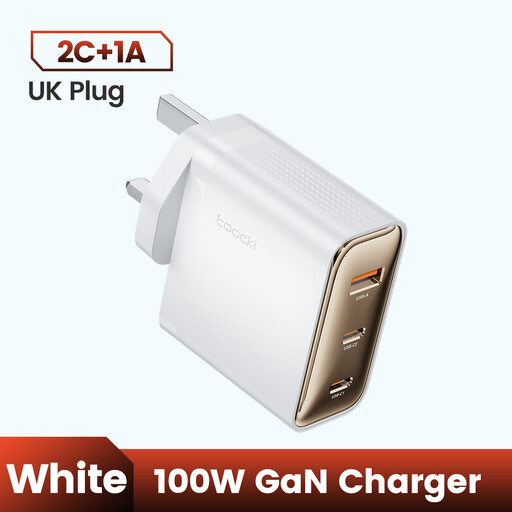
Why It Stands Out: This charger is a true powerhouse, delivering up to 100W of total output. It uses GaN technology to pack that power into a compact frame and features two USB-C ports and one USB-A port. This combination allows it to function as a MacBook charger, an iPhone fast charger and a charger for another accessory all at once. The foldable UK plug makes it an excellent companion for travel or a tidy workspace.
Pros:
Who is it for? Professionals, students and digital nomads who need a single charger to power a laptop, phone and tablet simultaneously, whether at home or on the move.
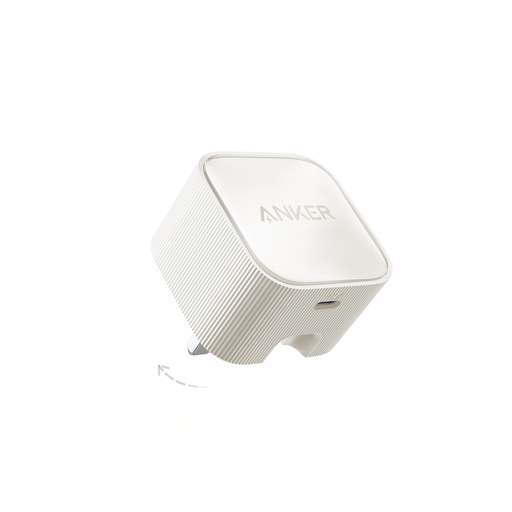
Why It Stands Out: The Anker Nano is designed for maximum portability without sacrificing speed. Its tiny form factor and foldable plug make it easy to slip into any pocket or bag. With 30W of Power Delivery output, it's perfectly matched for fast-charging the latest smartphones, including the iPhone and Samsung Galaxy series. According to Anker, its ActiveShield 3.0 technology monitors temperature to enhance protection.
Pros:
Who is it for? Anyone looking for a dedicated, high-speed Samsung charger plug or iPhone fast charger that is incredibly small and convenient for daily commutes or travel.
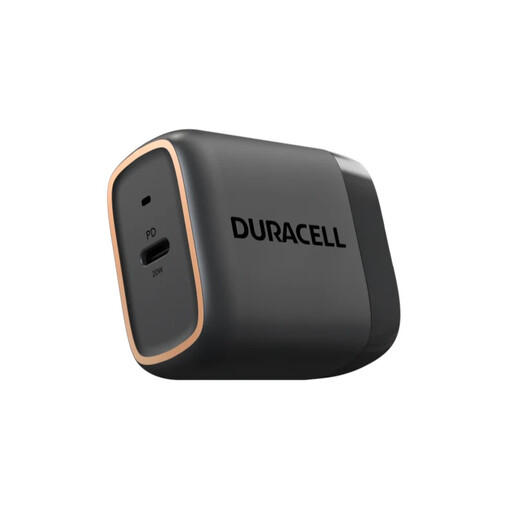
Why It Stands Out: From a brand synonymous with power, this Duracell charger offers a straightforward and reliable solution. It features one 20W USB-C PD port for fast-charging modern phones and a legacy USB-A port for older devices like power banks, smartwatches or headphones. This dual port USB charger provides flexibility in a simple, compact package.
Pros:
Who is it for? Users who need a simple, no-fuss charger to power their main smartphone quickly while also keeping an older USB-A device topped up.
These recommendations cover a range of common needs, but the world of charging technology is vast. If you're looking for different power levels, port configurations or designs, there are many other choices available.
Explore our full collection of wall chargers to find the perfect fit for all your devices.
Yes, you can. Modern chargers with Power Delivery (PD) are smart. The charger and your device communicate to determine the optimal amount of power needed. The charger will only supply the maximum power your phone can safely accept, so using a higher-wattage charger will not cause damage.
A GaN charger uses Gallium Nitride components instead of traditional silicon. This makes it more power-efficient, allowing it to be significantly smaller and cooler than a non-GaN charger of the same wattage. For high-power or multi-port chargers where size and heat are concerns, GaN technology offers a clear advantage and is generally worth the consideration.
No, you do not need to buy a charger from the same brand as your phone. Any third-party USB C fast charger that supports the Power Delivery (PD) standard and provides sufficient wattage (e.g., 20W or more) will fast-charge a compatible iPhone or Samsung device. Just be sure to use a quality USB-C cable that is also rated for fast charging.