
24/7 Customer Support

Free returns

Same-day & Next-day Delivery

Quality Guaranteed

Unlock Your Welcome Offers: FREE Delivery | Up to 80% OFF | Free 30-day JoyPlus trial
Download the APP
In a world filled with laptops, smartphones, tablets and wireless earbuds, the humble charger has become the unsung hero of our daily lives. Yet, finding the right USB-C fast charger can feel like navigating a minefield of confusing specifications and misleading marketing. Many of us have felt the frustration of a charger that promises the world but delivers a trickle of power, or worse, fails after just a few months.
As the Joybuy Product Recommendation Officer, my role is to help you sidestep these common issues. Before you spend your hard-earned money, let's look at the three most common pitfalls that UK consumers encounter and how to avoid them.
To make a smart purchase, you don't need a degree in electrical engineering. You just need to focus on three core parameters that determine a charger's performance and value.
This is the most critical factor. Wattage measures the rate of power transfer. Modern fast charging relies on a protocol called Power Delivery (PD), which allows the charger and your device to communicate and select the optimal charging speed.
Here’s a simple guide to matching wattage to your needs:
Always check the maximum output of a single port, not just the total.
If you see the term GaN charger, pay attention. Gallium Nitride is a semiconductor material that is far more efficient than the traditional silicon used in older chargers.
What this means for you:
For a modern, portable and powerful charging solution, a GaN charger is the clear choice.
Think about how many devices you need to charge at once. A multi-port USB charger can declutter your desk and lighten your travel bag.
A combination of USB-C and USB-A ports offers the most versatility for handling all your gadgets.
Instead of a generic list, we've matched some promising options to specific user needs. This way, you can find a charger that fits your lifestyle, not just a list of specifications.
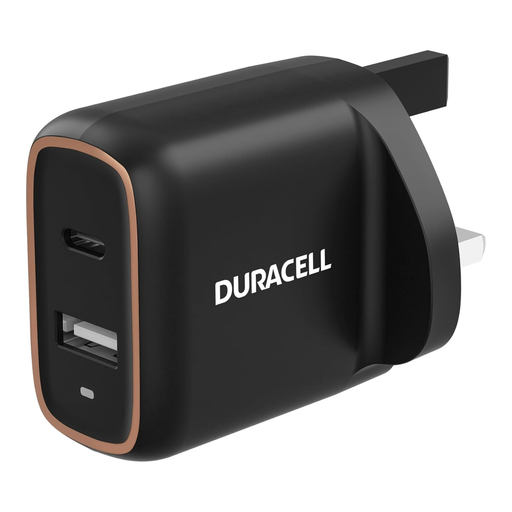
Why This Fits Their Persona: This is a straightforward, reliable choice for anyone needing to fast-charge a phone and power a secondary accessory. It comes from a trusted brand, offering peace of mind without a hefty price tag.
It avoids the safety gamble by being a fully certified product from a reputable manufacturer. Its 20W output is clearly stated for the USB-C port, so there's no confusion about its capability.
Features both a 20W PD USB-C port for modern phones and a USB-A port for legacy devices, offering great versatility in a single, compact plug.
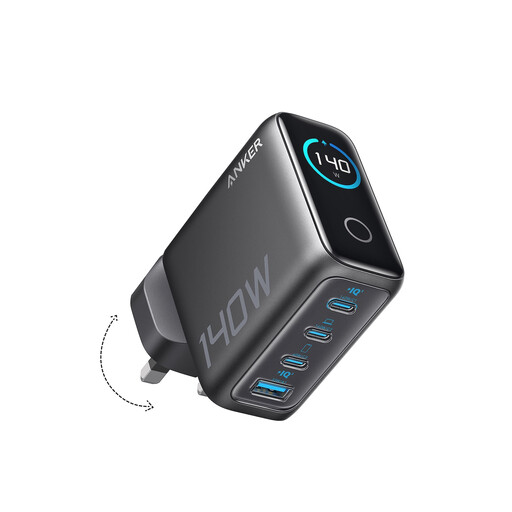
Why This Fits Their Persona: For the professional juggling a high-performance laptop, a tablet and a smartphone, this charger is a desktop powerhouse. It consolidates multiple bulky chargers into one sleek, efficient unit.
It directly counters the "Total Wattage" trap by offering a massive 140W maximum output from a single USB-C port, enough for the most demanding laptops. It's a modern GaN charger, not outdated tech.
Its ability to power four devices at once, including a high-power laptop, is its main strength. The colour display provides real-time charging status, a useful feature for managing power distribution.
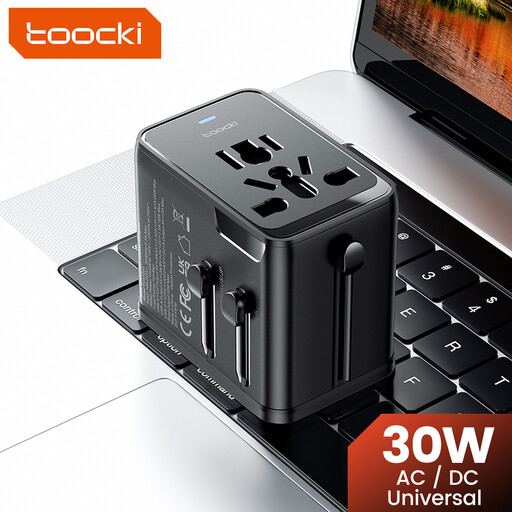
Why This Fits Their Persona: This is the ultimate tool for the frequent international traveller. It combines a universal **travel adapter** with a capable multi-port charger, saving precious luggage space and eliminating the need to carry multiple plugs.
It solves a problem that standard chargers don't: plug compatibility. Instead of buying a powerful charger and then a separate, often flimsy adapter, this integrates both functions into one robust, safety-certified unit.
Its all-in-one design supports plugs for the EU, UK, US and Australia. With two USB-C ports and one USB-A port, it can charge three devices simultaneously anywhere in the world.
We have compiled a complete, real-time list of products that fully satisfy these strict selection criteria and UK safety regulations.
Yes, absolutely. Modern chargers that use the Power Delivery (PD) standard are smart. The charger and your phone will communicate to determine the fastest safe speed. The charger will only supply the 20W your phone requests, so there is no risk of damage.
GaN stands for Gallium Nitride, a material that is more efficient at conducting electricity than the silicon used in older chargers. This means GaN chargers can be much smaller, run cooler and waste less energy. For anyone who values portability and efficiency, especially for a multi-port USB charger or a powerful laptop charger, GaN is definitely worth it.
A well-made, certified charger should last for several years of regular use. The lifespan depends on factors like build quality, internal components and heat management. A key indicator of a manufacturer's confidence in their product is the warranty period. Always choose chargers from reputable brands that are compliant with UK safety standards to ensure both longevity and safety.