
24/7 Customer Support

Free returns

Same-day & Next-day Delivery

Quality Guaranteed

Unlock Your Welcome Offers: FREE Delivery | Up to 80% OFF | Free 30-day JoyPlus trial
Download the APP
Is your desk drawer overflowing with a tangled mess of chargers? One for your phone, another for your laptop and a third for your tablet? The move towards USB-C was meant to simplify our lives, yet choosing the right USB-C fast charger can feel more complicated than ever. With terms like 'Power Delivery', 'GaN' and 'wattage' being used frequently, it is easy to feel lost.
This guide is designed to cut through the clutter. We will walk you through the key features to consider when buying a new charger and share some of our top recommendations for 2026, helping you find a reliable power solution for your specific needs, whether you are at home, in the office or travelling abroad.
Before you buy, a little knowledge goes a long way. Focusing on these three areas will help you select a charger that is safe, efficient and perfectly matched to your devices.
The most important factor is wattage (W), which measures power output. A charger with insufficient wattage will charge your device slowly, while one that is too powerful is fine, as modern chargers communicate with your device to deliver only the power it needs.
Look for chargers that support the Power Delivery (PD) standard. This is the technology that enables smart, high-speed charging by allowing the charger and your device to negotiate the optimal voltage and current.
A multi-port USB charger can be a game-changer, allowing you to power your laptop, phone and headphones from a single wall socket. This is especially useful for travel or decluttering your workspace.
Also, look for chargers built with GaN (Gallium Nitride) technology. GaN is a modern semiconductor material that is more efficient than the traditional silicon used in older chargers. This allows manufacturers to create chargers that are significantly smaller, lighter and run cooler, without sacrificing power.
For frequent flyers, a universal travel adapter with interchangeable plugs for the UK, EU, US and AU is an invaluable feature, ensuring you can stay powered up wherever you go.
When dealing with electricity, safety is paramount. Always choose chargers that display the CE and UKCA marks. These certifications indicate that the product meets the UK and European Union's high safety, health and environmental protection requirements. A quality charger will have built-in protections against over-voltage, over-heating and short-circuits, safeguarding your valuable devices.
Here are a few standout options that cater to different needs, from the globetrotting professional to the everyday smartphone user.
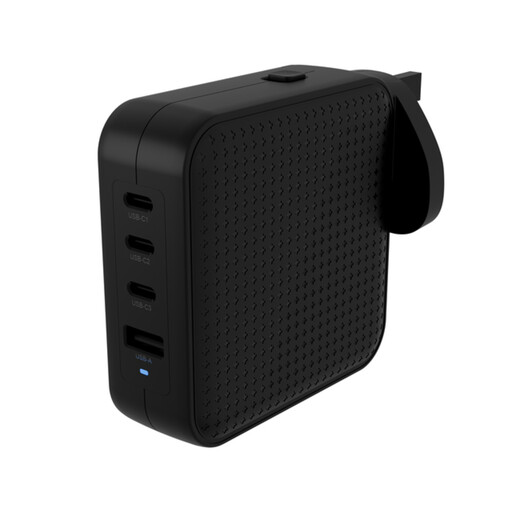
Why It Stands Out This charger is a true all-in-one power solution. It combines the power of a 100W GaN charger with the convenience of a multi-port USB charger and the versatility of a universal travel adapter. Its intelligent power distribution system automatically allocates the 100W output across its four ports, ensuring each connected device gets an efficient charge.
Pros
Who is it for? This is an excellent choice for international travellers, mobile professionals and anyone who wants a single charger to power all their devices, from their laptop to their smartwatch, without compromise.
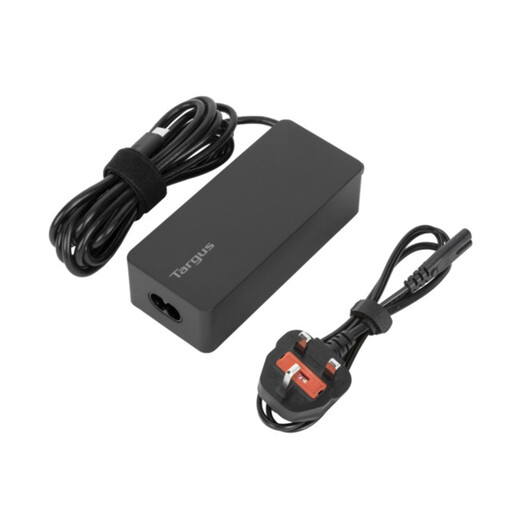
Why It Stands Out The Targus 65W charger is a reliable and straightforward workhorse. It focuses on doing one job exceptionally well: providing safe and efficient power for your USB-C laptop. It is a practical and portable alternative to the often bulky chargers that come with laptops.
Pros
Who is it for? Perfect for the business professional, student or remote worker who needs a dependable and portable 65W USB-C laptop charger for their primary work device.
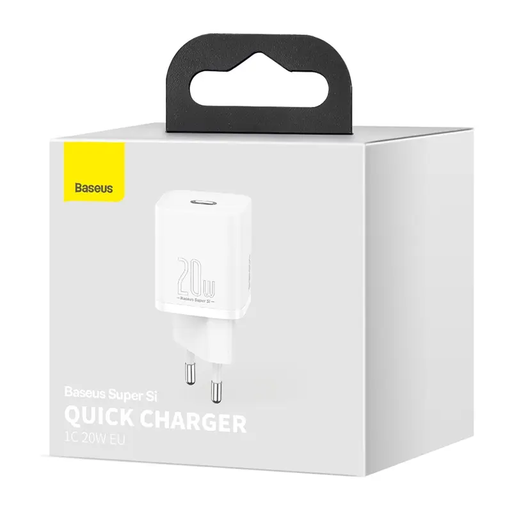
Why It Stands Out This charger from Baseus is a compact and affordable solution for fast-charging your smartphone. By using Super Si (silicon-based) technology, it maintains a tiny form factor while delivering a powerful 20W output. The inclusion of a certified USB-C to Lightning cable makes it a complete, ready-to-use package for iPhone users.
Pros
Who is it for? This is a great option for anyone needing a dedicated 20W iPhone charger plug or a secondary fast charger for their smartphone. Its small size and included cable make it a convenient travel companion.
If these recommendations do not quite fit your needs or if you are looking for specific cables or other charging accessories, there are many other solutions available.
Explore our full range of USB power cables and chargers to find the perfect match for all your devices.
Yes, you can. A modern USB-C fast charger featuring Power Delivery (PD) technology is designed to be smart. It communicates with your device to determine the maximum power it can safely accept. So, a 100W charger will only deliver around 20W to a phone that requests it, preventing any damage.
GaN stands for Gallium Nitride. It is a semiconductor material that is more efficient at conducting electricity than traditional silicon. For chargers, this means less energy is lost as heat, allowing manufacturers to build powerful chargers (like a 100W GaN charger) that are significantly smaller and lighter than their silicon-based counterparts.
The cable is a critical part of the charging system. To take full advantage of a high-wattage charger (typically over 60W), you need a USB-C cable that is rated to handle that amount of power. These are often labelled as supporting 100W or have an "E-Marker" chip. For lower-power charging, like with a 20W phone charger, a standard, good-quality certified USB-C cable will work perfectly.