
24/7 Customer Support

Free returns

Same-day & Next-day Delivery

Quality Guaranteed

Unlock Your Welcome Offers: FREE Delivery | Up to 80% OFF | Free 30-day JoyPlus trial
Download the APP
As our collection of gadgets grows, from laptops and tablets to the latest iPhone 15, the humble charger has become a critical piece of tech. Yet, finding the right USB-C fast charger can feel like navigating a minefield of confusing specifications and exaggerated marketing. Many of us have been caught out by a charger that promised the world but delivered a slow trickle of power, or worse, stopped working after a few months.
As the Joybuy Product Recommendation Officer, my role is to help you sidestep these common issues. Before you spend your money, let's look at the three most common pitfalls that UK shoppers encounter and how to avoid them.
100W USB-C charger with multiple ports, expecting to fast-charge your laptop at full speed. However, when you plug in your phone as well, your laptop's charging speed plummets. This is because the total wattage is split between the ports, a detail often hidden in the small print.To make a smart purchase, you don't need to be an engineer. You just need to focus on a few core parameters that determine a charger's performance and safety.
This is the most crucial factor for any multi-port USB charger. Always check the manufacturer's specifications for how power is distributed. A good 100W USB-C charger will clearly state the maximum output for each port when used alone, and how that power is split when multiple devices are connected. For instance, it might provide 100W from a single USB-C port (ideal for a laptop charger) but split to 65W + 30W when two ports are in use. This information is vital for ensuring your most power-hungry device gets the energy it needs.
Think of these as languages that your charger and device use to communicate. For most modern devices, including Apple MacBooks, iPads and the iPhone 15 series, Power Delivery (PD) is the essential standard. For many Android devices, like those from Samsung, Programmable Power Supply (PPS) and Quick Charge (QC) are also important for achieving maximum charging speeds. A versatile PD power adapter that also supports these other protocols will offer the widest compatibility for all your gadgets.
If you see GaN charger on the label, it's a significant plus. Gallium Nitride (GaN) is a material that allows chargers to be built much smaller, lighter and more power-efficient than traditional silicon-based models. They also generate less heat, which contributes to a longer lifespan and improved safety. For a compact travel charger UK, GaN technology is a non-negotiable feature.
Based on these practical criteria, we've identified several options that align with different user needs, helping you avoid the common traps and get a charger that truly works for you.
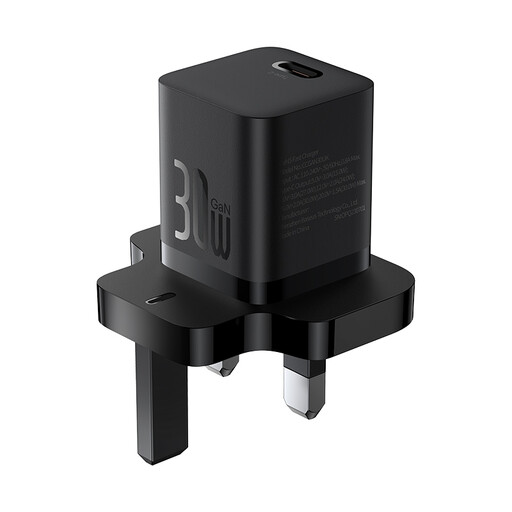
Why This Fits Their Persona: This user needs a single, ultra-portable charger for their bag that can quickly top up a phone or tablet between meetings or lectures. Its small footprint doesn't take up precious space, making it an ideal travel companion.
As a single-port charger, there's no confusion about shared wattage. The full 30W is dedicated to the one connected device, ensuring consistent fast charging for compatible phones and tablets.
Its primary advantage is its compact size, enabled by GaN5 technology. It supports multiple fast-charging protocols, making it a versatile option for both iPhone and Android users.
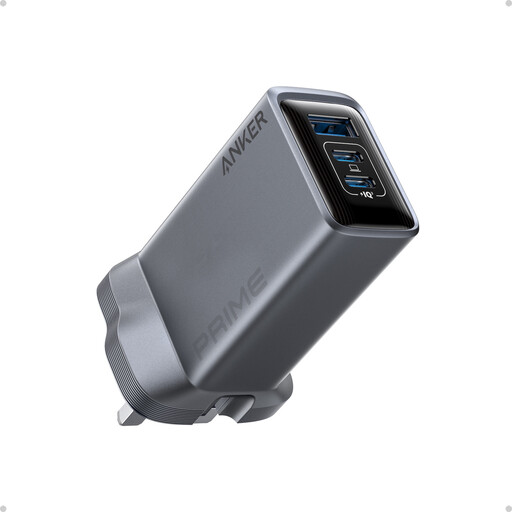
Why This Fits Their Persona: This user juggles a laptop, smartphone and wireless earbuds daily. They need a single, powerful charging station that can handle everything at once, whether at their desk or on the road, without carrying multiple bulky power bricks.
It directly addresses the shared wattage problem by offering a high 100W total output and intelligent power distribution. It can deliver up to 100W to a single device, enough for a demanding laptop, and clearly specifies how power is split when other ports are used.
Its key advantage is high-power versatility. With two USB-C ports and one USB-A port, it consolidates the need for a separate laptop charger and phone charger into one compact, GaN-powered unit.
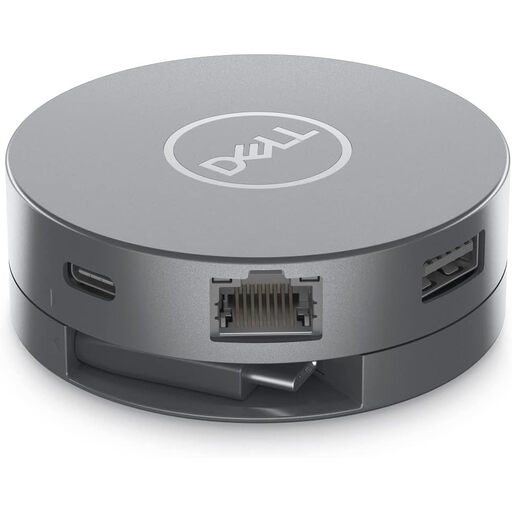
Why This Fits Their Persona: This user's problem isn't just charging; it's connectivity. Working from a modern laptop with limited ports, they need to connect an external monitor, wired internet and USB accessories, all while keeping their laptop powered.
This device redefines the solution. Instead of just being a charger, it's a USB-C hub that offers up to 90W power pass-through. This means you can use your laptop's original charger to power the hub, which then charges the laptop and runs all connected peripherals.
Its main advantage is comprehensive connectivity. It adds HDMI, DisplayPort, Ethernet and multiple USB ports to your laptop from a single USB-C connection, decluttering your workspace and expanding your laptop's functionality.
We have compiled a complete, real-time list of products that fully satisfy these strict selection criteria and UK safety regulations.
Yes, you can. Modern USB-C chargers and devices are designed with safety protocols that allow them to communicate. The charger will only supply the maximum amount of power that the device can safely accept. Using a higher-wattage charger will not damage your phone; it will simply charge at its own maximum supported speed.
A GaN charger uses Gallium Nitride, a semiconductor material that is more efficient than the silicon used in older chargers. This efficiency means less energy is lost as heat, allowing the charger to be made significantly smaller and lighter while handling more power. For anyone who values portability, especially for a travel charger UK or a powerful multi-port USB charger, the benefits in size and performance make GaN technology a worthwhile investment.
Always purchase chargers from reputable retailers. In the UK, look for both the UKCA and CE markings on the product and its packaging. These marks indicate that the manufacturer has declared the product compliant with UK and EU safety, health and environmental protection standards. Avoid unbranded chargers from unfamiliar online sellers, as they may not have undergone the required safety assessments.