
24/7 Customer Support

Free returns

Same-day & Next-day Delivery

Quality Guaranteed

Unlock Your Welcome Offers: FREE Delivery | Up to 80% OFF | Free 30-day JoyPlus trial
Download the APP
A USB-C fast charger can make a noticeable difference to daily charging, but the wattage printed on the box is only part of the decision. UK shoppers often pay for power their phone cannot use, buy a charger with the wrong plug, or assume that every USB-C cable supports the same charging speed.
As the Joybuy Product Recommendation Officer, my role is to filter the specifications that matter from marketing language. Use this guide to compare a USB-C wall charger, check device compatibility and avoid common buying mistakes.
A charger advertised as 65W does not automatically deliver 65W to every connected device. Phones may request around 20W to 30W, while compatible laptops can draw considerably more. Charging speed is controlled by the charger, cable and device working together.
A 20W USB-C charger can suit many phones and smaller tablets. A 30W USB-C charger offers more headroom for newer smartphones, tablets and selected lightweight laptops. For most USB-C laptops, check whether the manufacturer specifies 45W, 65W or more.
Some products use a UK three-pin plug, while others require a separate mains lead or are supplied with EU and UK power cords. A compact charger with the wrong plug may need an additional travel adaptor, making it less convenient and potentially less stable in a wall socket.
Also check whether a USB-C cable is included. The Apple 20W USB-C Power Adapter, for example, is supplied without a charging cable. A suitable USB-C to USB-C or USB-C to Lightning cable must be purchased separately, depending on the device.
A multi-port USB-C charger can reduce the number of adapters in your bag, but its total output may be shared between ports. A dual-port charger rated at 40W may provide 20W to each device when both ports are in use, rather than 40W to both simultaneously.
Before buying, look for the output details for one port and for multiple ports. This is particularly important when charging a laptop alongside a phone or tablet.
USB-C Power Delivery (PD) is a charging standard that allows compatible devices and chargers to negotiate an appropriate voltage and current. It is commonly used for fast charging phones, tablets and laptops.
Match the charger to your main device:
Charging speed may vary according to battery level, device temperature, cable specification and simultaneous use.
A single-port USB-C wall charger usually directs its available output to one device, which can be useful when charging a phone quickly. Two or more ports are more convenient for commuters, home offices and hotel rooms.
If you still use older USB-A cables or accessories, a charger with both USB-C and USB-A ports may reduce the need for additional adapters. However, USB-A output may have different power limits from the USB-C port, so read the detailed specification rather than relying on the port count.
A GaN fast charger uses gallium nitride components and can be smaller than some conventional chargers with a similar output. Compact dimensions are useful for travel, but do not cover the charger during use or place it in an enclosed, poorly ventilated space.
Look for clearly stated protections such as over-voltage, over-current, short-circuit and overheating protection. Use a certified, undamaged cable and stop using a charger if it becomes unusually hot, emits an odour or shows visible damage. A UK plug charger should be used with a suitable UK mains socket and according to the supplied instructions.
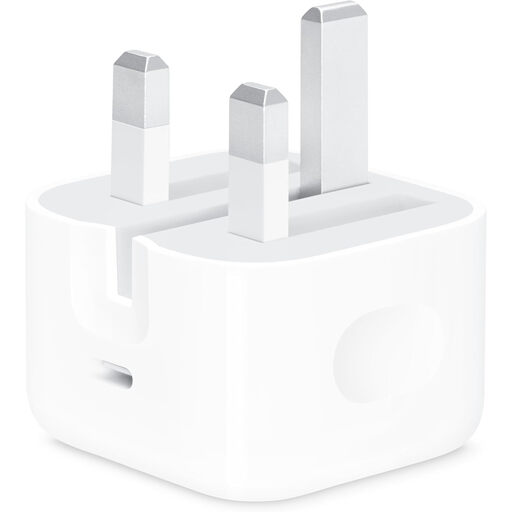
Why This Fits Their Persona: A straightforward option for shoppers who want a compact UK three-pin charger for a compatible phone or tablet without paying for unused laptop-level output.
Its stated maximum output is 20W and it has a UK three-pin plug, making the core specification easy to match. Remember that the cable is not included.
20W USB-C output; single-port design; compact UK three-pin format.
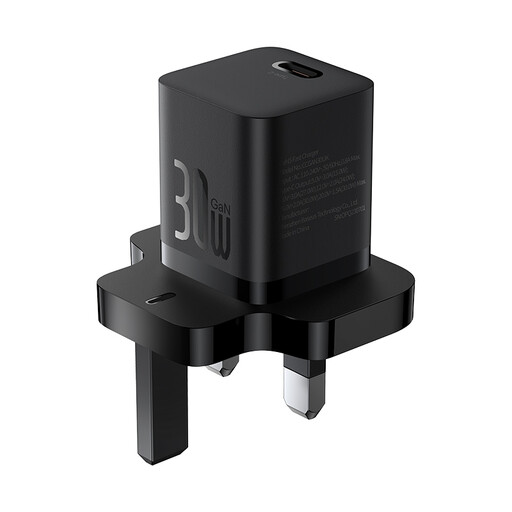
Why This Fits Their Persona: Its 51.5g pocket-sized format suits rail commuters, office workers and business travellers carrying a phone, tablet or other USB-C device.
The specification states 30W maximum output, one USB-C port and AC 110–240V input. This avoids mistaking a multi-port shared rating for single-device output.
30W USB-C PD charging; GaN5 technology; nine-layer protection system and temperature regulation features listed by the manufacturer.
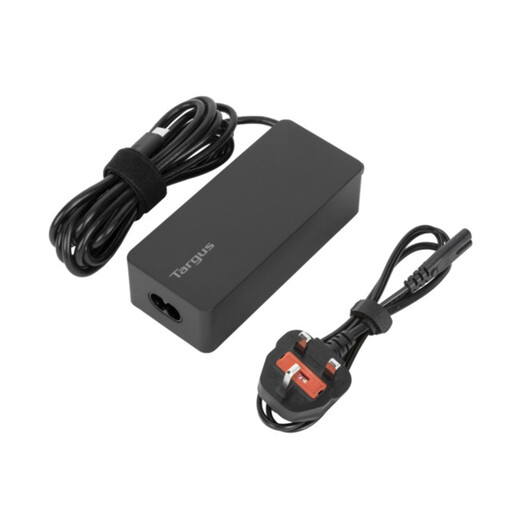
Why This Fits Their Persona: A suitable specification to consider for people carrying a USB-C laptop, tablet and phone between home, office and client meetings.
Its stated output is up to 65W, with USB-C Power Delivery and over-current, overheating and over-voltage protection. EU and UK power cords are included.
Up to 65W PD output; 1.8-metre cable; cable tie; compatibility listed for many USB-C laptops, tablets and phones.

Why This Fits Their Persona: Two USB-C ports are useful for households or travellers charging a phone and a second compatible device from one UK wall socket.
The output specification states 40W from one port and up to 20W plus 20W when both ports are used, so the shared-power behaviour is clear.
Two USB-C ports; 40W maximum single-port output; 20W plus 20W dual-port output; compact GaN design.
We have compiled a complete, real-time list of products that fully satisfy these strict selection criteria and UK safety regulations.
A charger for iPhone and Samsung devices may work with both ecosystems, but fast charging behaviour can differ. Confirm the supported PD profile and cable type for each device rather than relying only on the connector shape.
It can be suitable for many compatible smartphones, particularly when the device supports USB-C Power Delivery at or below 20W. Check the phone’s charging specification and use a suitable cable. A 30W model provides additional capacity for devices that accept higher input.
It is preferable to unplug a charger when it is not needed for an extended period. During use, keep it dry, uncovered and well ventilated. Stop using it if the casing is damaged, it becomes unusually hot, or it produces smoke or an unusual smell.
Not necessarily. A USB-C PD charger negotiates power with the connected device, so a phone only draws the amount it supports. A 65W charger can be a practical single-adapter option for a laptop, phone and tablet, but charging speed still depends on the device and cable.