
24/7 Customer Support

Free returns

Same-day & Next-day Delivery

Quality Guaranteed

Unlock Your Welcome Offers: FREE Delivery | Up to 80% OFF | Free 30-day JoyPlus trial
Download the APP
With USB-C now the standard across everything from the iPhone 15 to the latest MacBook Pro, finding a replacement cable should be simple. Yet, the market is flooded with options that often fail to deliver on their promises. A cable is no longer just a cable; it's a crucial component for performance and safety. Many UK shoppers find themselves with a drawer full of frayed, slow or incompatible wires.
As the Joybuy Product Recommendation Officer, my role is to help you navigate this confusing landscape. Before you add another cable to your basket, let's look at the common pitfalls that lead to wasted money and frustration.
To avoid these issues, focus on a few key specifications. Understanding these will ensure you buy a cable that not only works but also lasts.
The single most important factor is the maximum power the cable can handle, measured in watts (W). This determines what devices it can charge effectively.
A cable's lifespan is largely determined by its construction. Look for materials designed to withstand daily bending and pulling.
Finally, consider how and where you'll use the cable.
Based on these practical criteria, we've matched some standout options to different user needs.
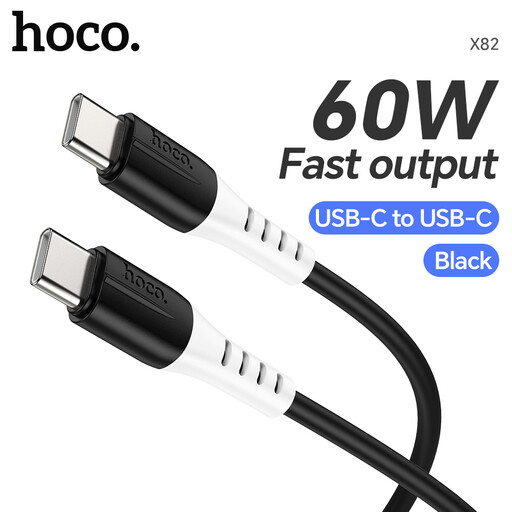
Why This Fits Their Persona: Perfect for those who need a reliable cable for their phone or tablet on the go. The silicone material means it can be thrown in a bag without becoming a tangled mess, and 60W is ample power for a replacement Samsung fast charging cable or for topping up an iPad between meetings.
Its premium food-grade silicone jacket directly counters the fraying connector flaw. It is highly flexible and resistant to kinking, protecting the internal wires from the stress of daily coiling and uncoiling.
Extremely tangle-resistant with a soft-touch feel. Supports up to 60W Power Delivery for wide compatibility.

Why This Fits Their Persona: For those working from home with a powerful laptop, this cable delivers. The 100W USB C cable rating is ideal for a MacBook Pro charging cable, and the generous long USB-C cable 2m length easily reaches sockets hidden behind desks or furniture.
It clearly states its 100W power capability, avoiding the vague "fast charge" trap. Its durable nylon braid and zinc alloy connectors are built for longevity, preventing the premature wear seen in cheaper cables.
High 100W power delivery for laptops. The 2-metre length provides excellent reach and convenience.
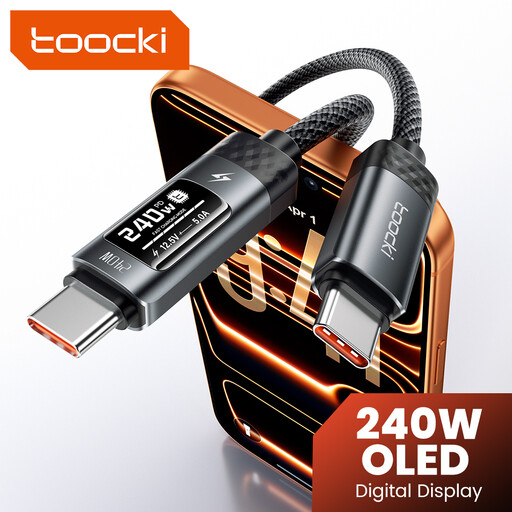
Why This Fits Their Persona: For the user who loves data and cutting-edge technology. This 240W PD 3.1 cable is future-proofed for next-generation devices, and the integrated LED display provides instant, real-time feedback on the charging speed, satisfying a desire for performance monitoring.
It completely demystifies the power mismatch trap. The LED screen shows the exact wattage being delivered, so you can instantly see if your power adapter and device are achieving the expected fast-charging speeds.
Unique built-in LED display for real-time power monitoring. Supports the latest 240W Power Delivery 3.1 standard.
We have compiled a complete, real-time list of products that fully satisfy these strict selection criteria and UK safety regulations.
No, a 240W cable is not necessary for current smartphones. Devices like the iPhone 15 or Samsung Galaxy series typically draw between 20W and 45W of power. A quality 60W Type C to Type C cable is more than sufficient to charge these devices at their maximum possible speed. The device itself determines how much power it draws, not the cable.
This is a common issue and usually stems from one of two things. First, ensure your power adapter (the plug) is also rated for fast charging and can supply the wattage your device needs. A 100W cable connected to a 20W plug will only deliver 20W. Second, check that your device itself supports the same Power Delivery protocol. The entire chain—adapter, cable and device—must be compatible to achieve top speeds.
Both are significant improvements over standard plastic cables, but they excel in different ways. A braided USB-C cable is generally more resistant to nicks, cuts and abrasion, making it great for rougher environments. A silicone cable offers superior flexibility and is almost impossible to tangle, making it ideal for storage and travel. The choice depends on whether you prioritise abrasion resistance or tangle-free convenience.