
24/7 Customer Support

Free returns

Same-day & Next-day Delivery

Quality Guaranteed

Unlock Your Welcome Offers: FREE Delivery | Up to 80% OFF | Free 30-day JoyPlus trial
Download the APP
As a Product Recommendation Officer at Joybuy, I see a common pattern: a drawer full of frayed, unreliable or disappointingly slow USB-C cables. With nearly every modern device from the iPhone 15 to the MacBook Pro now using this standard, choosing the right USB C fast charging cable has become more important—and more confusing—than ever.
Before you add another cable to your collection that will fail in six months, let's look at the common purchasing pitfalls that lead to wasted money and frustration.
To avoid these traps, focus on a few core parameters. These are the non-negotiable details that determine a cable's performance and lifespan.
The wattage rating on a cable indicates its maximum power handling capability. Using the wrong one is either inefficient or a waste of money.
A key component in any power delivery cable rated above 60W is the E-Marker chip. This tiny, intelligent chip communicates between your charger and device to safely manage voltage and current, preventing overheating and potential damage.
A truly durable type C cable is defined by its materials and construction, not just its appearance.
Instead of a generic list, we've matched specific cables to the people who will get the most value from them.
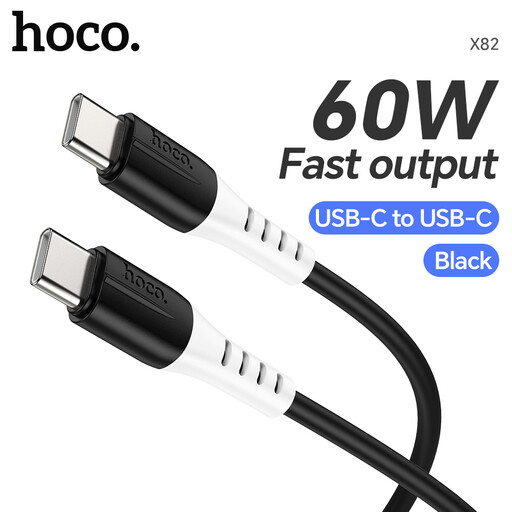
Why This Fits Their Persona: Ideal for the user who needs a reliable cable for their daily essentials—phone, tablet or power bank. The 60W output is more than enough for fast-charging most personal devices, and its 1-metre length is perfect for use with a laptop or in the car without creating clutter.
The food-grade silicone jacket directly counters the "Connector Snap" pitfall by being incredibly flexible and resistant to tangling and fraying, reducing stress on the connector joints.
Soft-touch, tangle-resistant silicone material. Provides a reliable 60W for fast charging phones and tablets.
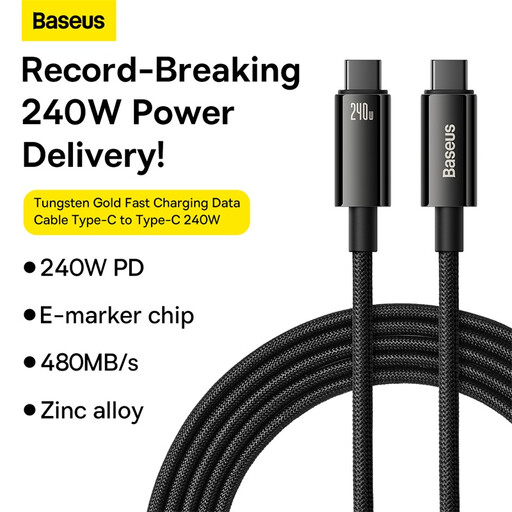
Why This Fits Their Persona: For the professional or creative who relies on a high-performance laptop like a MacBook Pro. This cable delivers the maximum power required, ensuring their machine charges quickly even under heavy load. It's built for demanding daily use in an office or studio.
It shatters the "Wattage Myth" by being fully PD3.1 certified with an E-marker chip to safely deliver 240W. Its zinc alloy connectors and high-density nylon braid are the antidote to the "Connector Snap" and "Braided Illusion" traps.
Supports the maximum 240W PD standard. Extremely durable construction with zinc alloy and dense braiding.
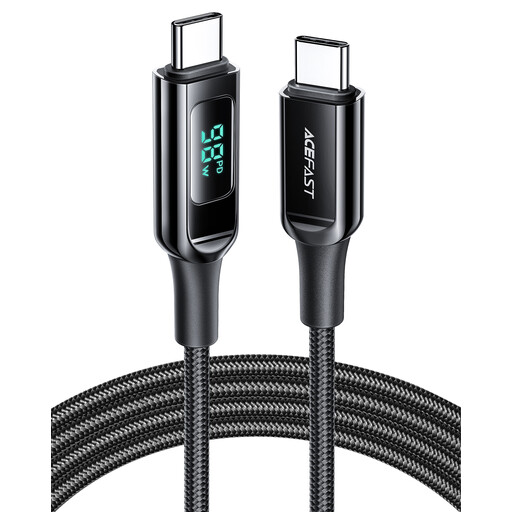
Why This Fits Their Persona: Perfect for the enthusiast who appreciates data and convenience. The generous 2-metre USB C cable length is ideal for a home office or bedside table, and the power display offers instant, satisfying feedback on charging performance.
This USB C cable with power display directly solves the "Wattage Myth" by showing you the exact power being delivered in real-time. You will know instantly if your charger or device is the bottleneck, not the cable.
Integrated digital display shows real-time wattage. A long 2-metre cable provides excellent flexibility for various setups.
We have compiled a complete, real-time list of products that fully satisfy these strict selection criteria and UK safety regulations.
This is the most common issue and it almost always comes down to the other components. To get 100W, you need three things: a 100W USB C cable, a wall charger capable of outputting 100W and a device (like a laptop) that can accept 100W. If any one of these is rated lower, the entire system will default to the slowest speed.
Yes, it is perfectly safe. Thanks to the USB Power Delivery standard and the E-Marker chip inside high-wattage cables, the cable, charger and your phone will communicate to determine the maximum safe speed. The cable will only deliver the amount of power your phone is designed to handle, not the full 240W.