
24/7 Customer Support

Free returns

Same-day & Next-day Delivery

Quality Guaranteed

Unlock Your Welcome Offers: FREE Delivery | Up to 80% OFF | Free 30-day JoyPlus trial
Download the APP
In a world of power-hungry laptops, tablets and smartphones, the humble charging cable has become a critical piece of kit. Yet, finding a reliable USB C fast charging cable can feel like navigating a minefield of confusing specifications and exaggerated marketing claims. Many of us have a drawer full of frayed, slow or completely defunct cables to prove it.
As the Joybuy Product Recommendation Officer, my role is to help you sidestep these common issues. Before you spend another pound, let's look at the three most common pitfalls that lead to buyer's remorse and how to choose a cable that genuinely meets the demands of your devices.
To ensure you get the performance and longevity you're paying for, focus on these three core parameters.
The power a cable can handle, measured in watts (W), determines how quickly it can charge your devices.
Always check that the cable explicitly supports the Power Delivery (PD) protocol, which is the industry standard for fast charging over USB-C.
While USB-C is becoming universal, connector needs can still vary.
A cable's lifespan is directly tied to its materials. A braided charging cable, typically made from high-density nylon, offers far greater resistance to abrasion, bending and tangling than standard plastic. Look for reinforced connector housings, often made from zinc or aluminium alloy, which prevent the common failure point where the cable meets the plug.
For length, a standard 1m cable is fine for desktops, but a 2m fast charger lead provides valuable flexibility for charging from awkward wall sockets or using your device comfortably while it powers up.
Instead of a one-size-fits-all approach, we've matched some standout options to specific user needs, ensuring you get the right tool for the job.
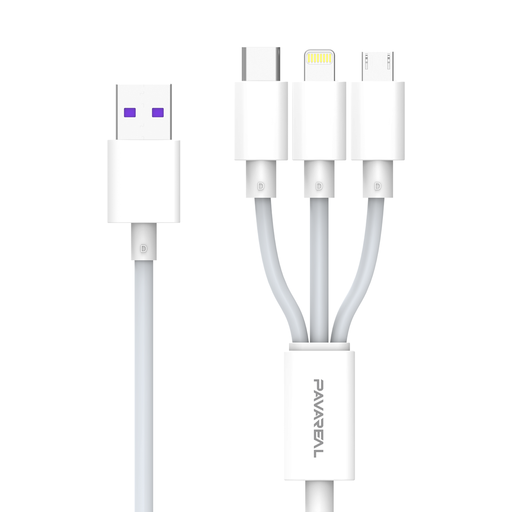
Why This Fits Their Persona: For the UK professional who carries a work laptop, a personal phone and headphones, this cable declutters their bag. It's a single solution for charging a mix of USB-C, Lightning and even older Micro-USB devices at a desk or in a hotel room.
It contains an intelligent power distribution chip that manages the high total wattage, safely dividing power between connected devices. This avoids the risk of overloading that can come with basic, unmanaged multi-head cables.
Unmatched Versatility: The 3-in-1 connector design covers nearly every modern portable device.
High Shared Power: A total 200W output capacity ensures multiple devices can charge efficiently at once.
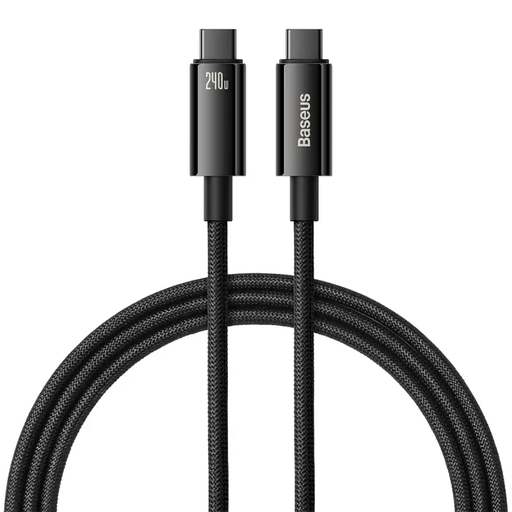
Why This Fits Their Persona: Ideal for the creative professional or tech enthusiast in the UK with a high-end MacBook Pro, Dell XPS or gaming laptop. This user prioritises maximum charging speed to minimise downtime and keep their primary work machine powered up.
This cable is PD3.1 certified and contains the crucial E-Marker chip. This guarantees it can safely handle the immense 240W power, sidestepping the danger of using an uncertified cable with a high-wattage charger.
Future-Proof Power: With 240W capability, it exceeds the needs of most current devices, ensuring it will remain relevant for years.
Robust Build: Features durable zinc alloy connectors and a braided nylon cord.
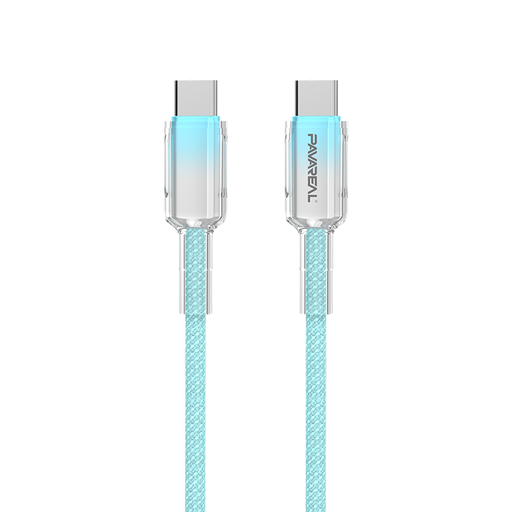
Why This Fits Their Persona: This is for the person who is tired of replacing frayed cables every year. They use their cable daily at home, in the car and on the move, and need something that can withstand being repeatedly coiled, stretched and plugged in.
It directly counters the "fraying fiasco" with its ballistic nylon braided exterior and extended inner moulds at the connector joints. This construction is specifically designed to resist tearing and damage from bending.
Exceptional Durability: The combination of a ballistic nylon braid and zinc alloy connectors provides high resistance to daily wear and tear.
High Power: Delivers a solid 100W, making it a powerful and robust choice for laptops and phones.
We have compiled a complete, real-time list of products that fully satisfy these strict selection criteria and UK safety regulations.
Check the product specifications for two key things: the wattage rating (e.g., 60W, 100W or higher) and support for the "Power Delivery" (PD) protocol. To achieve those speeds, you must also use a wall charger with an equal or higher wattage rating.
Generally, yes. A high-quality braided charging cable, usually made of nylon, provides significantly better protection against the bending, pulling and abrasion that cause standard plastic-coated cables to fray and fail, especially around the connector heads.
Yes, it is perfectly safe. Modern devices and chargers use smart technology to communicate. The cable and charger will negotiate with your phone to deliver only the maximum amount of power it can safely handle. Using a higher-rated cable will not damage a lower-rated device.