
24/7 Customer Support

Free returns

Same-day & Next-day Delivery

Quality Guaranteed

Unlock Your Welcome Offers: FREE Delivery | Up to 80% OFF | Free 30-day JoyPlus trial
Download the APP
As a Joybuy Product Recommendation Officer, my role is to help you navigate the crowded market of tech accessories. A common point of frustration is the humble charging cable. You buy a new USB-C fast charging cable expecting a quick power-up for your phone or laptop, only to find it charges at a snail's pace, or worse, stops working entirely after a few months.
Many of us in the UK have fallen into the same traps. Before you add another cable to your basket, let's look at the common pitfalls that lead to wasted money and a drawer full of duds.
By understanding a few core parameters, you can confidently select a cable that performs as expected and is built to last.
To avoid the pitfalls, focus on these three non-negotiable factors. They determine a cable's speed, compatibility and lifespan.
The single most important specification is the maximum power output, measured in watts (W). This dictates what devices the cable can charge effectively.
Always check that the cable's wattage rating meets or exceeds the requirements of your most power-hungry device and its corresponding wall adapter.
The ends of the cable are just as important as what is inside.
A cable's longevity is determined by its construction.
Instead of a generic list, we have matched specific cables to the people who will get the most value from them.

Why This Fits Their Persona: This is for the UK iPhone owner who needs a reliable daily charger that just works. It provides the right power for fast charging and removes any guesswork about compatibility or performance.
It directly solves the "Certification Gamble." Being MFI certified, it guarantees seamless compatibility with iPhones and iPads, preventing annoying error messages after software updates.
The built-in LED screen displays the real-time wattage, confirming you are getting fast-charging speeds. The nylon braid and zinc alloy plugs add considerable durability.
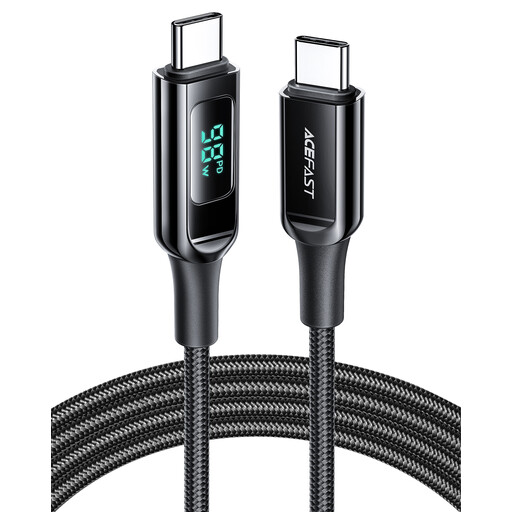
Why This Fits Their Persona: Ideal for the tech-savvy professional in London or Manchester who juggles a MacBook Pro, a Samsung phone and a tablet. This single cable can power every modern device in their bag, from home office to co-working space.
This cable demolishes the "Mismatched Power Pitfall." Its 100W Power Delivery capability ensures it can charge even the most demanding laptops at full speed, while also safely powering smaller devices.
The generous 2-metre length offers flexibility whether you are at a desk or in a hotel room with awkwardly placed sockets. The digital power display provides instant confirmation of charging performance.
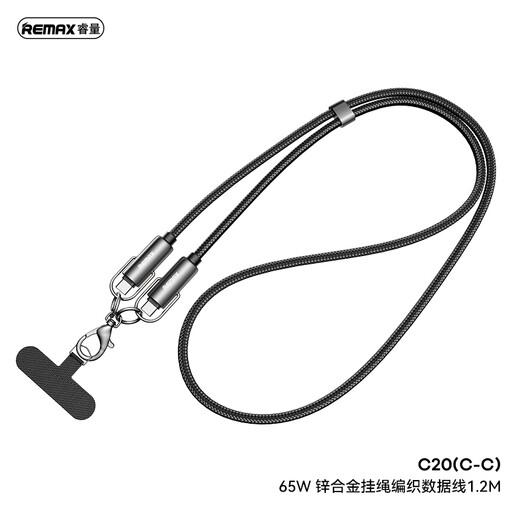
Why This Fits Their Persona: This is for the user who is tired of replacing frayed cables every six months. It is built for the rigours of daily commutes, travel and being thrown in a bag, prioritising a long lifespan above all else.
It is the direct antidote to the "Durability Deception." The combination of a tough braided nylon jacket and solid zinc alloy connectors provides robust protection against physical stress and wear.
The 65W power output is highly versatile, capable of charging laptops, tablets and phones. An adjustable collar helps manage cable length and prevents strain at the connector.
We have compiled a complete, real-time list of products that fully satisfy these strict selection criteria and UK safety regulations.
Yes, to achieve the maximum charging speed, you must pair your cable with a compatible wall charger (or "plug"). For example, to get 100W of power from a 100W-rated cable, you need a wall charger that can also output 100W via its USB-C port. Using an old, low-wattage plug will limit the charging speed, regardless of the cable's capability.
No, it will not. Modern charging standards like USB Power Delivery (PD) allow your device, the cable and the charger to communicate. The charger will only supply the amount of power that the device requests and can safely handle. Using a higher-wattage cable is perfectly safe and a good way to "future-proof" your purchase for more powerful devices later on.
Genuine MFI certified products will feature the "Made for iPhone/iPad" logo on their packaging or in the official product description. Buying from reputable retailers and checking the product specifications for "MFI Certified" is the most reliable way to ensure you are getting a compliant and safe accessory for your Apple devices.