
24/7 Customer Support

Free returns

Same-day & Next-day Delivery

Quality Guaranteed

Unlock Your Welcome Offers: FREE Delivery | Up to 80% OFF | Free 30-day JoyPlus trial
Download the APP
For international travellers, remote workers and students studying abroad, a USB-C GaN travel charger can replace several bulky plugs in a laptop bag. One compact unit may power a laptop, phone, tablet and accessories from a hotel room or airport lounge.
However, charger packaging often makes comparison difficult. A high wattage figure does not always mean every connected device will charge quickly, and an “international” label may refer only to voltage input rather than physical plug compatibility. Before buying, check the details below to avoid paying for features that do not match your routine.
A charger advertised as 100W may provide that figure across all ports rather than through one USB-C socket. Power can also be redistributed when several devices are connected. For example, a laptop may receive less power once a phone or tablet is added.
Check both:
A laptop charger for a performance notebook may require 65W or more. A 30W charger is generally more suited to phones, tablets and smaller accessories rather than laptops requiring higher input.
GaN, or gallium nitride, allows manufacturers to produce compact chargers with high power density. It does not, by itself, confirm that a charger supports every charging protocol or plug type.
Look for USB-C Power Delivery (PD) support and check whether the product includes UK, EU, US or Australian plug options. A charger accepting 100–240V AC at 50/60Hz can work with different mains voltages, but you may still need the appropriate physical plug or travel adapter.
Newer laptops and phones increasingly use USB-C, but headphones, e-readers, power banks and other accessories may still use USB-A. Choosing a dual USB-C charger can leave you carrying a second adapter.
If your luggage includes mixed cables, consider a USB-C and USB-A charger or a multi-port travel charger. Also check whether simultaneous charging reduces the output available to each port.
A USB-C Power Delivery charger negotiates power with a compatible device rather than delivering one fixed output. This helps match the charger to devices such as phones, tablets and laptops.
For laptops, compare the charger’s USB-C PD output with the manufacturer’s supplied laptop charger. A 70W USB-C charger may suit many compact laptops, while a 100W USB-C charger provides more headroom for larger notebooks and multiple-device use. The cable matters too: high-power charging may require a suitable USB-C cable with the correct current rating.
Count the ports you will realistically use. A multi-device charger with three USB-C ports may be convenient for a modern setup, while a USB-C and USB-A charger is more flexible for mixed accessories.
Read the output table, not just the headline wattage. A charger may offer its maximum output through one port but divide power between ports when two or more devices are connected.
A compact travel charger should fit your carry-on without taking the space of a traditional laptop brick. Dimensions and weight are useful comparison points, particularly for commuters and students.
For international use, distinguish between:
A universal travel charger may be useful when you need to plug in a device with a non-USB power cord, but it can be larger than a dedicated GaN charger. Confirm whether a desktop cable or C8 adapter is included, as some products use one for stable desk placement.

Why This Fits Their Persona: Its approximately 45g body and 30.2mm cube-style dimensions suit phone-first travellers, students and anyone wanting a small charger for everyday carry.
The listed 30W maximum output makes its intended use clear, so buyers are less likely to mistake a compact phone charger for a high-power laptop charger.
USB-C PD support, 110–240V input and a compact GaN5 design are practical for mobile devices and international trips where the correct plug is available.
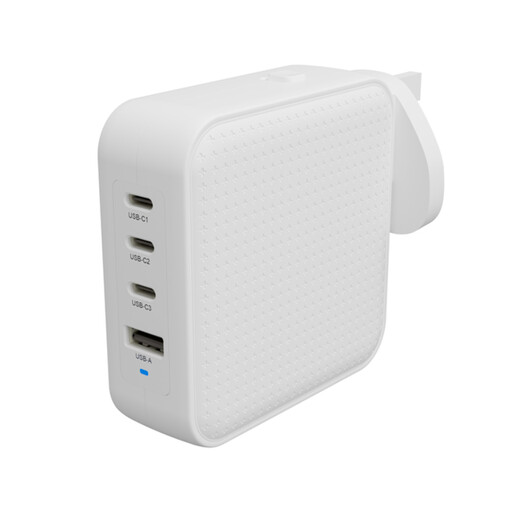
Why This Fits Their Persona: Business travellers and remote workers can charge a laptop, tablet, phone and accessory from one unit while moving between home, office and overseas accommodation.
Its specification lists three USB-C PD ports, one USB-A port, dynamic allocation and interchangeable EU, UK and AU plugs rather than relying on a single headline wattage.
Up to 100W total output, PD 3.0/PPS/QC support, 100–240V input and an included C8 desktop adapter support both travel and desk use.
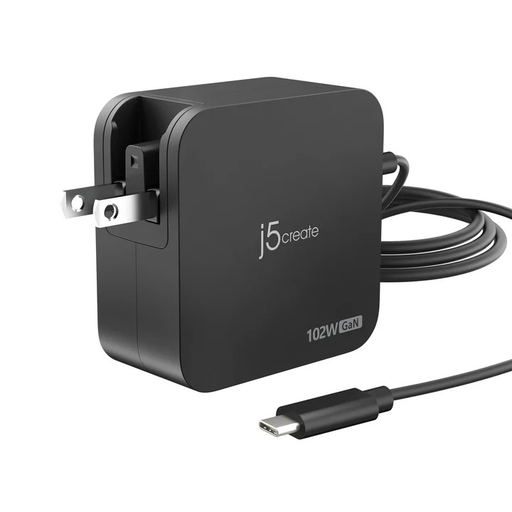
Why This Fits Their Persona: Users carrying a higher-powered laptop alongside a phone or tablet can use two USB-C PD connections without adding a second wall charger.
The specification separates 102W total output from the stated maximum 60W per USB-C port, helping buyers assess laptop suitability accurately.
It includes changeable AC plugs, a USB-C cable, 100–240V input and listed protection against overcurrent, overvoltage, short circuit and overheating.
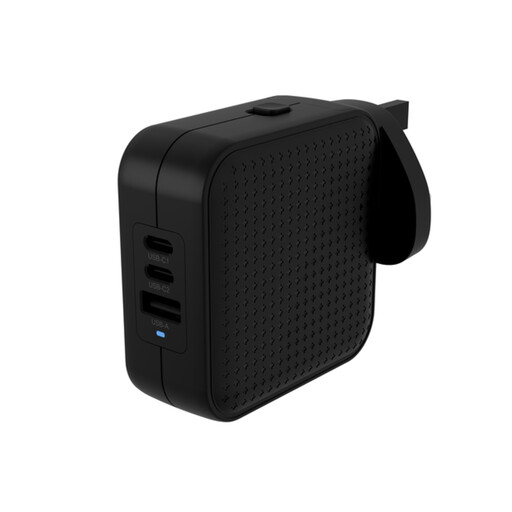
Why This Fits Their Persona: Travellers carrying a compact laptop, tablet and phone can use its three charging ports while retaining USB-A support for older accessories.
The 70W total rating, two USB-C PD ports and one USB-A port give a clearer picture of real multi-device use than a single-port claim.
It supports 100–240V input, includes interchangeable travel plugs and has an included C8 adapter for desktop positioning.
We have compiled a complete, real-time list of products that fully satisfy these strict selection criteria and UK safety regulations.
Check the input specification first. A charger marked 100–240V, 50/60Hz is designed for broad mains-voltage compatibility, but the wall connection still needs the correct plug arrangement. Interchangeable plugs or a suitable international travel adapter may be required. The destination’s socket type should be checked before departure.
Not necessarily. The laptop must support USB-C charging and its required wattage must be compatible with the charger’s available port output. A 100W total charger may provide less than 100W to one port, particularly when other devices are connected. Use a suitable cable and compare the charger with the laptop manufacturer’s requirements.