What should you check?
Start with the computer and desk you already have, then decide whether additional monitor connections would change how you use them.
| Priority |
What to check |
Your needs |
| Connections and charging |
Match a computer video output to a monitor input. For a one-cable setup, confirm USB-C video output, cable capability and whether the monitor’s power delivery meets the laptop maker’s charging requirements. Which? and Microsoft Support note that USB-C connections and cables do not all support the same features. |
I want to connect my laptop without discovering that its USB-C port cannot send a picture or that I still need a separate charger. |
| Screen position |
Measure desk depth and check height and tilt adjustment, plus swivel or pivot if you will use them. The Health and Safety Executive advises positioning the top of the screen around eye level and the screen about an arm’s length away. |
My screen needs to sit at a workable height while leaving room for a separate keyboard and mouse. |
| Document workspace |
Compare physical size with resolution: FHD is 1920 × 1080, while QHD is 2560 × 1440. Check that your computer supports the chosen display resolution and that the screen and stand fit the available space. |
I often keep documents or ordinary work windows open together, but a larger screen is only useful if I can position it comfortably. |
| Desk peripherals |
Count the USB devices and network connections you use regularly. If considering a hub, check the exact model for downstream USB, Ethernet and any two-device controls; also confirm the laptop connection those functions require. |
Repeatedly connecting peripherals is a nuisance at my fixed desk. If I use few of them, I would rather choose the display for its screen and stand. |
Relevant brand examples
These model-specific examples show why it is worth checking the exact display rather than assuming every monitor in a brand’s range has the same connections.
Dell
Dell’s Pro Plus range includes conventional QHD displays and USB-C hub variants for different desk setups.
- Dell UK lists the P2425D as a 23.8-inch QHD monitor with height, tilt, swivel and pivot adjustment.
- Dell UK lists up to 90W power delivery for the USB-C P2425HE; do not assume the P2425D has the same charging connection.
Lenovo ThinkVision
The ThinkVision P24h-30 is a 23.8-inch QHD option for a desk that also needs monitor-based connections.
- Lenovo UK lists USB-C, HDMI, DisplayPort, DisplayPort output, Ethernet and a USB hub for this model.
- Check the laptop’s USB-C video support and external-display limits before planning to use the monitor for docking or another display.
Samsung ViewFinity
The 24-inch ViewFinity S60UD combines a QHD display with connections aimed at a fixed laptop workspace.
- Samsung UK specifies USB-C charging and data transfer up to 90W, plus a LAN connection, for the S60UD.
- Compare the 90W output with your laptop’s charging needs and confirm that its USB-C port supports the intended display connection.
LG
The LG 24BA650-B is a 23.8-inch FHD USB-C monitor with an adjustable stand.
- LG UK specifies USB-C power delivery up to 65W and height, tilt, swivel and pivot adjustment for this model.
- Check whether 65W meets your laptop’s charging requirement and whether FHD provides the document workspace you want.
Joybuy monitor options
These options include desk-based external monitors and a second-screen option for laptop work. Compare each display’s size and stated connections with your own desk and computer.
 No image available
Dell P2425 24-inch monitor
A desk-monitor option for document work when you have room for a 24-inch screen. Match its inputs to your computer, and confirm the exact port functions before choosing it for a USB-C setup.
View on Joybuy
 No image available
Dell P2425H 24-inch Full HD monitor
Consider this for a 24-inch home desk display with a Full HD (1920 × 1080) IPS panel. The title lists DisplayPort, HDMI and USB-C; check the USB-C port’s video and charging functions if you intend to use them.
View on Joybuy
 No image available
AOC Q32V4 31.5-inch IPS monitor
A larger-screen option for a desk with sufficient width and viewing distance. Check its precise resolution and stand adjustments against your document layout and positioning needs before choosing it.
View on Joybuy
 No image available
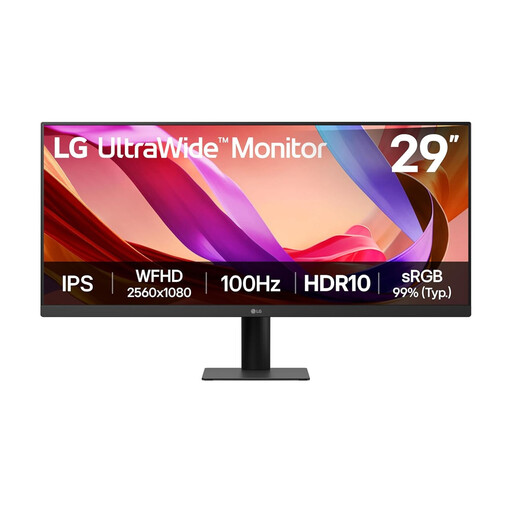
LG UltraWide 29U511A 29-inch monitor
The wide format is worth considering if you arrange documents side by side and have the desk width for it. Its title lists an IPS display, HDMI and DisplayPort; check the stand’s positioning options for your workspace.
View on Joybuy
 No image available
ASUS ZenScreen MB166CR FHD
Consider this as a second-screen option for laptop work rather than a larger fixed desk display. Confirm that your laptop supports the required USB-C video connection and that you can position the screen as needed.
View on Joybuy
Common questions
Will any laptop USB-C port work with a USB-C monitor?
No. Which? explains that USB-C carries monitor video only when the connection supports it, and Microsoft Support notes that USB-C cables differ in their capabilities. Check the laptop’s official video-output specification and the cable requirements before relying on one connection.
How can I tell whether a monitor will charge my laptop?
Compare the monitor’s USB-C power-delivery rating with the charging wattage specified for your exact laptop. Microsoft Support provides model-specific charging requirements for Surface Laptop devices; a monitor rated at 65W or 90W is not automatically suitable for every computer.
When is a separate dock or adaptor useful?
Consider one when your preferred display and computer lack matching connections or when the monitor does not provide the peripheral connections you need. Match the computer’s output, the monitor’s input and the cable or adaptor; do not assume a USB-C port supports video.
How should I arrange a monitor for prolonged laptop work?
The Health and Safety Executive advises using a separate keyboard and mouse so the screen can be raised, with the top of the screen around eye level and the display about an arm’s length away. Check that your desk depth and the monitor’s stand allow that arrangement.


