
24/7 Customer Support

Free returns

Same-day & Next-day Delivery

Quality Guaranteed

Unlock Your Welcome Offers: FREE Delivery | Up to 80% OFF | Free 30-day JoyPlus trial
Download the APP
As our devices, from the latest iPhone 15 to powerful MacBooks, have universally adopted the USB-C port, the humble charging cable has become more important than ever. Yet, buying a replacement or an upgrade isn't as simple as it seems. The market is flooded with options, and many fall short of their promises, leading to slow charging, frustratingly short lifespans and wasted money.
As a Joybuy Product Recommendation Officer, my role is to help you navigate this landscape. We will look past the marketing buzz and focus on the practical details that determine a cable's true performance and value. Let's identify the common pitfalls to avoid and the key features to look for.
To ensure you get a cable that performs well and lasts, focus on these three core specifications.
Wattage (W) is the single most important factor for charging speed. You must match the cable's power handling capability to your device's needs and your power adapter's output.
To achieve these speeds, your power adapter, cable and device must all support the same Power Delivery (PD) standard.
The material of the cable's outer jacket is a clear indicator of its longevity.
Consider how and where you will use the cable. A standard 1-metre cable is fine for desktops, but a 2m USB C cable offers far more flexibility for use at your bedside, on the sofa or in conference rooms where power sockets are further away.
For data, most charging cables support USB 2.0 speeds (480Mbps), which is adequate for syncing photos and music. If you regularly transfer large video files or backups, look for cables specifying USB 3.1 (10Gbps) or higher speeds, though these are less common and often command a premium.
Based on these practical criteria, here are a few options tailored to different user needs.
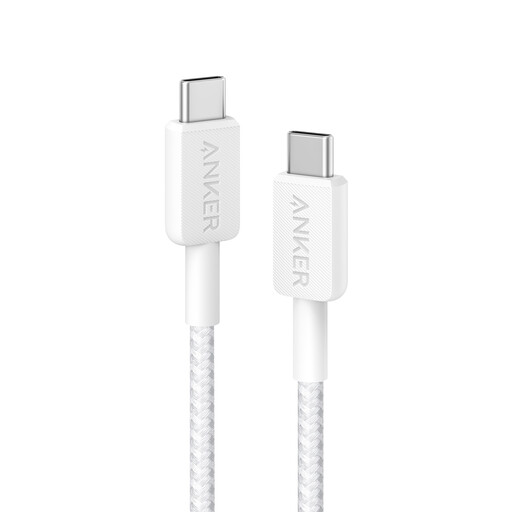
Why This Fits Their Persona: This is a reliable workhorse for charging an iPhone 15, Samsung Galaxy or tablet. The 60W output is also suitable for ultra-portable laptops, making it a versatile choice for daily commutes and office use.
The double-woven nylon braid directly counters the fraying connector flaw. It also clearly specifies 60W power, avoiding the "fast charge" mirage for devices that need more power.
USB-IF compliance ensures safe, reliable charging. Anker states it is proven to withstand up to 10,000 bends, offering peace of mind for long-term use.
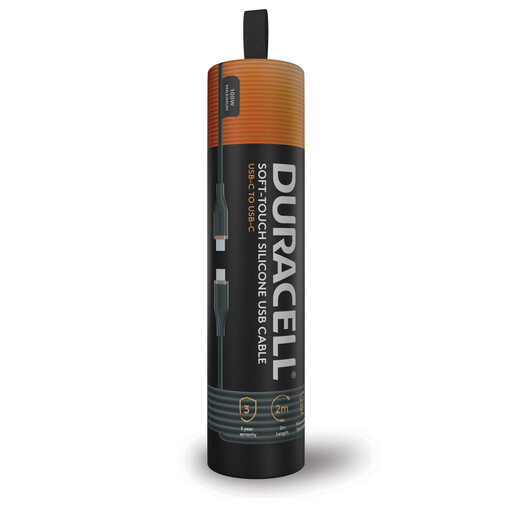
Why This Fits Their Persona: Ideal for professionals and students who rely on a powerful laptop. The 100W output handles demanding tasks, while the generous 2-metre length provides crucial flexibility whether at a hot-desk, in a meeting room or at home.
It delivers the genuine 100W power needed for a proper laptop charging cable USB C, avoiding the slow-charge pitfall. The kink-resistant silicone and double-braided nylon construction also addresses durability concerns.
Combines high power output with a long, flexible 2m cable. The soft-touch silicone finish is comfortable to handle and helps prevent tangling during storage and travel.
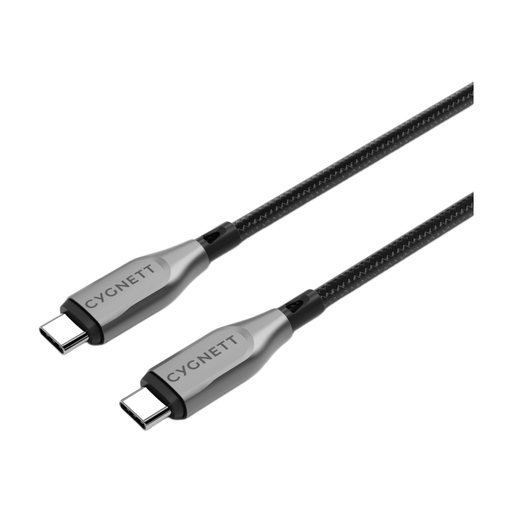
Why This Fits Their Persona: For the user who is tired of replacing frayed cables. This cable is specifically built for maximum strength, making it suitable for harsh environments, frequent travel or simply for anyone who values buying a product that is made to last.
Its construction, which includes DuPont Kevlar aramid fibre, a metallic alloy finish and a double-braided exterior, is the definitive answer to the fraying connector flaw.
Unmatched durability from its Kevlar reinforcement. It also supports 100W turbo charging and 10Gbps data speeds, offering top-tier performance alongside its strength.
We have compiled a complete, real-time list of products that fully satisfy these strict selection criteria and UK safety regulations.
No, they do not. A cable's ability to "fast charge" depends on its internal wiring and its certified power rating (wattage). A cable rated for 15W will not fast charge a laptop that requires 65W or 100W. Always check that the cable's wattage rating meets or exceeds the requirements of your device and power adapter.
Yes, you can. It is perfectly safe. USB Power Delivery (PD) is a smart technology. The charger, cable and device communicate to negotiate the correct amount of power. A 100W cable will only deliver the power your phone is designed to accept, so it will not cause any damage. Using a higher-rated cable is a good way to future-proof your purchase.
Look for clear specifications in the product description. Reputable brands will state the wattage (e.g., 60W, 100W), the data transfer speed (e.g., 480Mbps) and the materials used (e.g., braided nylon, silicone, zinc alloy connectors). Vague descriptions or an unusually low price are often indicators of a lower-quality product that may not perform as expected or last very long.