
24/7 Customer Support

Free returns

Same-day & Next-day Delivery

Quality Guaranteed

Unlock Your Welcome Offers: FREE Delivery | Up to 80% OFF | Free 30-day JoyPlus trial
Download the APP
A high-performance device like an iPhone 15, a new tablet or a powerful laptop deserves a cable that can keep up. It can be frustrating when your device's potential is limited by a slow, flimsy or unreliable cable. The market is filled with options, making it difficult to distinguish between a cable that will serve you well and one that will fail in a few months.
This guide is designed to help you understand the key features to look for in a USB-C to USB-C cable. We will explore what makes a cable suitable for your needs and present a few recommendations to simplify your search.
Choosing the right cable involves more than just matching the connector type. Here are a few practical considerations to help you make an informed decision.
Not all USB-C cables charge at the same speed. The key is to look for its power rating, measured in watts (W). A standard cable might only offer slow charging, while a USB C power delivery cable is designed for much faster speeds.
Always check the power requirements of your device and choose a cable that meets or exceeds them.
A cable's lifespan is often determined by its build quality. Frequent bending, pulling and twisting can cause standard cables to fray and fail. For a more resilient option, consider a durable USB C cable with reinforced construction.
A braided USB C cable, typically with a nylon exterior, offers significantly more protection against abrasion and tangling than a basic plastic-coated one. Some premium cables also incorporate materials like DuPont Kevlar fibre in their internal wiring, providing exceptional strength and resistance to stress at the connector points.
If you regularly transfer large files—such as videos, high-resolution photos or backups—between your devices, data transfer speed is a critical factor. This is measured in gigabits per second (Gbps).
Here are a few USB-C to USB-C cables that offer a strong combination of performance, durability and value for different user needs.
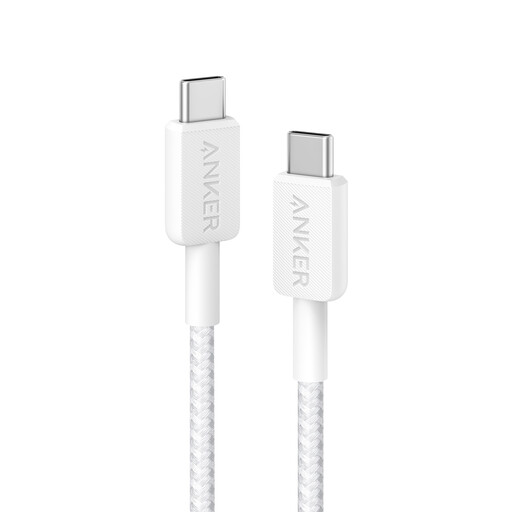
Why It Stands Out: The Anker 322 is a reliable workhorse for everyday charging. It supports 60W Power Delivery, making it a great fast charging USB C cable for a wide range of devices, from the iPhone 15 to Samsung flagships and iPads. Its double-braided nylon construction is designed for longevity, and Anker states it has been tested to withstand up to 10,000 bends. It is also USB-IF compliant, ensuring safe and compatible charging.
Pros:
Who is it for? This cable is ideal for users who need a dependable and durable replacement for their phone or tablet's original cable, offering a significant upgrade in build quality and charging performance for daily use.
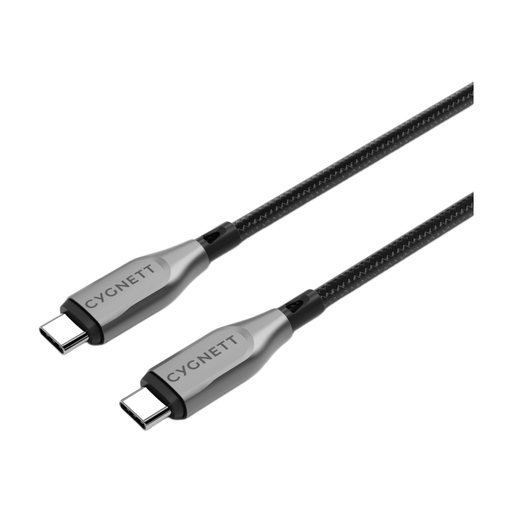
Why It Stands Out: For those who demand maximum performance, the Cygnett Armoured cable delivers on both power and speed. It is a 100W USB C cable, capable of charging even the most demanding USB-C laptops at full speed. It also boasts an impressive 10Gbps data transfer rate, making it suitable for professionals who handle large media files. The construction is exceptionally robust, featuring DuPont Kevlar aramid fibre reinforcement, metallic alloy connectors and a double-braided nylon jacket.
Pros:
Who is it for? This is the cable for power users, creative professionals and anyone needing a single, high-performance USB C cable for laptop and other devices. Its combination of speed and strength justifies its position as a premium option.
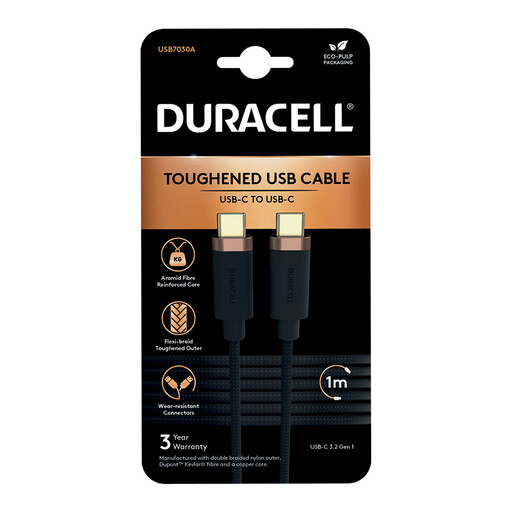
Why It Stands Out: This Duracell cable strikes an excellent balance between power, speed and ruggedness. It delivers up to 65W, making it a versatile choice for fast-charging phones, tablets and many mainstream laptops. It also supports SuperSpeed data transfer at 5Gbps. Like the Cygnett cable, it features an internal core of Dupont Kevlar fibre and a double-braided nylon exterior, ensuring it can withstand daily wear and tear. The 1m USB C cable length is practical for most situations.
Pros:
Who is it for? This cable is a superb all-rounder for users who want a durable, high-performance cable that can handle more than just a smartphone, without necessarily needing the full 100W capacity for a high-end laptop.
If the recommendations above don't quite match what you're looking for, or if you need a different length or specification, there is a wider variety to explore.
? Browse our full range of OTG Type C Cables
No, not all of them do. A cable must be specifically designed to handle higher wattage to enable fast charging. Look for terms like "Power Delivery" or a specific wattage rating (e.g., 60W, 100W) in the product description to ensure it is a fast charging USB C cable.
The main difference is the maximum amount of power they can safely deliver to a device. A 60W cable is perfect for smartphones, tablets and some smaller laptops. A 100W USB C cable is required to charge larger, more powerful laptops at their intended speed. Using a 60W cable on a laptop that requires 100W will lead to much slower charging.
Yes, you can use any compliant USB-C to USB-C cable with an iPhone 15. However, to take advantage of its fast-charging capabilities, you will need a cable that supports at least 20W of Power Delivery, paired with a compatible power adapter. All the cables recommended in this guide exceed that requirement, making them an excellent USB C cable for iPhone 15.