
24/7 Customer Support

Free returns

Same-day & Next-day Delivery

Quality Guaranteed

Unlock Your Welcome Offers: FREE Delivery | Up to 80% OFF | Free 30-day JoyPlus trial
Download the APP
As our devices become more powerful, the humble charging cable has become a critical accessory. From the latest iPhone 15 and Samsung Galaxy S24 to a power-hungry MacBook or iPad Pro, the right USB C to USB C cable is essential for fast, safe charging. Yet, the market is flooded with options and it's easy to make a poor choice.
As a Joybuy Product Recommendation Officer, my role is to help you navigate the clutter. Many cables fail to deliver on their promises, leading to slow charging, frustrating tangles or a broken connector after just a few months. Before you buy, let's look at the common pitfalls to avoid.
To ensure you get a cable that meets your needs, focus on these core parameters.
This is the most important factor for charging speed. Power Delivery (PD) is the technology that allows for high-speed charging. Your cable must be rated to handle the power your device and charger can provide.
Remember: To get the full benefit, your power adaptor (the wall plug) must also support the desired wattage.
A cable's lifespan is determined by its construction, not just its appearance.
Consider where you'll be using the cable most often.
We've selected a few options from our catalogue that align with specific user needs, helping you avoid the common purchasing traps.
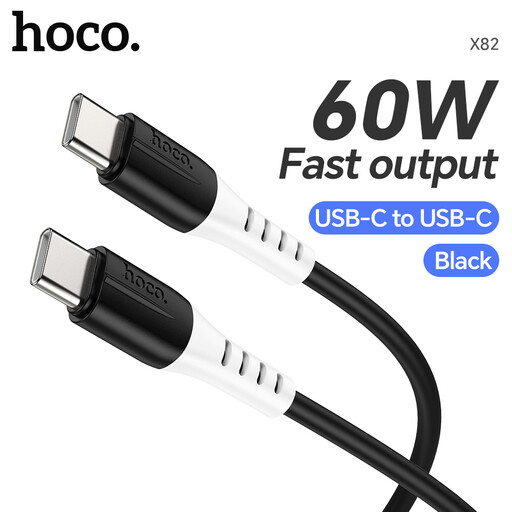
Why This Fits Their Persona: This is a practical, no-fuss cable for charging smartphones, tablets and lightweight laptops. The 60W power is more than enough for fast-charging an iPhone or Samsung device, making it a reliable daily driver.
It avoids the wattage myth by being clearly rated for 60W, a perfect match for most users' needs without over-promising. Its food-grade silicone jacket directly counters the durability deception of cheap, stiff cables by being incredibly flexible and tangle-resistant.
The soft-touch silicone material prevents tangles and kinks. It provides reliable 60W PD cable performance for a wide range of devices.
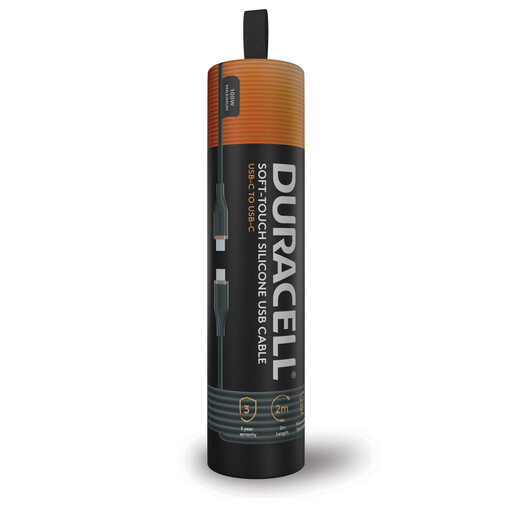
Why This Fits Their Persona: For those charging a MacBook charging cable replacement or for a high-power laptop, this cable delivers. The 100W capability and generous 2-metre length offer the performance and flexibility needed for a professional working at a desk or a user who needs to reach awkward sockets.
This cable delivers a genuine 100W, avoiding the power myth for users who truly need it. Its construction, featuring a double-braided nylon outer and a Dupont Kevlar fibre core, directly addresses the durability deception by focusing on internal strength and wear-resistant connectors.
Delivers a full 100W fast charging capability. The 2m USB C cable length provides superior convenience and the premium materials ensure long-term durability.
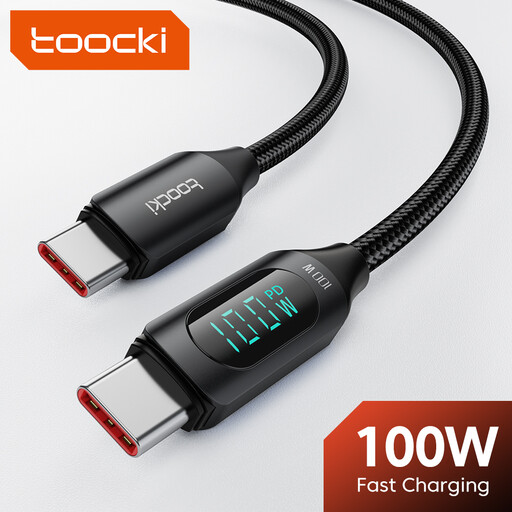
Why This Fits Their Persona: This cable is for the user who appreciates data and visibility. The built-in LED display shows the real-time wattage, offering instant feedback on charging performance and helping to diagnose any bottlenecks in the charging setup.
It actively debunks the wattage myth by showing you the *actual* power being delivered. If you see a low number, you know the issue is with the charger or device, not the cable. The high-density nylon braid and aluminium alloy connectors also address durability concerns head-on.
The smart LED digital power display provides unique, real-time charging information. It supports up to 100W, making it a versatile fast charging cable for all modern devices.
We have compiled a complete, real-time list of products that fully satisfy these strict selection criteria and UK safety regulations.
This is a common issue with a simple explanation. For a fast charging cable to work, three components must be compatible: the device (e.g., your smartphone), the power adaptor (the plug) and the cable itself. If you use a powerful 100W USB C cable with an old 20W power adaptor, your device will only receive 20W of power. Always ensure your power adaptor's wattage matches the speed you want to achieve.
No, it is not necessary. While a 100W cable is perfectly safe to use, the iPhone 15 series charges at a maximum rate of around 27W. A standard 60W PD cable is more than sufficient to charge your iPhone at its fastest possible speed and is often a more economical choice. A 100W cable is only required for high-power devices like a MacBook charging cable.
The lifespan of a Type C to Type C cable depends heavily on its build quality and how it is used. A cheap, poorly made cable might fail in as little as three to six months, typically at the connector joint. A high-quality cable with reinforced strain relief, durable materials like braided nylon or robust silicone and solid connector housings should last for several years of daily use.