
24/7 Customer Support

Free returns

Same-day & Next-day Delivery

Quality Guaranteed

Unlock Your Welcome Offers: FREE Delivery | Up to 80% OFF | Free 30-day JoyPlus trial
Download the APP
With nearly every new phone, tablet and laptop adopting the USB-C port, you would think picking a charging cable would be simple. Yet, as many of us have discovered, not all cables are created equal. One might charge your laptop in an hour, while another barely keeps the battery from draining. Some fray within weeks, while others seem built to last.
The universal connector has, ironically, created a universe of confusion. This guide is here to help you cut through the clutter. We will break down the essential features to look for in a USB C to USB C cable and highlight a few standout options that deliver on performance and durability for UK users.
Before you add a cable to your basket, consider these key factors to ensure it meets your needs.
The most critical feature is Power Delivery (PD), measured in watts (W). This determines how quickly your device can charge. A 60W Type C cable is generally sufficient for most smartphones and tablets, including as an iPhone 15 charger cable or a Samsung fast charge cable. However, for power-hungry devices like a high-performance laptop, you will need a 100W PD cable to charge at full speed. Using an underpowered cable on a laptop may result in slow charging or even battery drain while plugged in. Always check your device's power requirements.
The lifespan of a cable often comes down to its construction. Standard plastic-coated cables can be prone to splitting and fraying, especially at the connector joints. For a more robust alternative, consider a braided USB C cable. The woven nylon sheath provides extra protection against daily wear and tear, bending and tangling. Connectors made from materials like zinc alloy also offer superior resilience compared to basic plastic housings.
While your primary goal might be charging, it is worth noting that not all cables handle data equally. Most USB-C charging cables transfer data at USB 2.0 speeds (around 480 Mbps), which is perfectly adequate for syncing music or photos. If you frequently move large files, such as 4K video or project backups, you may want to look for a dedicated USB C data cable that specifies USB 3.1, USB 3.2 or Thunderbolt 3/4 speeds for significantly faster transfers.
Based on features, build quality and user needs, here are our recommendations for reliable USB-C to USB-C cables.
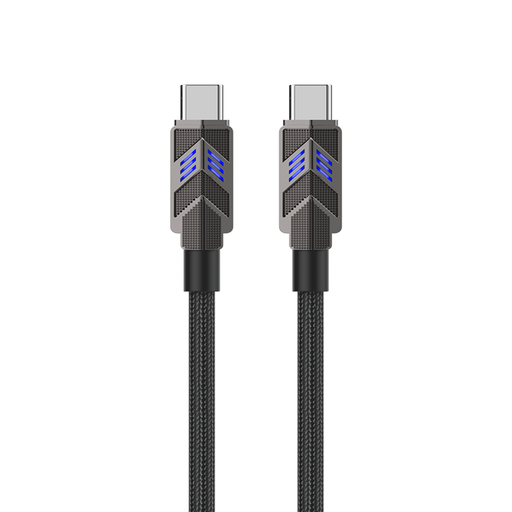
Why It Stands Out This cable is designed for both power and intelligence. Its standout feature is the smart power-off chip, which works with a colour-changing LED indicator. The light glows red during charging and switches to blue when your device is full, automatically entering a trickle-charge mode. This helps protect your device's battery health over the long term.
Pros
Who is it for? This is an excellent choice for tech-savvy users who want a single, powerful cable for all their devices, from phones to high-performance laptops. It is particularly suited for those who are conscious of battery longevity and appreciate visual feedback on their charging cycle.
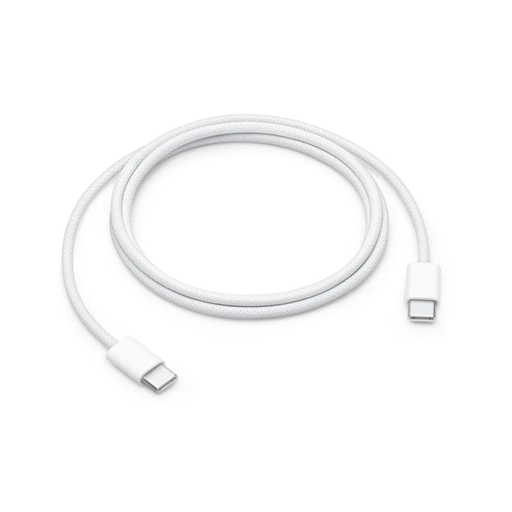
Why It Stands Out For those within the Apple ecosystem, this official cable offers seamless compatibility and reliability. The woven design is a significant improvement over Apple's older plastic cables, offering much better resistance to fraying and tangling. It’s built to work flawlessly with iPhone, iPad and Mac.
Pros
Who is it for? Apple users who prioritise guaranteed compatibility and appreciate the improved durability of the new woven design. It is the go-to iPhone 15 charger cable or a reliable spare for an iPad or MacBook Air.
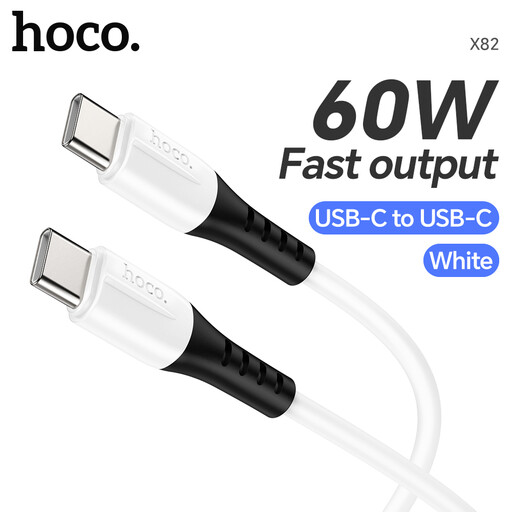
Why It Stands Out The HOCO X82 distinguishes itself with its soft, highly flexible silicone finish. Unlike stiffer braided or plastic cables, this one is exceptionally pliable and resistant to tangles, making it easy to store and use on the go. The reinforced joints add durability where it matters most.
Pros
Who is it for? This is a practical and affordable option for everyday use. It is ideal for anyone needing a reliable Samsung fast charge cable or a spare for their phone or tablet, especially those who prefer a more flexible, tangle-free cable for their bag or desk.
If these recommendations do not quite match what you are looking for, whether you need a different length, colour or specific feature, there are many other choices available. You can browse a wider selection of electronic accessories to find the perfect fit for your setup.
Explore our broader collection in the Black electrical wire category for more options.
No, they do not. A cable's ability to fast-charge depends on its Power Delivery (PD) rating, measured in watts (W). A basic cable might only support 15W, whereas a proper fast charging USB C cable will be rated for 60W, 100W, or more. To ensure fast charging, you must use a cable, a power adapter and a device that all support the same high-wattage standard.
Yes, absolutely. The USB-C Power Delivery system is designed to be safe and smart. The charger, cable and your device communicate to negotiate the correct amount of power. Your phone will only draw the 30W it needs, so using a higher-rated 100W PD cable is perfectly safe and a good way to future-proof your purchase for more powerful devices down the line.
While all charging cables can also transfer data, their speeds can differ greatly. The majority of standard and fast-charging cables operate at USB 2.0 speeds (around 480 Mbps), which is fine for everyday tasks like syncing music. However, a specialised high-speed USB C data cable will support faster protocols like USB 3.2 or Thunderbolt, offering transfer rates many times faster. These are necessary only if you regularly move very large files, like raw video footage or large design projects.