
24/7 Customer Support

Free returns

Same-day & Next-day Delivery

Quality Guaranteed

Unlock Your Welcome Offers: FREE Delivery | Up to 80% OFF | Free 30-day JoyPlus trial
Download the APP
A suitable USB-C wall charger for UK shoppers should do more than fit a socket. It needs enough power for your device, the right charging protocol, sensible port options and a design that suits daily use.
The wrong choice can leave you with slow charging, a bulky adapter or a charger that cannot power a tablet or laptop properly. Before buying, look beyond phrases such as “fast charger” and check the technical details that affect real-world compatibility.
A charger may advertise 40W, 65W or more, but that figure can apply only when one port is in use. When two or more devices are connected, output may be divided between them.
For example, the Baseus GaN5 Pro has two USB-C ports, each rated up to 40W individually, while its stated dual-port distribution is 20W + 20W. That is useful for charging two phones, but it is not the same as delivering 40W to both devices simultaneously.
USB-C describes the connector shape, not the charger's power level. A small 20W USB-C charger is generally suited to phones and smaller accessories, while many laptops need 45W, 65W or more.
Check your laptop’s original adapter or manufacturer specifications before choosing a 65W laptop charger or a higher-output model. A charger with insufficient wattage may charge slowly, maintain the battery level or fail to charge while the laptop is being used.
A GaN wall charger uses gallium nitride components, which can help manufacturers create smaller high-output designs. However, GaN does not automatically mean that a charger has more ports, higher output or better compatibility.
The important checks remain the power rating, USB Power Delivery support, port allocation and safety information.
A USB-C PD charger uses the USB Power Delivery standard to negotiate a suitable voltage and current with a compatible device. This can support faster charging than basic USB output, but the phone, tablet, laptop and cable must all support the required configuration.
Look for output profiles such as 5V, 9V, 12V, 15V or 20V, where listed. A charger offering 20V at 3.25A, for example, can provide up to 65W under the stated conditions. The device will normally draw only the power it is designed to accept.
Use your main device as the starting point:
A higher-rated charger will not force excessive power into a compatible device. It may, however, be larger or more expensive than necessary.
For everyday use in Britain, a UK plug charger should be designed for a standard UK mains outlet. Some travel models include separate UK and EU power cords rather than an integrated UK pin design, so check what is included.
Input ratings such as AC 100–240V or AC 110–240V are useful for travel, but they do not replace the need for an appropriate plug or cable. Also look for clearly stated protections such as over-current, over-voltage, short-circuit and overheating protection. Stop using any charger with cracked casing, loose pins, smoke, unusual sounds or excessive heat.
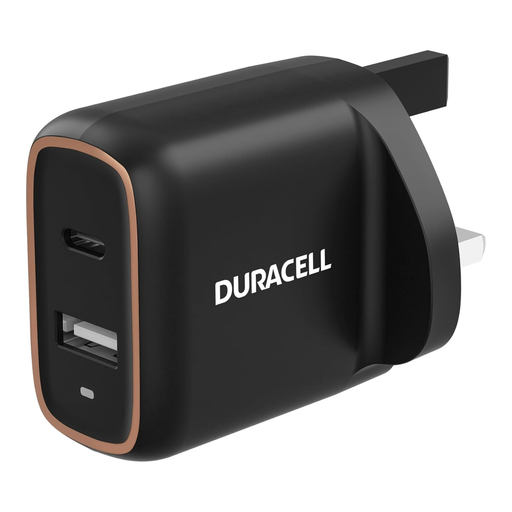
Why This Fits Their Persona: A practical option for students, commuters and households charging a phone alongside an older USB-A device.
The UK plug is specified, and the two-port layout makes the shared-use purpose clear rather than implying two full-power USB-C outputs.
20W USB-C Power Delivery, one USB-A port and simultaneous charging for two devices.
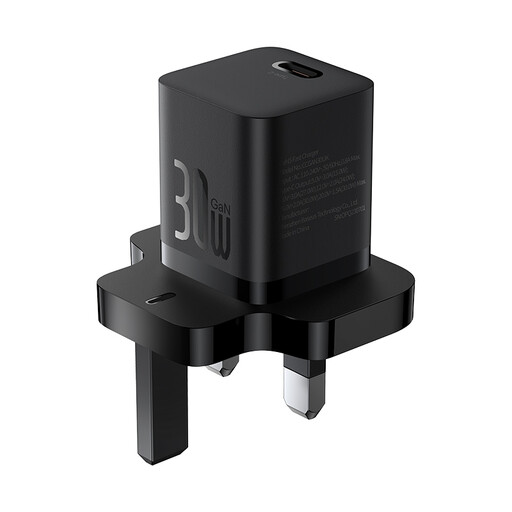
Why This Fits Their Persona: Its 51.5g compact format suits business travellers and commuters who want a pocket-sized single-device charger.
Its specification clearly identifies one USB-C port and a 30W maximum, helping prevent assumptions about multi-device charging.
GaN5 design, 30W USB-C PD output, 110–240V input and dimensions of 4.9 × 4.4 × 4cm.
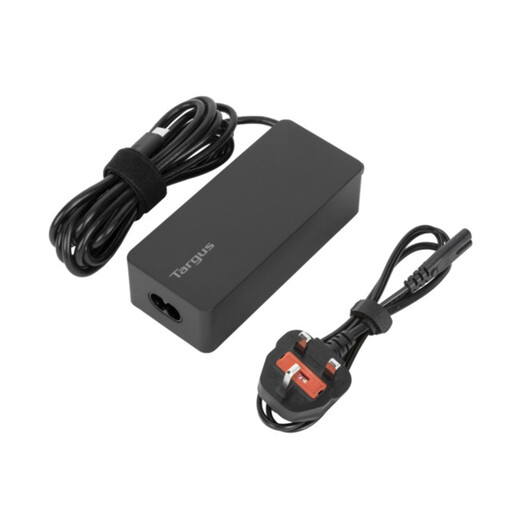
Why This Fits Their Persona: A sensible match for laptop users, office workers and travellers carrying a USB-C laptop, tablet and phone.
The stated 65W output makes it easier to compare against a laptop’s required wattage, while over-current, overheating and over-voltage protection are listed.
65W USB-C PD, 1.8m cable, cable tie and both EU and UK power cords included.

Why This Fits Their Persona: Two USB-C ports are convenient for a shared home office, family charging point or overnight bedside setup.
The product specification states both the single-port 40W profiles and the 20W + 20W maximum total when both ports are used.
GaN technology, two USB-C ports, 40W single-port output and 110–240V input.
We have compiled a complete, real-time list of products that fully satisfy these strict selection criteria and UK safety regulations.
Yes, provided it has a suitable UK plug or includes a UK power cord. Check the product listing carefully, especially for travel adapters that may be supplied with EU and UK cords separately.
The charger’s maximum wattage is not the same as its constant electricity use. A phone draws the power it needs, while the charger’s efficiency and standby consumption affect running costs. Unplug it when it is not required if you want to avoid unnecessary standby use.
Lifespan depends on build quality, heat, cable strain and handling. Keep the charger dry and ventilated, avoid covering it during use and replace it if the casing, pins or cable connection becomes damaged. A clear warranty, such as the three-year warranty listed for the Duracell model, can also provide useful purchase reassurance.