Single-tablet hotel guests
If you only need to charge a tablet, start with its connector, the right cable and a charger that meets its stated power requirements. A second port need not decide your choice.


For one tablet, choose a charger and cable that meet its model-specific requirements: Apple lists a USB-C output and at least 15 W in its general iPad guidance, but specifies 60 W or more for iPad Pro (M5) fast charging. If one hotel socket must serve two devices, check how a multi-port charger divides its output. For a hotel abroad, check the charger’s input rating and the destination socket: Electrical Safety First notes that a plug adaptor does not convert voltage or frequency.
If you only need to charge a tablet, start with its connector, the right cable and a charger that meets its stated power requirements. A second port need not decide your choice.
If a tablet and phone must share one conveniently placed socket, check both the number of ports and the power available when both are in use.
If the hotel socket differs from your charger’s plug, check the destination socket, the charger’s input rating and the adaptor’s rating. Electrical Safety First notes that a travel adaptor changes plug fit, not voltage or frequency.
Match the charger and cable to your tablet before deciding whether extra ports or higher output would be useful during your stay.
| Concern | What to check | Who this matters to |
|---|---|---|
| Tablet and cable compatibility | Confirm the tablet model, cable ends and the manufacturer’s charging requirements. Apple’s general iPad guidance lists a USB-C output and at least 15 W for a third-party adapter. | If my cable cannot connect to the charger or tablet, extra output will not help. Around 36% of consumers would put correct tablet-and-cable compatibility first. |
| Sharing one socket | Check the port types and the output available with both devices connected, not just the charger’s total rating. | When my tablet and phone need the same hotel socket, I want both connected without assuming each gets full power. For around 21% of consumers, charging two devices is the primary need. |
| Plug and supply compatibility | For a hotel abroad, compare the socket type and electrical supply with the charger’s input label; check any adaptor’s rating. Electrical Safety First says adaptors do not convert voltage or frequency. | Before packing for a hotel abroad, I need to know whether my charger will fit and can use the local supply. That would be the leading concern for around 29% of consumers. |
| Charging in a short window | Check the exact tablet’s fast-charge requirements and whether the charger supplies the required output through one port. Apple specifies a USB-C cable and a compliant adapter of at least 60 W for iPad Pro (M5) fast charging. | If I have little time in the room, model-specific fast charging matters more to me than a high wattage printed on the box. Around 14% of consumers would prioritise a faster top-up. |
Charging requirements vary by model. Apple’s general iPad guidance lists a 15 W minimum for the third-party USB-C adapters it covers, whereas its iPad Pro (M5) fast-charge setup requires at least 60 W.
Look up your exact tablet’s charging guidance before choosing output solely for speed.
Belkin states that its 45 W Dual USB-C GaN Wall Charger with PPS supplies up to 45 W using one port, or up to 25 W and 20 W with both ports occupied.
Check the multi-port output allocation if the tablet and another device will charge together.
Electrical Safety First says a travel adaptor changes the physical connection but does not convert voltage or frequency. An unsuitable or damaged adaptor can also create a safety risk.
Check the destination supply, the charger’s input label and the adaptor’s rating before use.
A charger needs ventilation, and visible scorch marks or damage are reasons not to use it. Electrical Safety First advises against charging overnight or unattended.
Inspect the charger and cable, keep the charger uncovered on a dry surface, and follow the charger’s and hotel’s instructions.
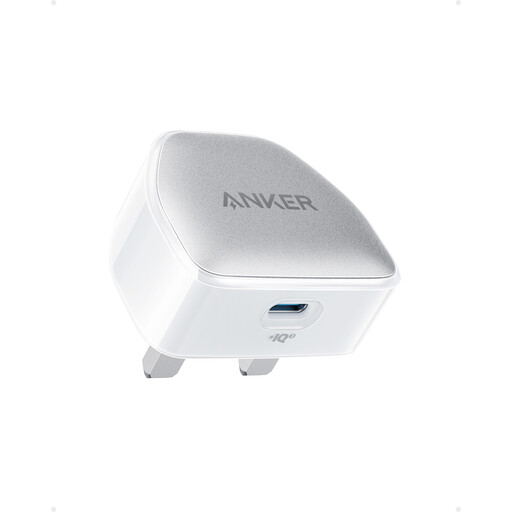
Anker’s Nano Charger (45W) with USB-C Cable is an example of a compact, foldable charger for a single-device setup.
Belkin’s 45 W Dual USB-C GaN Wall Charger with PPS illustrates a two-device option for a shared hotel socket.
Samsung’s cited 45 W USB-C wall charger is relevant when checking a Galaxy tablet’s model-specific charging setup.
These chargers offer different output ratings and port arrangements for tablet charging during a hotel stay. Check the exact tablet and cable first, and confirm plug fit and input rating before using any charger abroad.
 No image available
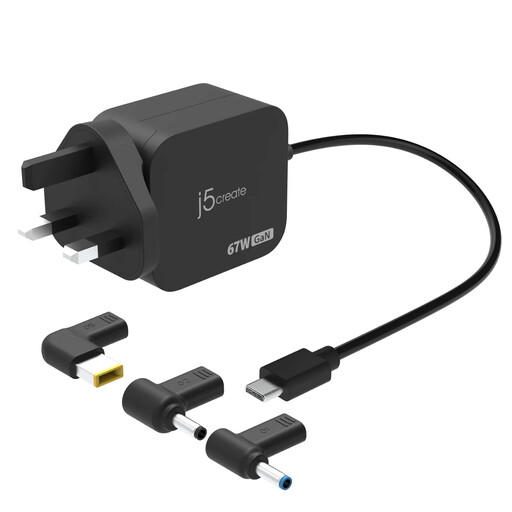
Consider this UK variant if your tablet’s charging requirements suit a 67 W USB-C PD charger. Check the cable you need, and do not assume the DC connectors fit your tablet; confirm the physical dimensions if packing space matters.
 No image available
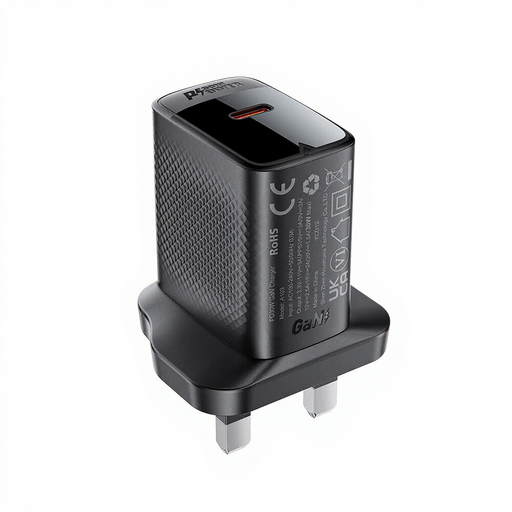
This 30 W USB-C option suits a one-device setup if its output meets your tablet’s requirements. Check that you have the correct cable; for travel abroad, confirm the charger’s input rating.
 No image available
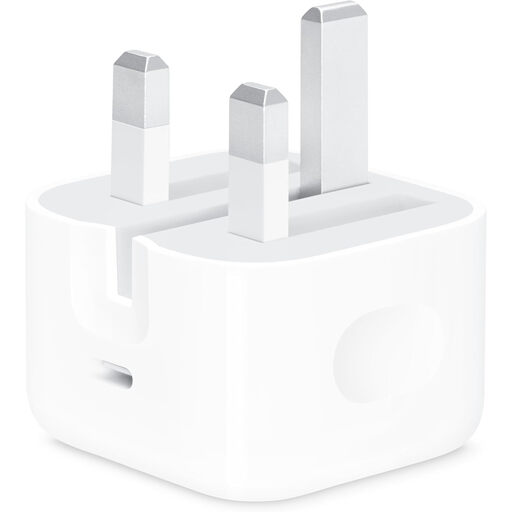
For a compatible iPad, this 20 W USB-C adapter is a one-device option; its output should not be mistaken for the 60 W-or-higher adapter Apple specifies for iPad Pro (M5) fast charging. A cable is not included, so choose one that fits your iPad model.
 No image available
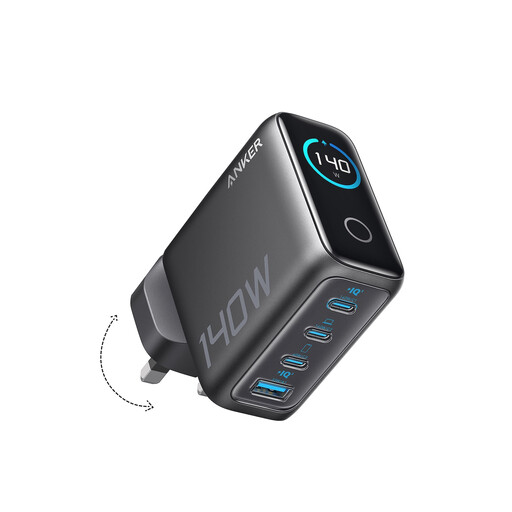
Consider a four-port charger if your tablet must share a hotel socket with other devices. The 140 W rating does not tell you what each device receives simultaneously; check the multi-port allocation, plug type and input rating for your stay.
 No image available
This compact 20 W USB-C charger is worth considering for one tablet if the exact model’s charging requirements suit it. Before packing it, confirm tablet compatibility, plug fit, the cable you need and the input rating for your destination.
Start with the exact tablet model’s charging requirements, not a wattage that sounds sufficient for every device. Apple’s general iPad guidance lists a USB-C output and at least 15 W for a third-party adapter, while its iPad Pro (M5) fast-charge guidance specifies a compliant adapter of at least 60 W and a USB-C cable.
Pack the cable your tablet requires unless your chosen charger bundle includes it. Apple notes that iPad cable type varies by model, so check whether yours needs USB-C-to-USB-C or USB-C-to-Lightning rather than relying on the charger’s USB-C port alone.
It can charge two compatible devices together, but the output available to each depends on the charger’s allocation. Belkin specifies up to 45 W from one port on its cited dual-USB-C model, changing to up to 25 W and 20 W when both ports are used.
You can use it only if its input rating suits the destination supply and you have a suitable connection to the hotel socket. Electrical Safety First advises checking the destination and adaptor rating; a travel adaptor changes plug fit but does not convert voltage or frequency.
Electrical Safety First advises against using USB chargers overnight or unattended. Keep the charger uncovered and ventilated while it is in use, and follow the charger’s and hotel’s instructions.