Headphones-only overnight travellers
If you are charging just one pair of headphones or one charging case, concentrate on the required cable and charger port rather than extra ports you will not use.


Choose a charger that accepts the cable required by your headphones or charging case, then decide whether you need a second port for another device. A single-port USB-C charger can cover a one-device stay; if a phone will share the socket, check the multi-port charger’s output when both ports are in use. For a hotel abroad, check the destination socket and the charger’s input rating before you travel.
If you are charging just one pair of headphones or one charging case, concentrate on the required cable and charger port rather than extra ports you will not use.
If your headphones and phone or tablet must share a hotel socket, check that the charger accepts both cables and how its output is allocated when both ports are occupied.
For a stay outside the UK, check the destination socket and the charger’s input rating as well as its USB connection. Electrical Safety First notes that a travel adaptor changes plug fit, not voltage or frequency.
Start with the connection your headphones require and how you can charge them safely. Then consider a second device or an overseas socket if either applies to your stay.
| Concern | Buying checks | Who this matters to |
|---|---|---|
| Cable and headphone compatibility | Check the headphone or case connection, the cable’s charger-end connector and the maker’s charging instructions. Sony UK Support warns that charging-only cables can cause problems for some of its headphones. | If my headphones need a particular cable, I want a charger port it actually fits. Around 36% of consumers would put connection compatibility first. |
| Electrical safety | Choose an undamaged charger and cable, and keep the charger dry and uncovered during use. Electrical Safety First advises against charging overnight or while away. | When charging in a hotel room, I want to keep the charger clear of bedding and unplug it when charging is complete. Safe use would come first for roughly 29% of consumers. |
| Sharing one socket | Match the ports to both cables and check the stated output with both ports occupied. A total wattage figure alone does not describe every port’s simultaneous output. | If my phone and headphones need the same socket, I want to know whether both can be connected as intended. About 21% of consumers would make two-device charging their primary concern. |
| Overseas use | Check the destination socket, the charger’s input label and any travel adaptor’s rating. Electrical Safety First notes that adaptors do not convert voltage or frequency. | For a hotel abroad, I need the plug to fit and the charger to suit the local supply. Destination compatibility would be the main concern for around 14% of consumers. |
The connection on the headphones or case does not necessarily match the end of the cable that goes into the wall charger. Apple documents different cable requirements across AirPods models, while Sony UK Support cautions that charging-only cables can be problematic for some headphones.
Identify both cable connectors and follow the charging instructions for your exact model before choosing a charger port.
If your existing lead does not fit, you may need a suitable replacement cable or a different charger.
Output can change when two devices are connected. The BluCore dual-port listing on Joybuy specifies 5V/3A combined output when both ports are used, rather than its advertised 30W single-port maximum.
Read the exact charger model’s per-port and combined-output details before relying on it for headphones and a second device.
A charger needs a clear space during use. Electrical Safety First advises against using USB chargers overnight or while away.
Keep the charger dry and uncovered, away from bedding and curtains, and unplug it after charging where practical.
Electrical Safety First explains that a travel adaptor changes the plug connection but does not convert voltage or frequency.
Before departure, compare the destination socket and mains supply with the charger’s input label, and check the adaptor’s maximum rating.
You may need to carry a suitable travel adaptor as well as the charger.
Anker’s A2337 is an example of a compact, single-port USB-C charger to consider when only one compatible device needs the socket.
Belkin’s WCB006 dual USB-C charger illustrates an option for headphones and another device that both use suitable USB-C cables.
Apple’s 35W Dual USB-C Port Power Adapter is relevant if you want to charge AirPods and another compatible Apple device from one socket.
These UK-plug chargers offer USB-C charging connections, with different port arrangements for a hotel stay. Match the charger to your headphone cable and charging instructions before deciding whether extra ports are useful.
 No image available
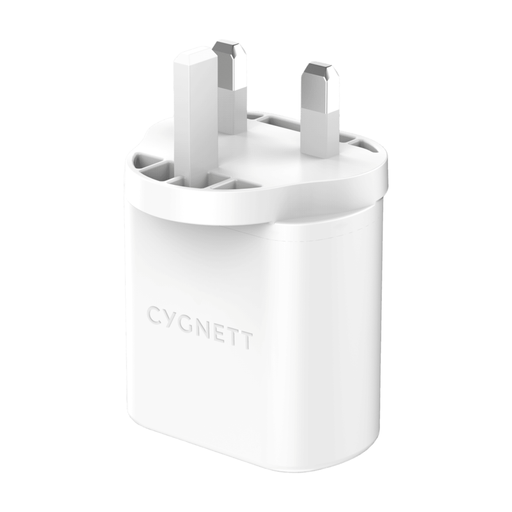
Consider this if you want two charger ports at one hotel socket and your headphone cable matches a port. It is a 32W USB-C dual-port wall charger with a UK plug; check the output available when both ports are used.
 No image available
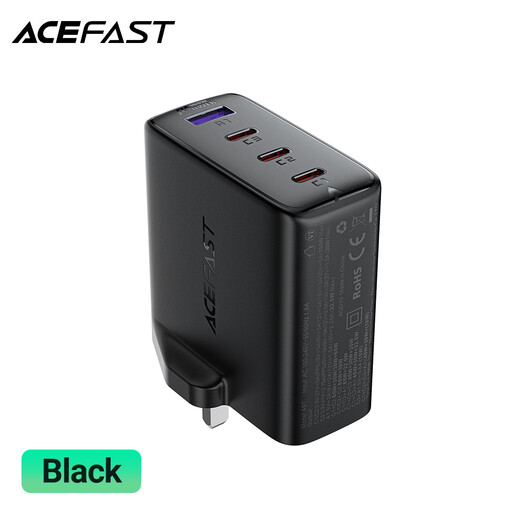
Consider the mixed USB-C and USB-A ports if the devices you take to the hotel use different cable ends. This UK-version charger has three USB-C ports and one USB-A port; check the output when multiple ports are occupied and follow your headphone maker’s charging instructions.
 No image available
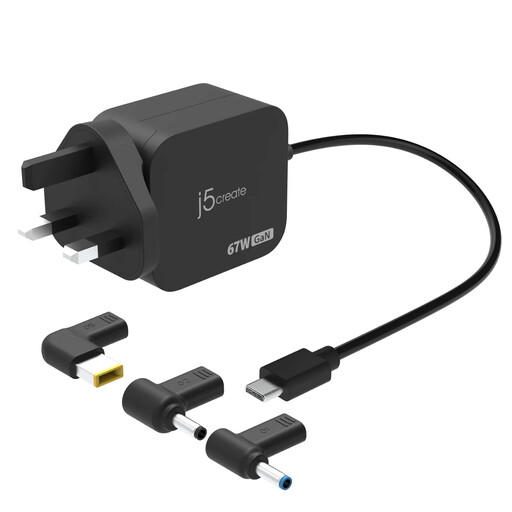
Consider its USB-C charging connection only if it suits the cable and instructions for your headphones. This UK-version 67W charger is listed with three types of DC connector; those connectors do not establish headphone compatibility.
Check the charging instructions for your exact headphones or case before using one. Electrical Safety First explains that fast USB chargers can negotiate higher voltages, but a charger’s advertised wattage alone does not establish compatibility; Sony UK Support specifies particular adapter limits for some of its products.
You may need one if your existing cable does not fit the charger or a cable is not included. Apple sells its 35W Dual USB-C Port Power Adapter without a charging cable, and Apple Support says the cable required for AirPods depends on the model.
Electrical Safety First advises against using USB chargers overnight or while away. Keep the charger dry, uncovered and clear of bedding and curtains, and unplug it when charging is complete where practical.
Only after checking the destination socket and the input rating on that charger. Electrical Safety First notes that a travel adaptor does not convert voltage or frequency, so plug fit alone is not enough.