Computer-library headphone listeners
If your music files are on a computer, tablet or phone, start with the device’s USB connection and your headphone plug. The source device and music app remain part of the playback setup.


Choose a USB headphone DAC around your source device and headphones before comparing maximum file-format figures. A higher-output dongle is worth assessing for demanding wired headphones, a battery-powered unit offers a different fit for portable listening with sensitive in-ear monitors, and a compact USB DAC may suit a simpler computer setup. Each route still depends on compatible ports, headphone connections and player settings.
If your music files are on a computer, tablet or phone, start with the device’s USB connection and your headphone plug. The source device and music app remain part of the playback setup.
If headphone output capability matters to your setup, compare the DAC/amp’s stated output and recommended headphone range with your exact headphones. A 4.4 mm output is relevant only if your cable has a compatible balanced termination.
If you carry a local library and use sensitive in-ear monitors, consider how you will power and carry the DAC, and whether its level controls suit your earphones.
For a local music library, identify the device that will play your files, then match its connection and your headphones to the DAC. Portability and low-level control can change the choice even when two devices support the same files.
Consider it: If your wired headphones call for more output, or you already have a compatible 4.4 mm balanced cable, the FiiO KA17 is a model to assess.
Trade-off: FiiO’s highest stated KA17 output requires sufficient USB power and Desktop mode; its PEQ works only up to PCM 192 kHz/24-bit and not in UAC1.0 mode.
Consider it: For listening away from a desk with sensitive IEMs, iFi audio’s hip-dac 3 combines a battery with its iEMatch adjustment.
Trade-off: It is another device to carry and charge; its stated format support does not establish what a particular phone and music app will output.
Consider it: AudioQuest’s DragonFly Cobalt offers a compact connection for a computer and can also feed powered speakers or an audio system.
Trade-off: AudioQuest states a 24-bit/96 kHz ceiling and says iOS use requires an Apple Lightning-to-USB adaptor.
| Concern | What to check | Who this matters to |
|---|---|---|
| Host connection | Match the source port to the DAC input and check any required cable or adaptor. Confirm that your music app can use the intended USB audio path. | When my files are on a laptop or phone, I need a connection that works with the port I actually use. Around 30% of consumers would make connection fit their primary concern. |
| Headphone matching | Compare your headphones’ sensitivity, impedance and plug with the exact DAC/amp’s output specifications; check any conditions attached to quoted output. | If my wired headphones need particular output capability, a file-format ceiling tells me little about the match. Roughly 40% of consumers would prioritise headphone fit. |
| Portable listening | Check battery and charging arrangements, carrying size and controls intended for sensitive IEMs. | With sensitive IEMs on the move, I want usable level control and a power arrangement I can manage. About 30% of consumers would put portable and IEM use first. |
A DAC’s stated ceiling does not establish that your device and music app will send each local file in that format.
Check the formats in your collection, your player’s output settings and the connection path before deciding whether a higher ceiling is useful to you.
The KA17’s highest stated output has power and mode conditions, while iFi audio provides a separate iEMatch adjustment for sensitive IEMs. A 4.4 mm socket also needs a compatible headphone cable.
Compare the exact headphone and DAC specifications, and start at minimum volume when connecting earphones.
Office for Product Safety & Standards guidance distinguishes how electrical-equipment provisions apply in Great Britain and Northern Ireland. A manufacturer’s direct-store warranty also need not be the warranty offered by another seller.
For the exact listing, check the delivery region, included accessories, seller identity, applicable product information and written after-sales terms.
The KA17 is FiiO’s example of a USB-C dongle DAC/amp with both 3.5 mm and 4.4 mm headphone outputs.
The hip-dac 3 is iFi audio’s battery-powered portable option for listeners considering a dedicated unit for wired headphones or sensitive IEMs.
DragonFly Cobalt is AudioQuest’s compact USB DAC/headphone amp for use with a compatible source device or an audio system.
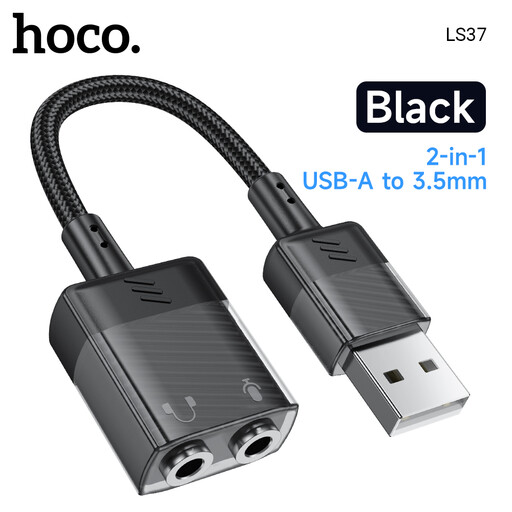
For a computer-based local library and wired 3.5 mm headphones, this USB sound-card adaptor is a connection option to consider. It is not presented as a substitute for the model-specific output and format checks discussed above.
 No image available
Consider this USB sound-card adaptor if you want to connect wired 3.5 mm headphones to a computer with a suitable USB port.
Check your device’s USB audio compatibility and the output requirements of your headphones before ordering.
A USB DAC/headphone amp generally receives audio from another device rather than browsing your music collection itself. Keep a compatible computer, tablet, phone or streamer and music-player app in your playback plan.
Compare your exact headphones’ sensitivity, impedance and cable termination with the DAC/amp’s stated outputs and conditions. FiiO lists recommended KA17 ranges of 8–150 ohms through 3.5 mm and 8–300 ohms through 4.4 mm; its highest quoted output also requires sufficient USB power and Desktop mode.
No: the DAC’s stated format support is only one part of the playback chain. Your file, player app, source device and USB connection must also support the output you intend to use.
Check the product information applicable to your delivery region and to any included mains power supply. The Office for Product Safety & Standards’ March 2025 guidance says provisions of the UK’s electrical-equipment rules apply differently in Northern Ireland; do not assume one marking or accessory arrangement covers every item and destination.
Check the terms offered by the actual seller for the exact item, including the process for a faulty or misdescribed product. A manufacturer’s direct-store offer should not be assumed to apply to another retailer’s listing.