Headset-first small-desk users
You need a reachable USB data port for a headset and perhaps one or two other accessories. Connector fit and the space the hub occupies matter more to you than extensive display connections.


If the USB headset is your main extra device, start with a compact hub that has a data port matching its plug and leaves room for any other essentials. A larger dock makes sense when you also want to reconnect a monitor, wired network or several peripherals with one cable; check the laptop’s video and charging capabilities before relying on those functions.
You need a reachable USB data port for a headset and perhaps one or two other accessories. Connector fit and the space the hub occupies matter more to you than extensive display connections.
You want to leave a headset, monitor and everyday peripherals connected while moving the laptop on and off the desk. The port mix and your laptop’s video and charging capabilities become important. Laptops Direct highlights these connections in its docking-station guidance.
Your headset is one of several devices in a fixed setup with fast USB connections or external displays. A Thunderbolt-class dock is worth considering only after checking what your laptop can use; CalDigit notes that its TS4 has reduced functionality with some USB-C hosts.
Start with the headset plug and the other devices that must stay connected. Add display and laptop-charging requirements only if your desk setup calls for them.
| Concern | What to check | Who this matters to |
|---|---|---|
| Headset access and desk space | Match the headset’s USB-A or USB-C plug to a reachable data port; allow for any other device that needs a port. | If I mainly need to plug in a headset, I want its port within reach without giving up much desk space. Around 50% of consumers put that connection and compact setup first. |
| One-cable desk setup | Count the USB, display and network connections you will use; check the laptop’s video and charging support and what power equipment comes with the dock. | When my monitor and everyday peripherals stay on the desk, reconnecting them through one host cable matters more than keeping the hub minimal. Roughly 30% of consumers prioritise that arrangement. |
| Workstation expansion | Check the exact laptop’s Thunderbolt, USB4 or USB-C capabilities and display limits against the dock functions you intend to use. | If the headset sits alongside several fast peripherals or displays, I need the extra connections to work with my laptop. About 20% of consumers make that expansion their primary concern. |
A dock’s display and charging connections cannot provide those functions if the laptop’s host port lacks the required support. Laptops Direct notes that USB-C does not always carry video or power.
Check the specifications for your exact laptop model, including display output and charging through its USB-C port, before choosing a dock for those functions.
Extra display and high-speed connections have little practical value if the headset is the only device you need to add, while the dock itself still needs a place on the desk.
List the plugs that must stay connected, then choose a port mix that accommodates them and fits the available space.
The number of sockets on a dock does not establish which display arrangement your particular laptop can drive.
Compare the dock’s stated display modes with the exact laptop model, operating system, resolution and refresh rate you intend to use.
A hub’s pass-through charging feature does not mean a charger and cable come in the box. Anker states that these items are not included with its 565 hub.
Check the contents and power requirements of the exact product listing, including the supplied plug arrangement when mains power is involved.
Using pass-through charging with the Anker 565 also means providing a compatible charger and cable.
Anker’s 565 USB-C hub is a reference point for a headset setup that also needs several other connections.
Belkin UK lists compact hubs as well as larger multiport and dual-display docks, giving you different form factors to compare.
CalDigit’s TS4 is relevant when the headset forms part of a workstation with many other connections.
These USB-C hubs and docks offer different combinations of headset data connections and additional desk ports. Match the headset plug first, then check the host connection and any display or charging functions you plan to use.
 No image available
Consider this when the headset needs a USB-A or USB-C data connection alongside other desk devices. The product name lists USB-A and USB-C connections and 4K 60Hz HDMI; check your laptop’s video capability before relying on that display mode, and check whether the port positions suit your desk.
 No image available
This adapter is worth checking if the headset shares the desk with another USB peripheral and you also want display or network connections. Its name lists two USB 3.0 ports, HDMI, VGA, Gigabit Ethernet and 100W Power Delivery; confirm that a USB port fits the headset plug and that your laptop supports the functions you need.
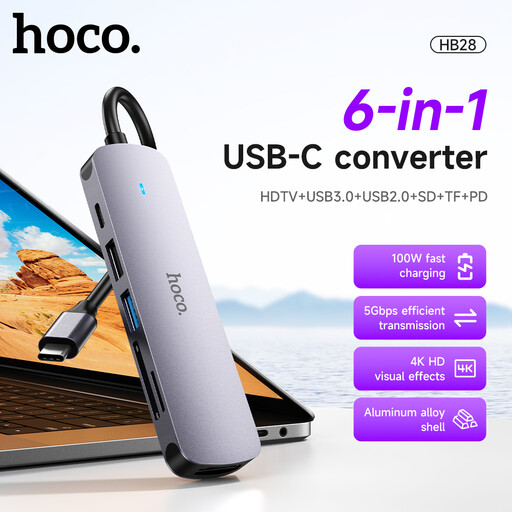 No image available
This is an option to examine when a headset connection and a small selection of other ports are enough. The product name lists USB 3.0, USB 2.0, SD/TF and PD connections; confirm the USB data-port shape against your headset plug and check laptop compatibility before relying on display or charging functions.
 No image available
Consider this for a headset and additional USB devices if its host connection matches your laptop. The product name lists two USB-A 3.0 ports, one USB-C 3.0 port, SD/TF and 4K 60Hz HDMI; confirm the exact host connection and supported display function for this variant before buying.
 No image available
This dock is relevant when the headset is one of several permanently connected desk devices. Its name lists two USB 3.0 and two USB 2.0 ports, two HDMI connections, DisplayPort, RJ45, PD, SD/TF and audio; verify the headset’s connector fit, the dock’s desk footprint and the laptop’s display and charging capabilities.
Usually not: a compact hub with a data port matching the headset plug can address that immediate need. Consider a larger dock if you also want to leave a monitor, network cable or several peripherals connected to the desk.
No. USB-C ports differ in the video and power functions they support. Check your exact laptop model; Anker Support specifies Power Delivery and DisplayPort Alt Mode host support for the corresponding functions on its 565 hub.
Choose one with a reachable data port for the headset and enough remaining ports for devices you actually keep connected. Check the unit’s dimensions, port positions and included cable or charger against your desk arrangement rather than choosing by total port count alone.
Check the exact listing for the included power supply, cable and plug arrangement, and confirm they suit your intended setup. If you plan to charge the laptop through the dock, check both the dock’s stated charging arrangement and the laptop’s supported input.