For a pen tablet without a screen, consider a USB data hub only if the tablet maker permits hub use and the connection supplies adequate power; use a direct computer port when its instructions call for one. For a pen display, establish its video, USB-data and power connections before choosing a hub: an HDMI socket or a USB-C connector alone does not establish that the whole connection will work.
Who needs which connection?
Pen-tablet users short of USB ports
If your tablet has no screen, a data hub may leave room for a keyboard, mouse or storage device. Follow the tablet maker’s connection instructions first: Wacom Developer Support advises a direct computer connection for the device covered by its pen-response guidance.
Pen-display creators
A tablet with its own screen needs a working video path as well as any required USB and power connections. Wacom and XPPen connection guidance shows why you should check the exact tablet’s cable arrangement and the computer’s video-output capability.
Fixed-study workstation users
If the same desk also accommodates laptop charging, peripherals or an external monitor, check which ports can be used together. Port layout and the computer’s video capability matter more than the total socket count.
What to check before buying
Start with the tablet’s prescribed connection, then check the computer port and count the other devices you need connected at the same time.
| Concern |
What to check |
Who this matters to |
| Reliable pen input and power |
Check the tablet manual for direct-connection instructions and its power requirements; do not assume a hub’s PD input is a tablet connection. |
If intermittent pen response would interrupt my drawing, I would put the tablet’s prescribed connection ahead of extra sockets. Around 40% of consumers put reliable input and power first. |
| Pen-display video |
Match the tablet’s USB-C or separate HDMI, USB and power arrangement to the computer and hub. Confirm USB-C video output where the tablet requires it. |
If my tablet has a screen, I need its image to appear before added peripheral ports are useful. For around 30% of consumers, pen-display video compatibility is the primary concern. |
| Peripheral expansion |
Count simultaneous USB-A and USB-C data connections separately from charging inputs; include any display or card slots you will use. |
When my pen tablet works with its required connection, I mainly want room for everyday desk devices without repeated cable swaps. Compact peripheral expansion comes first for around 30% of consumers. |
Connection mistakes to avoid
-
Assuming every USB-C socket carries video
A pen-display connector can fit while the screen remains blank. Wacom and XPPen specify video-capable computer ports for the USB-C display connections covered by their guidance.
Compare the exact tablet connection diagram with the computer’s port specifications. If the tablet uses separate HDMI, USB and power cables, account for each connection.
-
Using a PD input as a spare data port
Ports with the same USB-C shape can serve different purposes. Anker specifies that the PD input on its 565 hub supports charging only.
Identify the hub’s data ports separately from its charging input, then connect the tablet only through a port that meets its instructions.
-
Choosing a large dock for a basic port shortage
A conventional pen tablet and a few everyday peripherals may not need the additional display and card connections offered by a broader dock.
List what must remain connected together before choosing a port layout. Keep the tablet on a direct computer port if its maker requires that arrangement.
Relevant brands for reference
UGREEN
UGREEN UK lists a compact 5-in-1 USB-C hub with HDMI, USB-C PD, one USB-A 3.0 port and two USB-A 2.0 ports.
- Its listed USB-A 3.0 capability is 5 Gbps, alongside two USB-A 2.0 ports for other peripherals.
- Its listed HDMI output is 4K@30 Hz. Check a pen display’s separate video, data and power requirements before relying on this hub for it.
Belkin
Belkin UK lists compact USB-C hubs that combine peripheral connections, HDMI and laptop power pass-through, including the AVC022 and AVC006.
- Belkin lists up to 4K@60 Hz monitor support and up to 5 Gbps data transfer for the AVC022; its AVC006 is listed with HDMI 1.4 and up to 4K@30 Hz.
- A hub’s HDMI specification does not establish that the computer can supply the video connection required by a particular pen display.
Anker
Anker UK lists broader desk hubs, including the 553 with dual HDMI and card slots and the 565 with distinct data and charging connections.
- Anker specifies up to 100 W charging input for the 553, with 15 W reserved for hub operation.
- Anker says the 565’s PD input supports charging only. Additional desk connections may be unnecessary if you only need to attach a pen tablet and basic peripherals.
USB-C hubs and docks on Joybuy
These USB-C hubs and docks offer peripheral connections for a study desk; several also have display connections. Choose a connection for your graphics tablet only after checking its manual and your computer’s ports. A display output on a dock does not establish pen-display compatibility.
 No image available
USB-C hub with 2 HDMI, DP, USB, RJ45, PD, SD/TF and audio
Consider this port mix if a fixed desk needs several peripheral and display connections, provided your tablet can use the intended connection.
The product name specifies two USB 3.0 and two USB 2.0 connections alongside the two HDMI outputs and DisplayPort. Check the computer’s video output and the hub’s charging arrangement before relying on either function.
View on Joybuy
 No image available
Targus USB-C Universal Dual HDMI 4K Docking Station, 100 W PD Pass-Thru
This dock is relevant if your desk needs dual HDMI connections as well as a connection for a graphics tablet, subject to the tablet and computer’s requirements.
The named variant specifies 100 W Power Delivery pass-through. Check whether its required power adapter is included and whether the computer supplies the video connection your setup needs.
View on Joybuy
 No image available
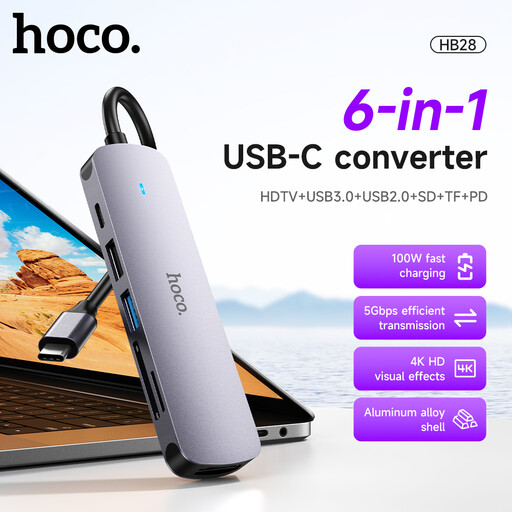
HOCO HB28 USB-C Converter, Metal Grey
Consider its mix of connections if your study desk needs USB peripherals and a separate display connection, after confirming the tablet’s cable arrangement.
The product name specifies HDTV, USB 3.0, USB 2.0, SD, TF and PD connections. Check the display format and required charging capability for your setup before purchase.
View on Joybuy
 No image available
MOVESPEED DK5A1 USB-C 10-in-1 Docking Station
This dock suits a port-planning check for a desk with USB peripherals, card access and an external display; keep any tablet connection subject to its manual.
The product name specifies 4K@60 Hz HDMI, USB-C at 10 Gbps, USB-A at 10 Gbps and 5 Gbps, SD/TF at 160 MB/s and 3.5 mm audio. If laptop charging is essential, confirm the charging arrangement separately.
View on Joybuy
Common questions
Will any USB hub work with my graphics tablet?
No: use the exact tablet’s connection instructions to decide whether a hub is appropriate. A pen tablet may need a compatible USB data connection or a direct computer port, while a pen display may also require video output and a separate power connection.
Does USB-C guarantee a pen display will work through a hub?
No: the computer must support the video output required by the tablet’s chosen connection method. Wacom and XPPen specify video-capable USB-C computer ports for the pen-display connections covered by their guidance; an HDMI-based arrangement must also preserve any required USB-data and power connections.
Does a 100 W PD label mean my graphics tablet receives 100 W?
No: check which device the hub’s Power Delivery connection is intended to charge. Anker specifies that its 565 hub’s PD input is charging-only, while its 553 reserves 15 W of its stated 100 W charging input for hub operation. Neither figure establishes the power delivered to a graphics tablet through another port.


