
24/7 Customer Support

Free returns

Same-day & Next-day Delivery

Quality Guaranteed

Unlock Your Welcome Offers: FREE Delivery | Up to 80% OFF | Free 30-day JoyPlus trial
Download the APP
Finding suitable USB wall chargers UK shoppers can rely on is not simply a matter of choosing the highest wattage on the box. A charger must match your device, cables, daily routine and available sockets. The wrong choice may mean slow charging, unused ports, unnecessary bulk or buying a second adaptor because the first one does not include the connection you need.
This guide from the Joybuy Product Recommendation Officer explains the practical details worth checking before you buy a USB-C wall charger, USB-A charger or multi-port USB charger.
A charger labelled 65W does not make every device charge at 65W. Phones, tablets and laptops request the power they are designed to accept. A 20W USB charger may suit a smartphone, while a laptop USB-C charger generally needs considerably more power.
Charging performance can also depend on the cable, device battery level, software and whether other ports are being used. Treat the wattage as the charger’s available output, not a guaranteed speed for every connected product.
USB-C describes the connector shape, not the charger’s power capability. Check whether the product specifically supports USB Power Delivery (PD) and note its maximum output. A USB-C port with a 15W limit will not perform like a 30W or 65W USB-C PD port.
Also check whether a cable is included. The Apple 20W USB-C Power Adaptor, for example, is supplied without a charging cable.
A low-priced imported adaptor may have an EU plug or require an additional travel adaptor. For everyday use in Britain, a UK three-pin plug or UK-compatible design is more convenient and avoids extra connections.
Port layout matters too. A single-port phone charger plug may be compact, but a dual-port or three-port model can reduce clutter for households, commuters and hotel rooms. Confirm how the power is divided when several devices are charging simultaneously.
Use your device manufacturer’s recommended charging power as a starting point:
A higher-rated charger is not automatically unsuitable for a lower-rated device, provided the charger and cable use compatible charging standards. The device controls the power it requests.
USB Power Delivery enables compatible devices to negotiate an appropriate charging level. It is particularly relevant when selecting a laptop USB-C charger.
GaN (gallium nitride) chargers can provide relatively high output in a compact enclosure. This may benefit business travellers and commuters, although compact size does not remove the need for suitable ventilation during use.
Review whether the charger has USB-C ports, USB-A ports or both. Older cables commonly use USB-A, while many newer phones and tablets use USB-C to USB-C cables. A USB-C and USB-A combination can be a practical transition option.
Choose a product with clear manufacturer information, usage instructions and safety warnings. Useful protections may include over-current, over-voltage, over-temperature and short-circuit protection, where stated in the product specifications.
Do not use a charger that is cracked, unusually hot, making strange sounds or showing signs of damage. Keep it dry, avoid covering it while operating and use a compatible, undamaged cable. A charger should be connected directly to a suitable UK wall socket or an appropriately rated extension lead.
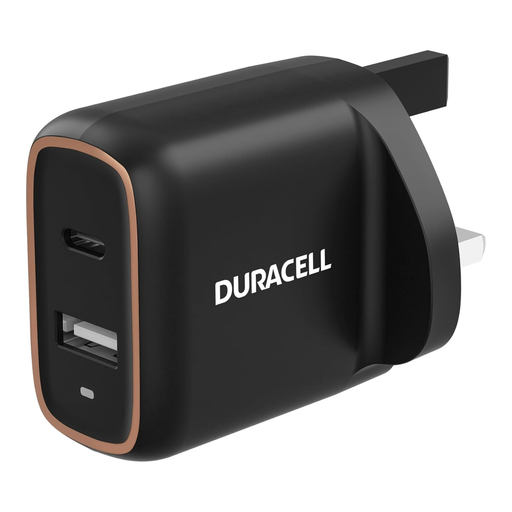
Why This Fits Their Persona: A practical everyday option for households, students and commuters who need to charge a modern phone alongside a device using a USB-A cable.
It clearly combines a UK plug with one USB-C PD port and one USB-A port, reducing the need for separate adaptors or an additional travel plug.
20W Power Delivery; two ports for simultaneous charging; compact design; three-year warranty stated in the product information.
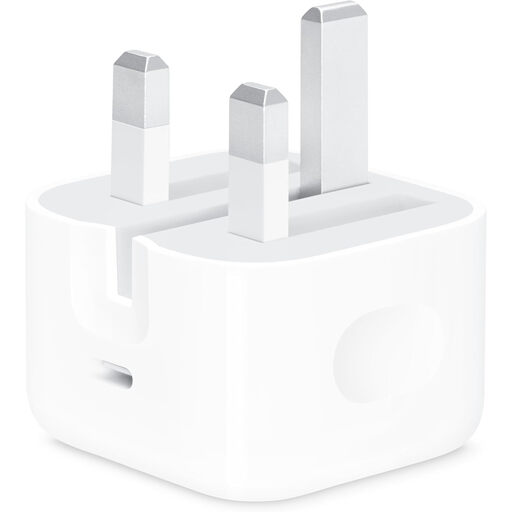
Why This Fits Their Persona: A compact single-port choice for Apple device owners who prefer a straightforward UK three-pin adaptor for home, office or travel.
The single USB-C port makes its intended setup clear. Buyers can also see before ordering that the charging cable is not included.
Up to 20W output; compact UK three-pin design; compatible cable can be selected separately for the device.
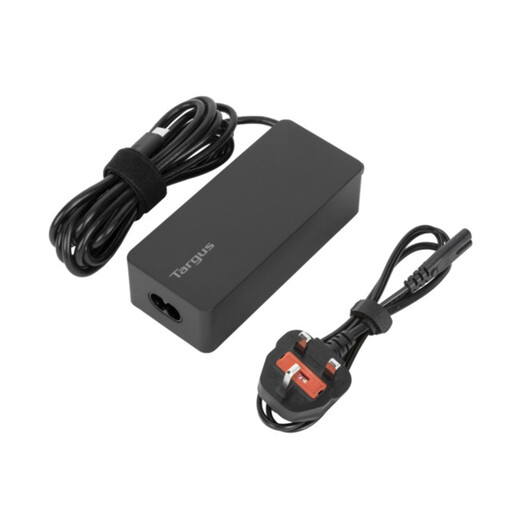
Why This Fits Their Persona: Designed for business travellers and users carrying a USB-C laptop, tablet and phone who want one higher-output charger for workdays away from home.
Its stated 65W USB-C PD output is more transparent than relying on vague “fast” wording. Check your laptop’s required wattage before ordering.
Up to 65W PD; UK and EU power cords included; 1.8-metre cable; over-current, overheating and over-voltage protection stated.
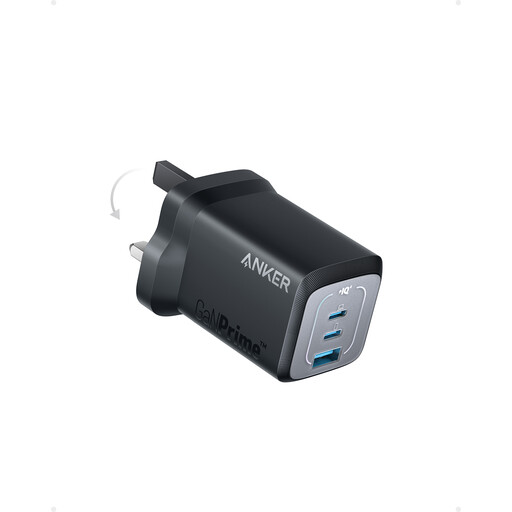
Why This Fits Their Persona: Suitable for families, shared desks and travellers carrying a notebook, tablet and phone that need charging from one compact unit.
It provides two USB-C ports and one USB-A port, while the product information states separate maximum output limits for single- and multi-device charging.
Up to 67W single-device output; three ports; GaN design; stated support for smartphones, tablets, laptops and smaller USB devices.
We have compiled a complete, real-time list of products that fully satisfy these strict selection criteria and UK safety regulations.
They can be, provided the charger, cable and phone support compatible charging standards. A USB-C PD charger is commonly used with modern USB-C devices. Check whether your phone requires USB-C to USB-C or USB-C to Lightning, and remember that the cable may be sold separately.
A compatible 65W charger can be used with many phones because the phone normally requests the power level it supports. However, use a reputable charger, a suitable cable and the device manufacturer’s guidance. The phone may not charge at 65W; its own charging limit still applies.
A charger connected to the wall without a device may draw a small amount of standby power, although the exact figure varies by product. For safety and to avoid unnecessary consumption, unplug the charger when it will not be used for an extended period. Keep the adaptor ventilated and replace it if it becomes damaged or unusually warm.