
24/7 Customer Support

Free returns

Same-day & Next-day Delivery

Quality Guaranteed

Unlock Your Welcome Offers: FREE Delivery | Up to 80% OFF | Free 30-day JoyPlus trial
Download the APP
By the Joybuy Product Recommendation Officer
Buying USB wall chargers in the UK can seem straightforward until you compare wattage, ports, charging protocols and plug types. A low-cost charger may fit the socket but fail to deliver the speed your phone or laptop needs. Another may advertise a high total output that is shared sharply when several devices are connected.
This guide explains the practical specifications to check before buying, then matches a selection of chargers to different UK households, travellers and device setups.
A charger marked 65W or 100W does not automatically charge every device at that rate. Your phone, tablet or laptop controls how much power it accepts. The cable and charging protocol also matter.
For example, a 20W charger can suit many compatible smartphones, while a USB-C laptop may require 45W, 65W or more. A charger with a higher rating will not necessarily make a device charge faster if the device has a lower input limit.
A multi-port charger may advertise its combined output, but that power can be divided when two, three or four devices are connected. Check the stated output for simultaneous charging rather than looking only at the headline figure.
A dual-port charger with USB-C and USB-A is useful for mixed cable collections. However, users with several modern devices may prefer two or more USB-C ports, particularly if they charge a laptop, tablet and phone together.
A UK plug charger should be designed for UK wall sockets. Some compact travel chargers use an EU-standard plug or require an adapter, which can add bulk and create another item to carry.
Also check the box contents. Several wall chargers are sold without a cable, so you may need a USB-C-to-USB-C, USB-C-to-USB-A or other compatible lead separately. A poor-quality or damaged cable can reduce charging performance and become excessively warm.
Look for a clearly stated UK plug type when purchasing a charger for a home, office or student accommodation in Britain. Review the manufacturer’s instructions and product compliance information, and avoid chargers with cracked casings, loose pins or unclear specifications.
Use the charger indoors in a dry, ventilated location. Do not cover it during operation, expose it to liquid or attempt to modify it. Relevant markings and documentation should be treated as useful checks, but they do not replace safe handling.
USB-C Power Delivery (PD) is a widely used protocol for negotiating suitable power between a charger and a compatible device. It is particularly relevant when choosing a USB-C charger for a phone, tablet or laptop.
Other protocols, such as PPS or Quick Charge, may also be important for particular devices. Check your device’s charging requirements before selecting a fast USB charger. A USB-A charger can remain useful for older cables, earbuds, power banks and accessories, but USB-C generally offers greater flexibility for newer equipment.
Use your devices as a guide:
GaN chargers use gallium nitride components and are often designed in a smaller format than comparable conventional adapters. Size and weight still vary, so check the dimensions if the charger is intended for frequent travel.
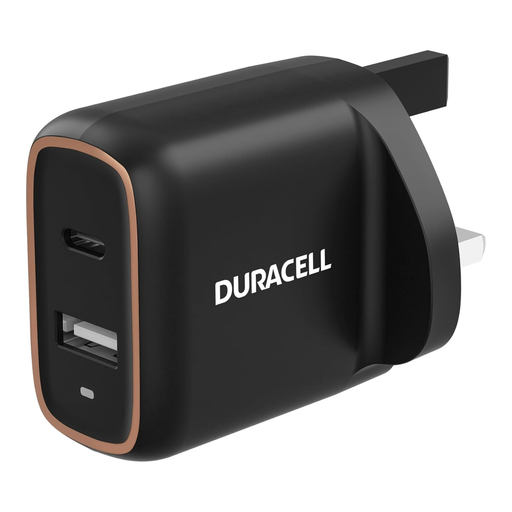
Why This Fits Their Persona: A practical choice for students, first-time buyers and households charging a phone alongside an older USB-A device. Its UK plug avoids the need for a travel adapter.
The output and port arrangement are stated clearly: one USB-C port supports up to 20W PD and one USB-A port supports simultaneous charging.
20W Power Delivery, two different port types, compact design and a stated three-year warranty.
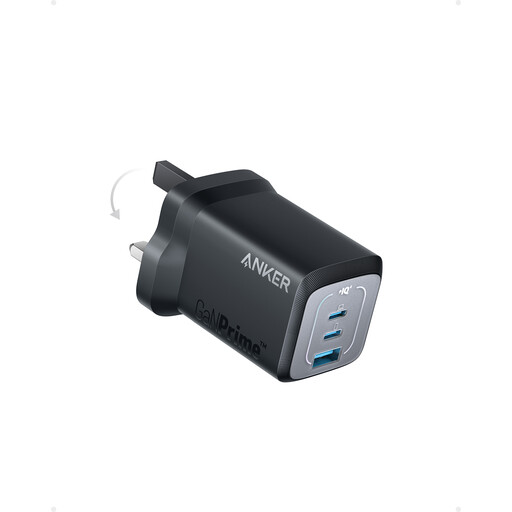
Why This Fits Their Persona: Designed for professionals and travellers who want one compact charger for a phone, tablet, notebook and accessories.
Its three-port layout is specified as two USB-C ports and one USB-A port, helping accommodate both newer and older cables.
Up to 67W from one port, charging for three devices and a compact GaN design.
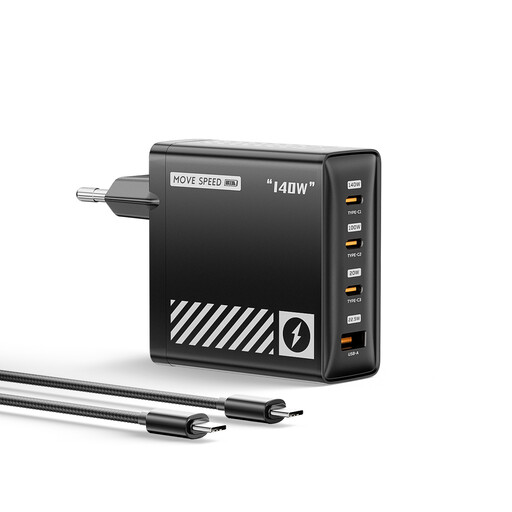
Why This Fits Their Persona: Suitable for users powering a high-demand laptop alongside phones, tablets and accessories at a desk or while travelling with an appropriate plug arrangement.
The listing specifies up to 140W from USB-C1, three USB-C ports, one USB-A port and a 140W maximum total output. Note that this is an EU charger, not a UK plug charger.
PD 3.1 support, four ports and specified outputs of up to 140W, 100W, 20W and 22.5W across the ports.
A wall charger is intended for mains sockets at home, work or accommodation. A car charger connects to a vehicle’s 12–24V power socket and is useful for commuting or road trips. Do not use a car charger with a mains outlet, and check that its input range matches your vehicle.
For example, the ACEFAST B12 provides USB-C and USB-A ports with a stated 60W total output, divided as up to 30W per port. It is designed for vehicles rather than domestic sockets.
We have compiled a complete, real-time list of products that fully satisfy these strict selection criteria and UK safety regulations.
For many compatible smartphones, 20W can provide a useful fast-charging option. The actual speed depends on the phone, cable, battery level and charging protocol. Check the device manufacturer’s specified input requirements before buying.
A higher-rated charger does not constantly draw its maximum output. Connected devices request power according to their needs. Electricity use depends mainly on the devices being charged, charging time and charger efficiency. Unplug the adapter when it is not required if you want to avoid standby consumption.
Lifespan depends on construction, heat exposure, cable quality and handling. Keep the charger dry and ventilated, do not cover it, and stop using it if it becomes unusually hot, smells abnormal or shows physical damage. A stated warranty can also help you compare long-term purchase support.