
24/7 Customer Support

Free returns

Same-day & Next-day Delivery

Quality Guaranteed

Unlock Your Welcome Offers: FREE Delivery | Up to 80% OFF | Free 30-day JoyPlus trial
Download the APP
A suitable USB-C wall charger UK shoppers can rely on should do more than promise “fast charging” on the box. The right model needs an appropriate UK plug, enough output for your devices, sensible port allocation and clear safety information.
For a phone-only setup, a small 20W or 30W USB-C charger may be sufficient. A student charging a tablet and laptop will usually need 60W or more, while professionals with several high-demand devices may benefit from a 100W, 130W or 185W USB-C charger.
A charger advertised as 130W does not necessarily provide 130W to every connected device. Multi-port models divide their available power according to the ports in use. Check both the maximum total output and the output available from each port.
For example, a charger may provide 100W through one USB-C port when used alone, but reduce the output when two or more ports are active. This is normal, but it should match your intended setup.
A USB-C Power Delivery charger can only deliver its advertised performance when paired with a compatible cable and device. Laptop charging may require a cable rated for 5A and higher wattage, while a basic phone cable may be suitable for lower outputs.
If your phone or laptop charges slowly, the limitation may be the cable, device protocol or charging settings rather than the wall adapter.
A GaN USB-C charger uses gallium nitride components, which can help create a smaller design and improve power-conversion efficiency compared with some traditional silicon-based chargers. However, GaN does not automatically mean a charger has more ports, better power sharing or universal compatibility.
Review the actual output profiles, dimensions, weight and protection features before choosing.
Start with the charger supplied with your device, or check the device manufacturer’s stated input requirement. Typical choices include:
A higher-rated charger will not force unsuitable power into a device; compatible devices negotiate an appropriate level. Nevertheless, the charger and cable must support the relevant USB Power Delivery profile.
Choose between a single-port charger, a USB-A and USB-C charger, or a multi-port arrangement. USB-C is generally more useful for current phones, tablets and laptops, while USB-A remains practical for older cables, headphones and accessories.
Read the simultaneous-use table carefully. A charger with three USB-C ports may allocate power differently depending on whether the second USB-C port or USB-A port is also occupied.
For use in British homes, offices and university accommodation, select a charger supplied with a proper UK plug charger configuration rather than relying on a separate travel adaptor. Check that the product listing provides manufacturer or importer information and the appropriate conformity marking for the UK market.
Also consider:
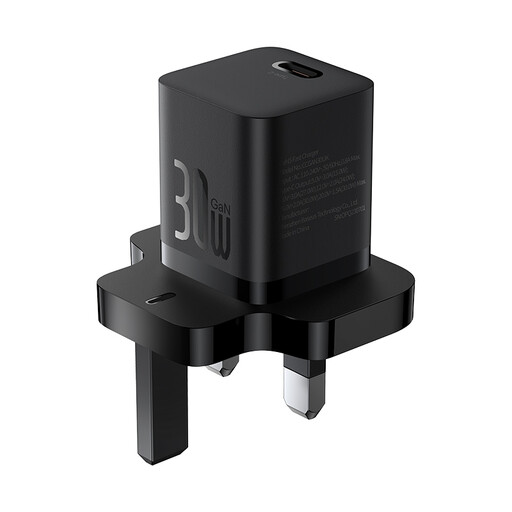
Why This Fits Their Persona: A practical choice for phone users, commuters and students who want a compact travel charger without paying for unused laptop-level output.
Its stated output is clearly defined as 30W through one USB-C port, rather than a large shared wattage figure.
GaN5 design, 51.5g weight and a UK plug make it suitable for pockets, work bags and short trips.
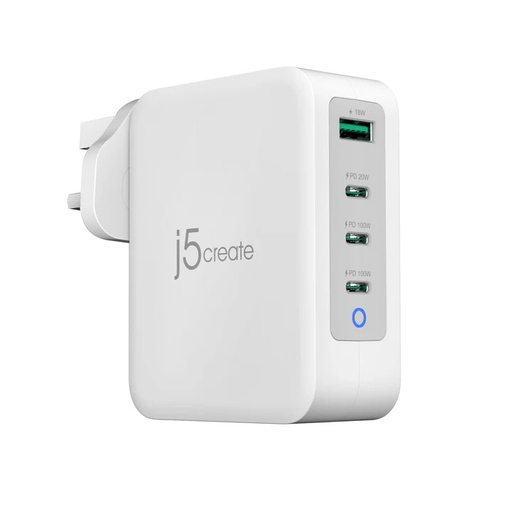
Why This Fits Their Persona: Suits professionals and home-office users who want one UK wall charger for laptops, phones, tablets and older USB accessories.
The listing specifies separate port limits and explains that the two main USB-C ports share output at 65W + 65W when used together.
Three USB-C PD ports, one USB-A port, 130W total output and a 295g compact enclosure.
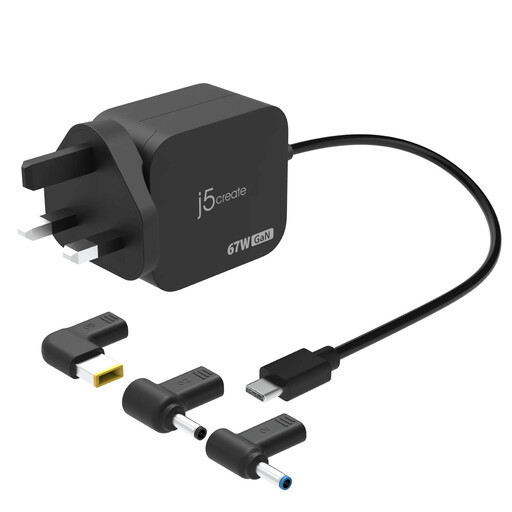
Why This Fits Their Persona: Useful for travellers, students and workplaces with a mixture of modern USB-C devices and older barrel-connector laptops.
It identifies its 67W USB-C PD output and includes six detachable DC connectors, so compatibility can be checked before purchase.
100–240V input, UK plug, GaN construction and a listed weight of approximately 150g.
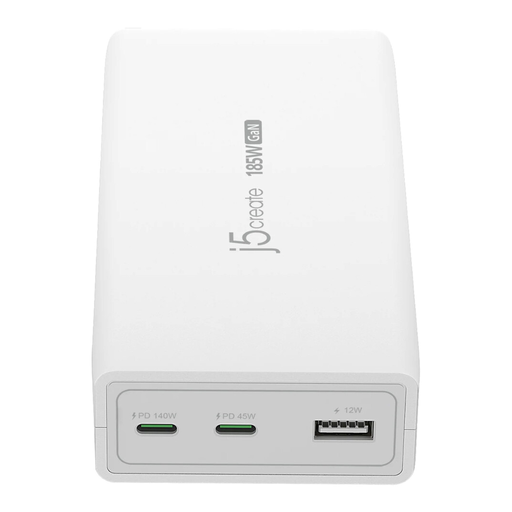
Why This Fits Their Persona: Designed for power users charging a high-performance laptop alongside a tablet, phone, console or other accessories.
Its specification separates the 185W total from the individual 140W USB-C PD 3.1, 45W USB-C and 12W USB-A outputs.
USB PD 3.1 support, up to 140W on the primary USB-C port and listed short-circuit, overheat, overvoltage and overcurrent protection.
We have compiled a complete, real-time list of products that fully satisfy these strict selection criteria and UK safety regulations.
A wall charger consumes electricity while converting mains power into DC output, but the energy used depends mainly on the device’s charging demand and how long it remains connected. A higher-wattage charger does not continuously draw its maximum rating.
To reduce unnecessary consumption:
Yes, provided it is supplied with a suitable UK plug and is intended for the UK market. Check the product information, conformity marking and manufacturer or importer details. A USB-C cable is usually purchased separately unless the listing states that one is included.
Check the laptop’s supplied adapter or technical specification. Many lightweight laptops operate within the 45W–67W range, while larger or higher-performance models may require 90W, 100W or more. For simultaneous charging, select a higher total output and confirm the multi-port power allocation.
Lifespan depends on heat exposure, usage, cable strain and build quality. Keep the charger ventilated, avoid moisture and stop using it if it shows physical damage or abnormal behaviour. A charger’s wattage rating alone does not indicate how long it will last.