
24/7 Customer Support

Free returns

Same-day & Next-day Delivery

Quality Guaranteed

Unlock Your Welcome Offers: FREE Delivery | Up to 80% OFF | Free 30-day JoyPlus trial
Download the APP
A UV protection umbrella can be useful on bright commutes, holidays, outdoor lunches and unpredictable British days when sunshine turns into a shower. However, not every umbrella marketed for sun protection offers the same balance of UV coverage, portability, rain resistance and wind stability.
The most common buying mistakes come from focusing on a single impressive-sounding number or choosing a design that is inconvenient to carry. Use the checks below to compare specifications more sensibly.
A listing may promote UPF 50+ umbrella or UPF 2000+ umbrella protection, but the number does not tell you everything about daily usability. Canopy size, the quality of the shade, gaps around the edges and whether the umbrella stays open in wind also matter.
UPF applies to the fabric’s ability to reduce ultraviolet transmission. It is not a guarantee that every part of your body remains covered, particularly if the canopy is small or the sun is low in the sky.
Some blackout sun umbrellas are designed primarily for shade and may not be intended for wet weather. If you want one item for commuting and travel, check for a water-repellent or waterproof sun umbrella canopy, quick-dry features and care instructions.
Even a dual-purpose design should be dried fully before storage. Folding a damp canopy into a case can encourage unpleasant odours and may affect the fabric or coating over time.
A lightweight pocket umbrella is easy to keep in a handbag, rucksack or coat pocket, but a very compact frame often has a smaller open diameter. This may be suitable for one person walking between transport stops, but less useful when you want shoulder-to-knee coverage or space for a second person.
Compare both the folded dimensions and the open diameter before purchasing. A five-fold umbrella may save space, while a three-fold model can offer a larger canopy.
Look for a clearly stated UPF rating, rather than relying only on phrases such as “sun-blocking” or “UV-resistant”. UPF 50+ is a commonly recognised high fabric rating. Some product listings state UPF 2000+; this is a product-specific marketing designation rather than a standard equivalent that can be compared directly with every UPF 50+ fabric.
A black-coated or multi-layer canopy can create deeper shade and may reduce the amount of heat you perceive underneath. These features can make an umbrella feel more comfortable in direct sunlight, but they do not replace sunscreen, suitable clothing or other sensible sun precautions.
For personal use, an open diameter around 32–37 inches can provide practical head-and-shoulder shade while remaining relatively portable. Larger canopies around 39 inches may provide more coverage down the body, although they are usually bulkier when folded.
If your priority is full-body sun protection umbrella coverage, inspect the open height and canopy diameter, not just the product title. Also consider crowded pavements and public transport, where an oversized canopy may be less convenient.
The UK’s changeable weather makes frame construction important. Aluminium can reduce weight, while fibreglass ribs can provide flexibility. A wind-resistant umbrella should still be closed in strong gusts if the manufacturer advises doing so; no compact umbrella should be treated as storm-proof without a specific rating.
Check the number of ribs, shaft material and any stated wind-resistance level. Reinforced ribs and a fibreglass-aluminium alloy frame may offer a useful balance between portability and stability.

Why This Suits Them: A practical option for shoppers wanting one compact umbrella for sunny and rainy journeys without carrying a full-size model.
The listing states UPF 50+ protection and dual-use sun-and-rain functionality, rather than presenting it only as a shade accessory.
35-inch open diameter; 5-fold aluminium structure; 5.99 oz listed weight; includes a handheld/crossbody pouch.
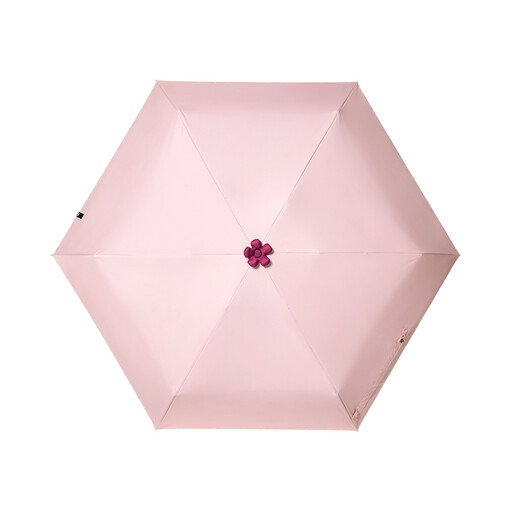
Why This Suits Them: Suits commuters and travellers who want a compact design with reinforced construction and a more distinctive appearance.
Six reinforced ribs and a fibreglass-aluminium alloy frame address the weakness of choosing solely by folded size.
37.2-inch open diameter; approximately 247 g; water-repellent canopy; hand or crossbody pouch carrying.
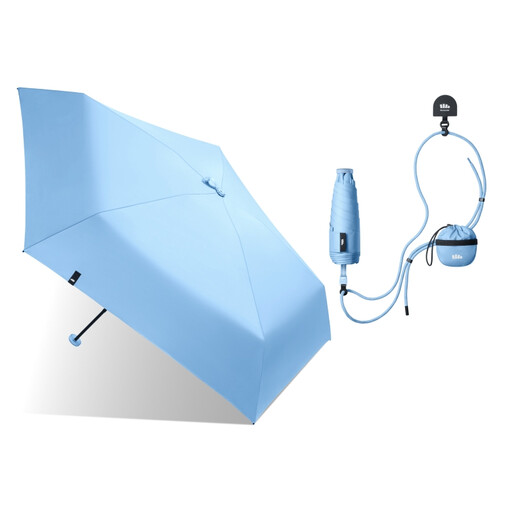
Why This Suits Them: Designed for people who prioritise a very small, lightweight umbrella for bags, pockets and everyday travel.
Its listed open diameter and UPF 50+ rating make the coverage trade-off clearer than judging by its slim appearance alone.
Approximately 150 g; around 5 cm slim profile; 20D polyester canopy; carbon-fibre aluminium alloy frame.
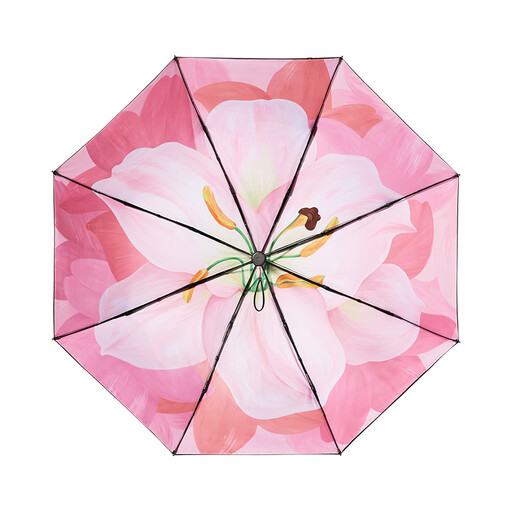
Why This Suits Them: A larger choice for holidays, outdoor activities and users who want more extensive shade from sun and rain.
The product details specify a 39-inch canopy and double-layer construction, helping buyers assess coverage rather than relying on “blackout” wording alone.
UPF 2000+ stated in the listing; 39-inch open diameter; double-layer canopy; fibreglass-aluminium alloy frame.
We have compiled a complete, real-time list of products that fully satisfy these strict selection criteria and UK safety regulations.
Some models are designed for dual use, with water-repellent or quick-dry fabric. Check the individual listing before assuming a sun umbrella is waterproof. After use, allow it to dry completely before storage.
UPF 50+ indicates a high level of fabric-rated UV protection, but the umbrella’s practical coverage also depends on its canopy size, angle and how it is held. Use it alongside other sensible sun-protection measures.
Cost varies according to the frame, canopy layers, fabric coating, dimensions and carrying accessories. Rather than choosing by price alone, compare the stated UPF rating, open diameter, folded size, weight and rain suitability against how you intend to use it.