
24/7 Customer Support

Free returns

Same-day & Next-day Delivery

Quality Guaranteed

Unlock Your Welcome Offers: FREE Delivery | Up to 80% OFF | Free 30-day JoyPlus trial
Download the APP
As sunny days become more frequent across the UK, many of us are looking for effective ways to stay protected from UV radiation. While sunscreen is essential, a high-quality UV protection umbrella offers a physical barrier for your skin, hair and eyes. However, the market is filled with options, and it's easy to choose a model that looks good but fails to deliver when you need it most.
Before you buy, it's worth knowing about a few common pitfalls. Many shoppers are drawn in by impressive-sounding features that don't hold up in practice. For instance, an ultra-lightweight design can sometimes signal a fragile frame that won't survive a single gusty commute. Similarly, a high UPF rating is less effective if the canopy is too small to provide adequate coverage. Finally, many so-called "windproof" umbrellas use materials that buckle under the pressure of a typical British downpour, leaving you exposed to both sun and rain.
To avoid disappointment, focus on the core specifications that determine an umbrella's performance and longevity. Understanding these factors will help you select a reliable sun umbrella that serves as a practical investment for your health and comfort.
The most critical feature is the Ultraviolet Protection Factor (UPF) rating. A rating of UPF 50+ is the standard for excellent protection, indicating the fabric blocks at least 98% of UV rays. However, the material and colour of the canopy are just as important. Many high-performance models use a dense fabric with a specialised black coating on the underside. This black sun umbrella design is highly effective because it absorbs, rather than reflects, UV rays that might otherwise bounce from the ground up to your skin. This construction also helps to reduce glare and can create a noticeably cooler space underneath the canopy.
An umbrella is only as strong as its frame. For a windproof sun umbrella that can handle the UK's unpredictable weather, look for frames made from a combination of fibreglass and aluminium alloy. Fibreglass is valued for its flexibility and strength, allowing the ribs to bend under pressure without snapping. Aluminium keeps the overall structure light without sacrificing stability. This combination is far superior to the all-steel frames found in cheaper models, which are often heavy and prone to rust and breakage.
For daily use, a compact travel umbrella is essential. Consider how and where you'll carry it. If you need a mini umbrella for handbag storage, look for 5-fold designs, which collapse into a very small, often flat, profile. A standard 3-fold umbrella offers a good balance between compact size and a larger open canopy. Pay attention to the weight; a good lightweight sun umbrella for commuting or travel should weigh under 400g. This ensures it provides protection without becoming a burden to carry all day.
To help you navigate the options, we've matched some products to different user needs, focusing on how they address the common buying traps.

Why This Fits Their Persona: Ideal for the urban professional who needs reliable protection without the bulk. Its card-style, 5-fold design and 170g weight make it the perfect mini umbrella for a handbag, briefcase or even a large coat pocket.
It counters the "portability vs. durability" trap by using a lightweight aluminium shaft and upgraded fibreglass ribs, providing strength in an ultra-compact form that won't break after a few uses.
Its primary advantage is its extreme portability. The flat, card-style shape and included crossbody pouch offer unmatched convenience for those constantly on the move.
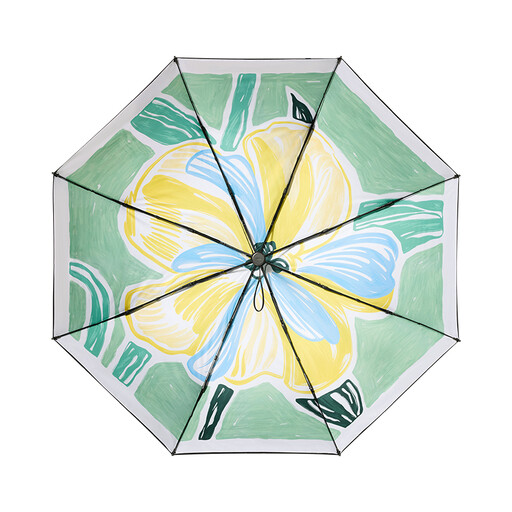
Why This Fits Their Persona: Perfect for those who enjoy long weekend strolls, garden parties or outdoor markets. It combines high-performance sun protection with an elegant design, offering full-body coverage without sacrificing style.
This model avoids the "flimsy windproof" claim with a premium fibreglass-aluminium alloy frame built for stability. The large 99 cm canopy provides genuine coverage, unlike smaller umbrellas with exaggerated UPF ratings.
The double-layer canopy not only enhances UV blocking but also promotes cooling. Its large diameter offers protection down to the feet, making it a true dual use sun and rain umbrella.
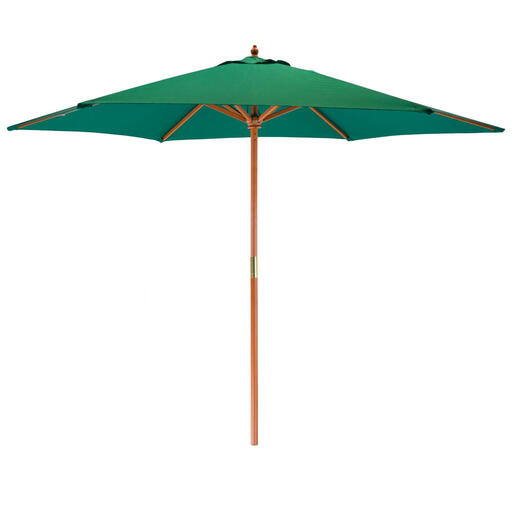
Why This Fits Their Persona: For those whose sun protection needs are centred around the home. This is not a personal umbrella, but a stylish and functional centrepiece for a garden, patio or outdoor dining area.
By being designed for a stationary purpose, it avoids the compromises of portable umbrellas. Its focus is on providing a large, stable area of shade, using a sturdy hardwood frame and a wide polyester canvas.
Its key advantage is scale. With a 2.68m width, it provides ample shade for multiple people, making it ideal for social gatherings. The pulley system allows for easy operation.
We have compiled a complete, real-time list of products that fully satisfy these strict selection criteria and UK safety regulations.
1. How long does the UV protection on an umbrella last? The UPF rating is determined by the fabric's weave and any special coatings. This protection does not diminish from sun exposure alone. However, the fabric's effectiveness can be compromised by physical damage like scuffs, tears or excessive stretching. With proper care—allowing it to dry fully and storing it correctly—the UV protection should last for the functional life of the umbrella.
2. Is a black sun umbrella better than a light-coloured one? A black sun umbrella, especially one with a black inner lining, is generally considered more effective for personal protection. While a light or silver outer surface is good at reflecting direct sunlight and heat, the black underside is superior at absorbing scattered UV rays that reflect up from surfaces like pavement or sand. This reduces your total UV exposure and minimises glare.
3. Can I use a UV protection umbrella in the rain? Absolutely. Most high-quality models are designed as a dual use sun and rain umbrella. The canopy fabric is treated with a water-repellent finish to handle showers. To maintain its condition, it is crucial to shake off excess water and allow the umbrella to air dry completely in an open position before folding it for storage. This prevents mildew and helps preserve the integrity of the fabric and frame.