
24/7 Customer Support

Free returns

Same-day & Next-day Delivery

Quality Guaranteed

Unlock Your Welcome Offers: FREE Delivery | Up to 80% OFF | Free 30-day JoyPlus trial
Download the APP
A dark lens is not automatically a protective lens. Many shoppers choose sunglasses based on colour, shape or a low price, then discover that the frame pinches, glare remains distracting or the hinges feel loose after regular use. For UK residents, where sunglasses may be used for commuting, coastal walks, driving and cycling, the specification matters as much as the appearance.
This guide explains what UV400 sunglasses mean, which features are worth paying attention to and how to match different designs to your routine.
A very dark lens can make the surroundings look dim without providing adequate ultraviolet protection. UV400 refers to protection against ultraviolet wavelengths up to 400 nanometres; it is separate from how dark or fashionable the lens appears.
Look for clear product information about UV400 or UV protection sunglasses rather than relying on lens colour. Brown, grey and mirrored lenses can all be suitable, provided the stated protection is present.
Polarised sunglasses are designed to reduce reflected glare from surfaces such as wet roads, water and glass. However, polarisation alone does not tell you the level of UV protection. Check for both features if glare reduction and ultraviolet protection are priorities.
Polarised lenses may also make some dashboard screens or mobile displays harder to read at certain angles. This is worth considering if you want driving sunglasses.
A pair may look lightweight online but still slip during movement or press behind the ears. Universal sizing is not universal comfort. Check frame width, bridge width, temple length and nose-pad design before ordering.
Foldable sunglasses can solve the portability problem, but repeated forceful folding may damage hinges. A protective case and careful handling are more useful than a thin folding profile alone.
UV400 sunglasses should state protection clearly in the product listing. Lens category is a separate consideration:
Photochromic sunglasses can change tint according to UV exposure. A model described as changing from Cat.0 to Cat.3 may be useful when moving between shade and sunlight, but its response inside a car can be limited because windscreens filter much of the UV that activates the lens.
For UK sales, also check that the product includes appropriate conformity and safety information. General-purpose sunglasses are commonly associated with BS EN ISO 12312-1 requirements, while sports eyewear may provide additional impact-related information. A product description should not be treated as a substitute for reading the supplied warnings and instructions.
Choose the lens feature that addresses your actual problem:
TR90 sunglasses use a flexible thermoplastic frame material commonly selected for low weight and shape retention. Weight figures help with comparison: several options below are listed at approximately 25.5–33g, while the Beneunder FD01h is listed at 0.97oz.
For cycling or running, prioritise anti-slip nose pads, rubber temple sections and wraparound coverage. For travel sunglasses, a compact foldable design and included case may be more valuable than aerodynamic styling.
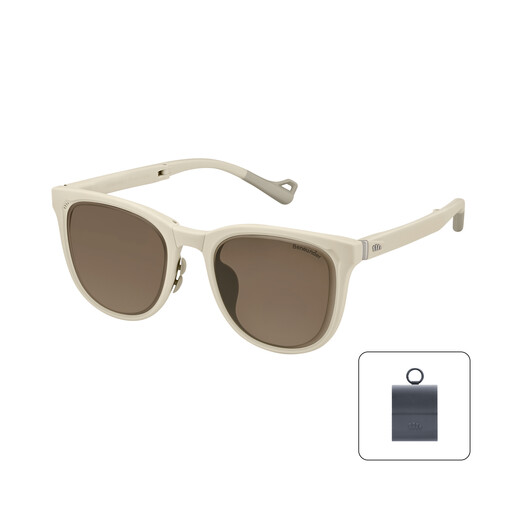
Why This Fits Their Persona: A practical everyday option for shoppers wanting a classic shape, portability and adjustable features for commuting, walks and holidays.
The listing specifies UV400 protection, a TR90 frame, foldable construction and adjustable temples rather than relying only on lens colour or style.
Listed at 0.97oz, with three-position adjustable temples, dual-axis nose pads and anti-reflective, oleophobic and scratch-resistant coatings.

Why This Fits Their Persona: Suits travellers and daily drivers who want a larger lens profile, a compact case-friendly design and a lighter frame.
The product details give measurable dimensions, a 26g weight and a folded thickness of 35mm, helping you judge portability before purchase.
The listing states UV400 protection, anti-reflective coating, a tri-fold TR90 frame and scratch-resistant protective layers.
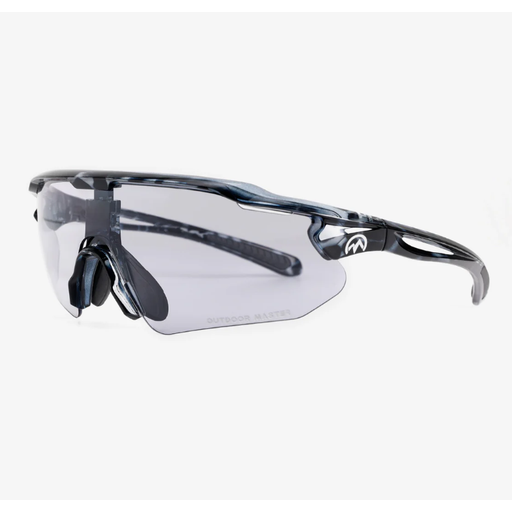
Why This Fits Their Persona: Designed around changing light and active movement, making it relevant to cyclists and multi-sport users who ride through mixed UK weather.
It combines stated photochromic and polarised lens functions with impact-resistant polycarbonate and adjustable nose pads rather than offering a fashion-only frame.
The listed weight is 26–29g, with UV400 protection, wider peripheral vision and an included prescription inner frame.

Why This Fits Their Persona: A cycling-focused option for riders who need glare reduction, a secure fit and lens coatings suited to outdoor conditions.
The listing specifies TAC polarisation, approximately 15.2% visible light transmission, adjustable silicone contact points and an ANSI Z87.1 performance certification.
Features a TR90 frame, UV400 protection, water- and oil-repellent coating, scratch-resistant coating and a stated weight of about 33g.
We have compiled a complete, real-time list of products that fully satisfy these strict selection criteria and UK safety regulations.
Rinse away grit before wiping lenses, then use a clean microfibre cloth. Avoid paper towels, abrasive cleaners, alcohol-based products and household detergents unless the manufacturer specifically permits them. Store sunglasses in their case rather than loose in a bag, and keep them away from high heat.
Do not use sunglasses for direct solar observation, and replace lenses if they become badly scratched or damaged. For driving, never wear dark sunglasses at night and check that the tint category is appropriate for road use.
They can be suitable for daytime driving when the lens category and visibility are appropriate. Avoid very dark category 4 lenses, and remember that polarised lenses may affect the readability of some displays. Photochromic lenses may also remain lighter inside a vehicle.
Lifespan depends on hinge use, storage, cleaning and exposure to scratches. A flexible TR90 frame and protective case can support regular use, but coatings and lenses still require careful handling. Replace a pair when the lenses are damaged or the frame no longer fits securely.
Price alone does not confirm protection or comfort. Compare the stated UV400 specification, lens technology, frame dimensions, weight, fit adjustments and included accessories. A straightforward pair with the right specifications may suit you better than a heavily marketed design with limited technical information.