
24/7 全天候客户支持

免费退货

当日/次日达

品质保障

开启新人专享福利: 全场免邮 | 低至 2 折 | 免费试用 30 天 JoyPlus 会员
下载 Joybuy
Choosing between a traditional broom, cordless stick vacuum, robot vacuum cleaner or wet and dry vacuum cleaner depends on your floors, household routine and cleaning priorities. A compact flat may need quick daily sweeping, while a family home with carpets, pets and muddy entryways may benefit from a more capable combination of appliances.
The product with the highest suction figure is not automatically the right choice. Before buying, look beyond headline claims and check how the cleaner will work in your actual home.
A powerful suction vacuum can collect dust and debris effectively, but suction figures such as 6000Pa, 8150Pa or 10,000Pa are not directly comparable across every product type. Brush design, airflow, floor contact, filtration and navigation also influence everyday results.
For robot vacuums, a high Pa figure may be useful on hard floors and low-pile carpets, but it does not remove the need to empty bins, clean brushes or prepare the floor by removing cables and small objects.
A vacuum cleaner with mop may wipe light marks while collecting dust, but many robot mops use a damp cloth rather than a powered roller. Check whether the product has a water tank, adjustable water flow, automatic mop lifting and a suitable cleaning method for your flooring.
A dedicated wet and dry vacuum cleaner is more appropriate for handling liquid spills and washing hard floors. However, it normally requires more hands-on care, including emptying tanks and cleaning the roller after use.
A self-emptying robot vacuum reduces the frequency of emptying the robot’s dustbin, but the dock still needs attention. Mop pads, filters, brushes and water tanks require regular cleaning. Similarly, an anti-tangle vacuum cleaner can reduce hair build-up, but it does not make maintenance unnecessary.
For a traditional broom, check handle construction and storage dimensions. A broom that is difficult to assemble or too bulky for your cupboard may be left unused, regardless of its low purchase cost.
For wood, laminate, vinyl and tile, look for soft bristles, a gentle brush roll or adjustable cleaning settings. A hard floor cleaner should reach edges and corners without leaving excessive moisture behind.
Homes with rugs and carpets should consider brush height, carpet boost and surface detection. A dedicated carpet vacuum cleaner or cordless stick model may provide more direct control than a robot for stairs, upholstery and concentrated dirt.
Cordless models list a maximum runtime, usually measured in a lower-power mode. Actual runtime can fall when using motorised brushes or higher suction. Check the battery charging time, whether the battery is removable and the dust cup capacity.
Robot vacuums also need enough runtime for the floor area. Multi-floor mapping can help in larger UK homes, but the robot may still need to return to its dock between cleaning sessions.
LiDAR or LDS navigation can create a map and support route planning, while ToF or other sensors help detect obstacles. These systems may reduce missed areas, but the cleaner still needs clear access around furniture and charging docks.
Check whether the robot supports no-go zones, carpet detection, multi-floor maps and app scheduling. These features are particularly useful for homes with children, pets or rooms that need different cleaning routines.
Pet owners should look for an effective pet hair vacuum with a motorised brush, a large dustbin and a design that makes hair removal straightforward. Anti-tangle features can reduce wrapped hair around the brush, but regular inspection remains sensible.
Allergy-conscious households should check the filter type, how often it needs replacing and whether dust can escape while emptying. Avoid making medical assumptions about filtration; instead, focus on the stated filter construction and maintenance instructions.
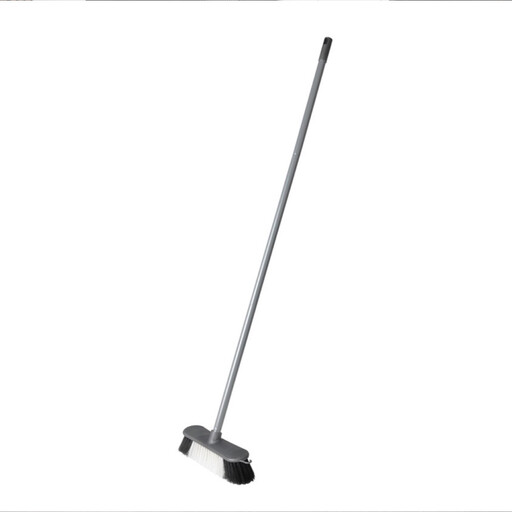
Why This Fits Their Persona: A practical option for renters, smaller homes and households needing quick daily cleaning without charging, apps or replacement batteries.
The three-piece metal handle dismantles for compact storage, while soft nylon bristles suit smooth indoor floors and avoid relying on inflated suction claims.
Angled head reaches corners and skirting boards; the 47-inch handle and 300g weight support easy everyday sweeping.
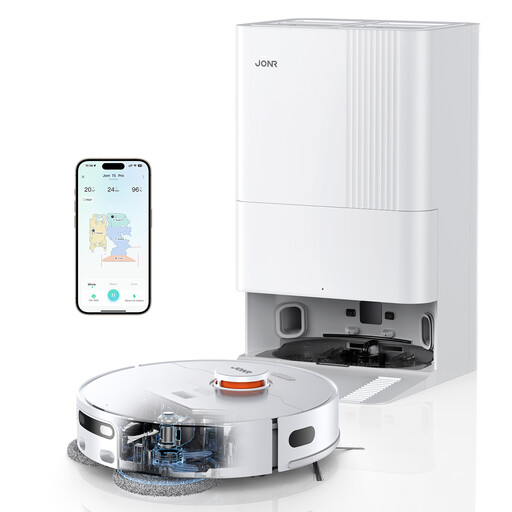
Why This Fits Their Persona: Suitable for smart-home shoppers wanting automated vacuuming, wiping and dock-based maintenance for regular floor care.
Its listed dock functions include automatic dust emptying, mop cleaning and hot-air drying, addressing the maintenance often overlooked in mop-capable robots.
8150Pa maximum suction; LiDAR navigation, carpet detection, no-go zones and an anti-tangle side brush.
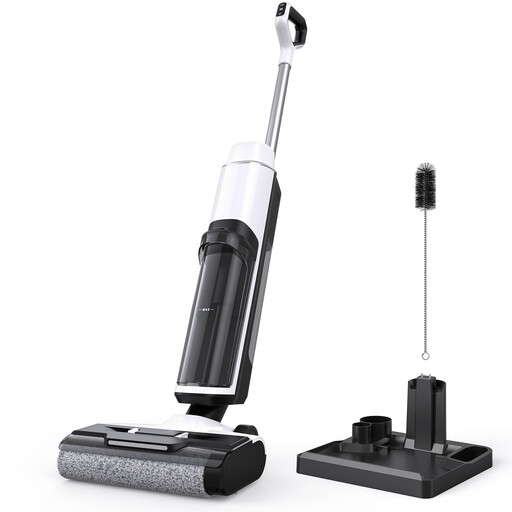
Why This Fits Their Persona: Designed for busy family kitchens and hard floors where dry debris, tracked-in dirt and everyday liquid messes need a single cleaning process.
It is designed for washing, drying and self-cleaning rather than presenting a damp wiping cloth as a substitute for floor washing.
Three-in-one wash, dry and self-clean functions; self-propelled forward motion and edge-cleaning squeegees.
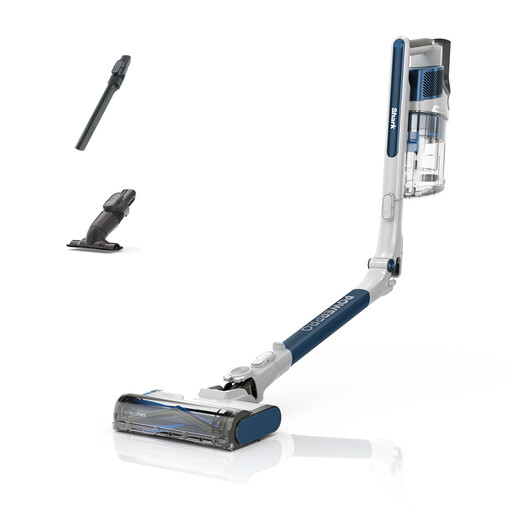
Why This Fits Their Persona: A flexible cordless stick vacuum for homes with pets, stairs, furniture and mixed hard-floor and carpet cleaning needs.
The anti-hair-wrap brush is intended to reduce hair build-up, while the XL dust cup limits interruptions during larger cleaning sessions.
75AW maximum suction and up to 50 minutes’ listed runtime; converts to a handheld cleaner for stairs, upholstery and cars.
We have compiled a complete, real-time list of products that fully satisfy these strict selection criteria and UK safety regulations.
Running cost depends on electricity use, cleaning frequency and replacement parts. Robot vacuums may reduce manual effort but can require dust bags, mop pads and filters. Cordless models may have fewer consumables but battery replacement can become a cost consideration over time.
Lifespan varies with usage, battery care, filter cleaning and brush maintenance. Follow the manufacturer’s charging and storage instructions, avoid blocked airflow and replace washable filters only when completely dry. A stated warranty or parts guarantee can also help when comparing models.
Yes. A broom is useful for quick spills, corners, thresholds, stairs and areas where a robot cannot safely operate. It also works without charging and can complement automated daily cleaning. For smooth indoor flooring, soft nylon bristles and an angled head are practical features to look for.