
24/7 Customer Support

Free returns

Same-day & Next-day Delivery

Quality Guaranteed

Unlock Your Welcome Offers: FREE Delivery | Up to 80% OFF | Free 30-day JoyPlus trial
Download the APP
Choosing between vacuum cleaners is not simply a matter of comparing suction figures. A compact flat, a multi-storey family home, a pet household and a car-cleaning routine all require different features. The right model should suit your floors, storage space, cleaning habits and tolerance for maintenance.
Before buying, look beyond headline marketing claims and check how a vacuum cleaner will work in everyday UK conditions.
Numbers such as Pa, kPa, AW or watts are not directly interchangeable. Motor wattage indicates electrical consumption, while suction measurements may be recorded under different conditions. A high figure does not automatically mean better results on every floor.
Brush design, airflow, floor-head sealing and filtration also affect performance. For carpets, look for a motorised brush and carpet adjustment. For hard floors, a soft roller or suitable floor head can help reduce scattering and protect delicate surfaces.
A cordless vacuum cleaner may advertise its longest runtime on the lowest setting with a non-motorised attachment. Using a motorised head or maximum suction usually reduces operating time. Check:
For larger homes, a spare removable battery or a corded alternative may be more practical than relying on the headline runtime.
Hair, fine dust and blocked filters can reduce airflow. A pet hair vacuum cleaner should have an anti-tangle brush or a roller that can be removed easily for clearing hair. Washable filters reduce the need for frequent replacements, but they must be dried completely before refitting.
Robot models also require regular attention. Even a robot vacuum cleaner with mapping needs its brushes, sensors, wheels, dustbin and mop components checked. Automation reduces daily effort; it does not remove maintenance altogether.
For a vacuum cleaner for carpets and hard floors, check whether the model offers separate modes or automatic floor detection. Carpet boost can help lift embedded debris, while a soft floor head may be more suitable for sealed hard floors.
A stick vacuum cleaner is convenient for quick daily cleaning, stairs and upholstery, but its smaller dustbin may need more frequent emptying. An upright vacuum cleaner generally offers a larger body and can be useful for regular whole-room carpet cleaning. A corded model provides continuous operating time, although cable management may be less convenient.
If fine dust is a concern, look for a vacuum cleaner with HEPA filter and confirm the stated filtration specification. The filter should be accessible for cleaning or replacement, and the dust container should empty without creating unnecessary contact with debris.
Bagless designs avoid buying replacement bags, but the cyclone, seals and filters still require care. You can browse more bagless options in the bagless vacuum cleaners range.
Compare the machine’s weight with the cleaning tasks you perform. A lightweight handheld vacuum cleaner is useful for stairs, shelves and cars, while a heavier floor model may provide a larger bin or stronger motor.
For open-plan homes, check the stated noise level where available. Consider where the vacuum will be stored and charged: wall mounts, freestanding docks and automatic cord rewind can make a practical difference in smaller UK homes.
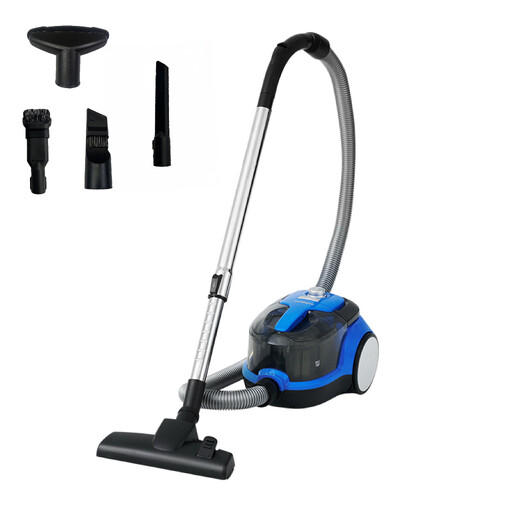
Why This Fits Their Persona: A practical choice for renters, first homes and users who prefer continuous corded cleaning without battery planning.
Its 800W motor, 17.5kPa stated suction and 1.1L bagless dust container are clearly specified, avoiding reliance on an unqualified “powerful” label.
Multiple brush heads, automatic cord rewind and a washable filter support floors, carpets and upholstery.
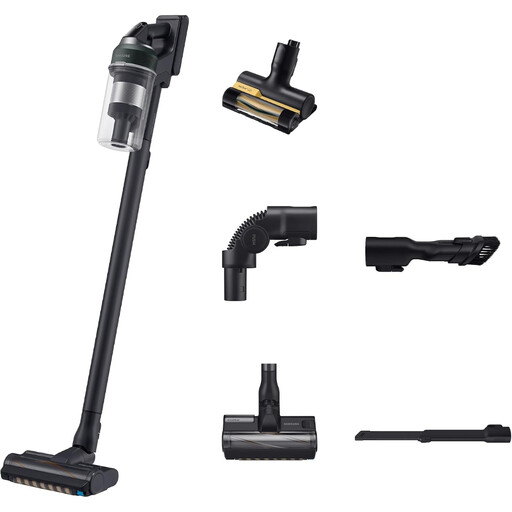
Why This Fits Their Persona: Suitable for households wanting cordless convenience, detailed filtration information and tools for pet hair and upholstery.
The listed 60-minute maximum runtime is accompanied by charging and battery details, so buyers can distinguish stated maximum use from higher-power cleaning.
It has a 0.8L dust container, Pet Tool+, removable battery and a listed HEPA filtration system.
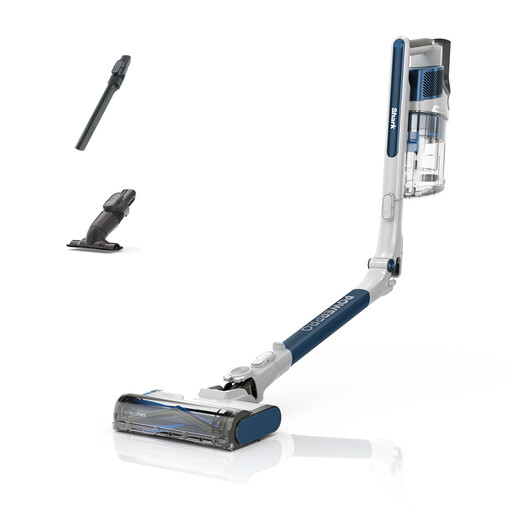
Why This Fits Their Persona: Designed for frequent cleaning across carpets, hard floors, stairs, furniture and car interiors.
The stated 50-minute maximum runtime is paired with a 3.5-hour charge time, while the XL dust cup addresses frequent emptying.
FloorDetect, 75AW maximum suction, Anti Hair Wrap and a conversion to handheld use support mixed household cleaning.
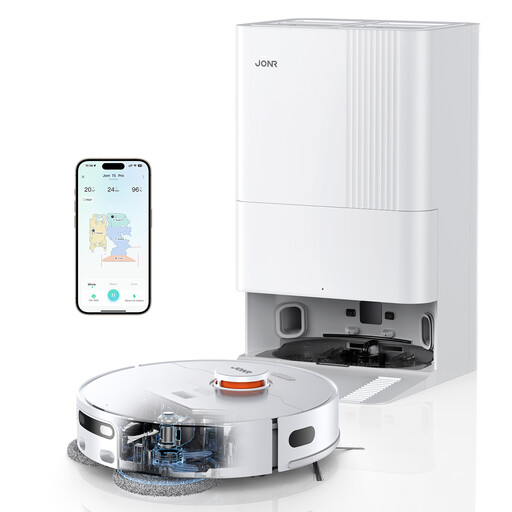
Why This Fits Their Persona: A suitable format for people who want scheduled floor cleaning and app-based control while managing a busy routine.
Its listed LiDAR navigation, obstacle avoidance, no-go zones and anti-tangle side brush provide more specific information than a vague automation claim.
The all-in-one dock provides dust emptying, mop cleaning, hot-air drying and charging, subject to the manufacturer’s instructions.
We have compiled a complete, real-time list of products that fully satisfy these strict selection criteria and UK safety regulations.
Follow the product manual, but inspect filters whenever suction drops or the machine sounds different. Washable filters must be fully dry before installation. Hair and debris should be removed from the brush roll regularly, especially in homes with pets.
Electricity use is generally modest for domestic charging, but running costs also include replacement filters, batteries and brush parts. A model with a removable battery may be easier to maintain over time, provided compatible replacements remain available.
Many multi-surface models can handle all three with the correct attachment or mode. Check the included tools, brush-roll design and floor compatibility rather than assuming that a high suction figure guarantees suitable performance on every surface.