Small-cottage space savers
If the machine will be put away between stays, check where it can stand and how much room it needs in use. FoodSaver UK specifies vertical storage for its VS0100 bag sealer.


Choose a bag sealer if you need custom-sized portions for several stays or to take home; a vertically storable model is worth considering when cupboard space is tight. If you mainly open and reseal beans at the cottage, a reusable vacuum-storage system or coffee canister better matches that workflow. Freshly roasted beans continue to release carbon dioxide, so decide how the packaging will manage off-gassing before choosing a sealer or container.
If the machine will be put away between stays, check where it can stand and how much room it needs in use. FoodSaver UK specifies vertical storage for its VS0100 bag sealer.
If you divide beans into different-sized guest or take-home portions, a heat-sealing machine that uses rolls offers a way to make bags to length. Check whether it can also seal without drawing a vacuum when your packing process requires that.
If you pack beans soon after roasting, account for the carbon dioxide they continue to release. Coffee-packaging supplier Roastar explains why packing timing and a suitable degassing-valve format matter for freshly roasted beans.
Choose when: You make occasional heat-sealed portions but need to put the machine away between cottage stays.
Trade-off: You will need bags or rolls compatible with the machine.
Choose when: Custom bag lengths and the option to close a bag without vacuum are central to your packing routine.
Trade-off: You still need to check the machine's size against the space available for storage and use.
Choose when: Beans stay at the cottage and are opened and resealed in small quantities.
Trade-off: A pump-and-container system relies on compatible parts and does not make custom-sized heat-sealed packs.
| Concern | What to check | Who this matters to |
|---|---|---|
| Fresh-roast packing | Check when the beans were roasted and whether the intended packaging manages off-gassing, such as with a suitable one-way valve. | If I pack beans soon after roasting, I need the closed pack to account for continuing gas release rather than relying on vacuum strength alone. Around 42% of consumers put fresh-roast pack integrity first. |
| Cottage storage | Measure storage and working space; check the machine's dimensions and whether it stores vertically. | With a small kitchen and occasional packing sessions, I need equipment I can put away between stays. Space and simple occasional use come first for around 33% of consumers. |
| Portions and resealing | Check the supported bag width, seal-only function or compatible reusable containers, depending on how beans will be used. | When guest numbers change, I want to make different-sized portions or reopen the same supply without making another pack. Around 25% of consumers prioritise flexible portioning or repeat resealing. |
Roastar explains that coffee continues to release carbon dioxide after roasting. Pressure can build in an ordinary sealed bag without suitable degassing provision.
Find out when the beans were roasted and choose the packing timing and bag format before deciding which sealer to use.
A heat-sealed portion and a reusable vacuum container serve different routines. FoodSaver UK, CASO Design UK and ZWILLING UK describe distinct ranges of compatible supplies and accessories.
Decide whether beans will be divided into packs or repeatedly reopened, then check the sizes and compatible supplies for the model you intend to buy.
Whether coffee is packed privately or as part of a food business affects the obligations to consider. The Food Standards Agency says a food business must register with its local authority, while its MyHACCP guidance treats packaging, storage and shelf life as parts of food-safety planning.
If packing beans is part of a commercial cottage operation, confirm the activity's status with the relevant local authority and plan the handling and storage process accordingly.
FoodSaver UK offers countertop bag sealers and compatible storage supplies. Its VS0100 is relevant if you want to make portions but store the machine vertically between uses.
The CASO Design VC10 is a conventional bag sealer for buyers who want custom bag lengths and a separate sealing function.
ZWILLING's Fresh & Save range centres on a compact pump and compatible reusable bags, containers and lids. It suits a routine of opening and resealing beans on site rather than making many custom-sized packs.
These choices cover two different routines: making bagged portions with a household sealer, or keeping coffee in a manual vacuum-storage canister for repeated use. Check fresh-roast packaging separately for either routine.
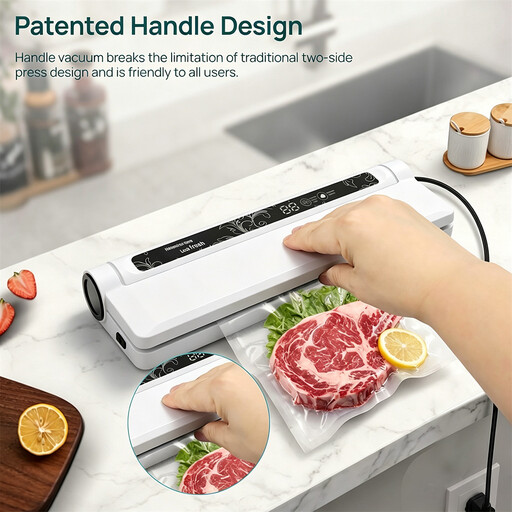 No image available
Consider this machine if you want to make occasional bagged portions at the cottage.
The product name specifies a built-in storage pocket and 20 supplied bags measuring 17 × 25 cm. Before buying, check bag compatibility and whether the machine offers a separate seal-only mode. For freshly roasted beans, check the packing timing and bag format rather than assuming an ordinary vacuum bag manages off-gassing.
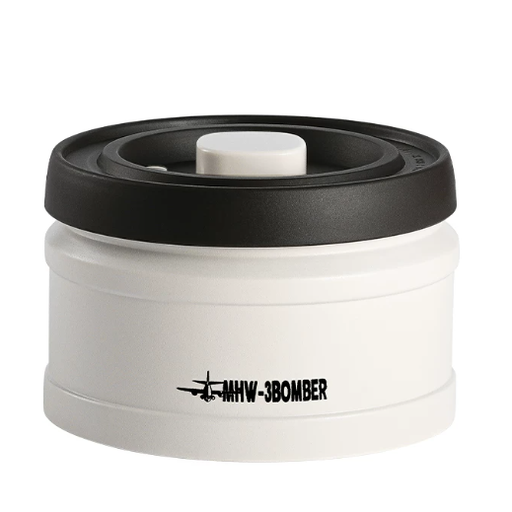 No image available
Consider this canister if you intend to store coffee for repeated use at the cottage rather than make heat-sealed portions.
It is identified as a manual vacuum-storage canister for coffee, not a bag-sealing machine. Check its capacity and dimensions against the amount of coffee and storage space you have, and check the appropriate storage approach if the beans are still off-gassing.
Do not assume an ordinary vacuum bag is suitable immediately after roasting. Coffee-packaging supplier Roastar explains that beans release carbon dioxide most strongly in the first 12–24 hours and can continue off-gassing for days or weeks. Choose a packing time and format that manage that release, rather than relying on a sealer setting alone.
Use a bag sealer when you need separate, custom-sized portions; choose reusable vacuum storage when the same supply will be opened and resealed on site. For bags, check width, seal-only operation and compatible rolls or bags. For a reusable system, check that its pump and storage pieces are compatible.
Packing coffee at a cottage is not automatically a food business; the purpose of the activity matters. The Food Standards Agency says food businesses must register with their local authority. If the coffee is packed as part of a commercial offering, confirm how that requirement applies to the operation and plan the handling, packaging and storage process.
No: using a vacuum sealer alone does not establish a shelf life or suitable storage conditions. The Food Standards Agency's MyHACCP guidance calls for packaging, storage conditions, shelf life and the product itself to be considered together. Do not apply a shelf-life claim for one food or packing method to another.