Who is this for?

Frequent bulk-bean portioners

If you divide a large bag of beans into many portions at once, a heat sealer that stores and cuts rolls can reduce repeated measuring and trimming. Check those features on the particular model; FoodSaver lists them for its VS3190.

Small-kitchen coffee drinkers

If you prepare only a few portions and have limited cupboard space, a handheld pump and compatible valve bags may be easier to accommodate. Lakeland StayFresh and ZWILLING Fresh & Save use their own bag systems, so check what comes with the set.

Freshness-focused coffee drinkers

If you mainly want to stop reopening one large bag, compare portioning with keeping beans in their original package. A study published in Food Packaging and Shelf Life found that an original package with an integrated screw cap performed better than the other post-opening methods it tested; it did not establish that every domestic vacuum-sealed bag performs worse.

What matters when choosing a sealer?

Start with how many portions you make in one session, then decide whether limiting repeated opening or keeping the equipment compact matters more to you. Compare the complete storage routine with the closure on your original coffee bag, not just the suction setting on a machine.

Concern What to check Who this matters to
Preparing many portions Check whether the model accepts rolls, includes a cutter and supports the bag width you need. I split a large bean purchase into many packs at once and want to spend less time measuring and cutting. Around 33% of consumers put the batch-packing workflow first.
Limiting repeated opening Choose portions you can finish without reopening them repeatedly, and compare the plan with your original bag's closure. Once I open a large coffee bag, I want the remaining beans to stay closed until I need them. For around 42% of consumers, limiting repeated opening is the primary concern.
Compact, reusable storage Check whether the pump is included and whether compatible bags have the capacity and cleaning instructions you need. I have little cupboard space and would rather wash suitable bags than prepare a new length for every small portion. Around 25% of consumers prioritise a compact, reusable system.

Mistakes to avoid

  • Assuming a vacuum-sealed portion always beats the original bag

    A study published in Food Packaging and Shelf Life found that an original package with an integrated screw cap retained freshness better than the clip, tape and container methods it tested. It did not compare every domestic vacuum sealer with every original coffee package.

    If your bag has an effective reclosure, consider keeping it. If you need separate portions, size them so the unopened packs can remain closed until use.

  • Buying valve bags without checking the pump

    Lakeland StayFresh bags are intended for its separately sold handheld sealer, while ZWILLING FlexBags belong to the Fresh & Save system. A heat sealer should not be assumed to work with either valve-bag format.

    Check the pump, bag sizes and compatible replacements together before choosing a handheld system.

    A brand-specific valve-bag system may require compatible replacement bags or containers later.

  • Choosing a large machine for occasional portions

    Roll storage and a cutter are useful during repeated packing sessions, but the appliance also needs somewhere to sit or be stored.

    Match the format to how often you seal: compare a countertop machine for regular batches with a handheld system for a few portions at a time.

  • Using the same routine for beans and raw or wet foods

    Dry coffee-bean portioning is not a substitute for cleaning the appliance between different food uses. UK Food Standards Agency guidance on chilled vacuum-packed foods addresses different food-safety considerations from storing dry beans at home.

    Follow the machine's cleaning instructions, particularly if you also use it for raw, wet or ready-to-eat foods.

Relevant brands for reference

FoodSaver

Its vacuum-sealer range includes countertop machines for roll-based batch packing and slimmer models for tighter storage spaces.

  • FoodSaver lists built-in roll storage, a cutter and compatibility with 20 cm and 28 cm rolls for the VS3190.
  • Features differ by model: the slimmer VS0100 is described as storing vertically, so check the selected machine's roll and bag requirements.

Lakeland StayFresh

A handheld valve-bag system to consider for occasional dry-food portions where storage space is limited.

  • Lakeland describes StayFresh bags as suitable for dried foods, including coffee beans.
  • The bags require the separate StayFresh handheld sealer and do not provide custom heat-sealed bag lengths.

ZWILLING Fresh & Save

A pump-and-bag system for consumers who prefer reusable storage to cutting heat-seal rolls.

  • ZWILLING describes its FlexBags as reusable and dishwasher-safe; the referenced set includes a compact pump.
  • Check that the chosen bag capacity fits your portions and allow for washing and drying between uses.

LAICA

Its countertop models provide a reference point if you also want sealing controls for foods beyond coffee beans.

  • LAICA lists a 30 cm maximum bag width and seal-only function for the VT3210, and adjustable suction and manual pulse control for the VT3260.
  • Check the chosen model's electrical configuration and compatible bags for your intended market and use.

CASO Design

Its range spans handheld, bar and chamber formats, useful for distinguishing a simple bean-packing task from wider batch-cooking needs.

  • CASO Design identifies handheld and bar sealers as distinct formats alongside larger machines.
  • For dry bean portions, check whether a larger format serves any other food-packing task you actually plan to do, as well as its electrical configuration.

A Joybuy household sealer to consider

This household vacuum sealer is a candidate for making dry-food portions. Check its supplied bags and whole-bean suitability before deciding whether it fits your coffee-packing routine.
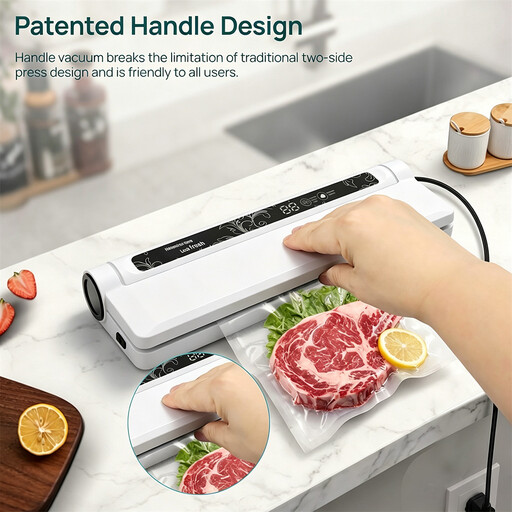
Huacan household vacuum sealer with storage pocket and supplied bags

Huacan Vacuum Sealer with Storage Pocket and 20 Bags (17 × 25 cm)

For making several portions at home, check that this dry-food sealer and its bags suit your whole coffee beans.

The product title lists a built-in storage pocket and 20 bags measuring 17 × 25 cm. Confirm whether the supplied bags are pre-cut or on a roll, and check cutter and replacement-bag compatibility if you want to make custom lengths.

View on Joybuy

Questions about sealing coffee beans

Will vacuum sealing keep beans fresher than their original bag?

Not necessarily. A study published in Food Packaging and Shelf Life found that an original package with an integrated screw cap performed better than several other post-opening methods it tested, but it did not test every domestic vacuum-sealed portion. Compare the closure on your own bag with the portioning routine you would actually use.

How much coffee should I put in each bag?

Pack an amount you can finish without repeatedly reopening that portion. Base it on how quickly you use beans and how much your grinder or brewer takes; there is no single portion weight established for every household.

Do I need a moist-food setting for whole coffee beans?

Dry whole beans do not call for a moist-food setting. If you will also pack wetter ingredients for batch cooking, compare those additional tasks with the settings and operating instructions of the particular machine.

Can I use my coffee-packing routine for other foods?

You can consider a sealer for other foods, but do not carry over assumptions about storing dry beans to chilled, raw or wet ingredients. Follow the appliance's cleaning instructions and food-specific storage guidance; the UK Food Standards Agency's guidance for businesses packing chilled foods addresses different safety considerations.

What product marking should I check in Great Britain?

Check the marking and documentation applicable to the particular electrical product and market. UK government guidance dated 21 August 2026 states that Great Britain continues to recognise CE marking alongside UKCA marking where applicable; Northern Ireland has different market processes. A marking does not indicate how well a sealer packs coffee beans.