
24/7 Customer Support

Free returns

Same-day & Next-day Delivery

Quality Guaranteed

Unlock Your Welcome Offers: FREE Delivery | Up to 80% OFF | Free 30-day JoyPlus trial
Download the APP
A vacuum sealer machine can help organise the freezer, portion meals and protect dry ingredients from air and moisture. However, the wrong model may create more work than it saves. Some machines are difficult to clean after sealing liquids, while others have narrow sealing areas that limit the size of bags you can use.
Before buying a food vacuum sealer, look beyond power ratings and promotional language. The practical differences are usually found in the sealing width, food modes, controls, included accessories and how easily the machine fits into your kitchen routine.
A higher wattage figure does not automatically mean faster or more effective vacuum sealing. Performance also depends on the pump, sealing strip, bag compatibility and operating controls. A 120W vacuum sealer may be suitable for regular household use, but check its other specifications before assuming it will handle large batches.
Dry ingredients such as rice, coffee and cereal are relatively straightforward to seal. Fresh meat, fish, marinades and cooked meals are more demanding because liquid can be drawn towards the pump.
If you plan to seal both fresh and dry ingredients, look for a vacuum sealer for dry and wet food with separate modes or pulse control. A dry-only machine may be less suitable for meal preparation and freezer storage.
An appliance with a small footprint can be convenient in a compact kitchen, but a narrow sealing strip may restrict the size of portions you can prepare. Also check whether bags are included, whether replacement rolls are compatible and whether the unit has space for accessories.
A 28cm sealing width is a useful specification for many household portions, while smaller machines may be more appropriate for individual servings and limited cupboard space.
A reliable kitchen food sealer should provide a setting suited to the food being packed. Dry mode is generally designed for solid, low-moisture foods. Wet mode can help manage foods containing more liquid, although it does not remove the need to handle food safely.
Pulse mode is also useful because it gives you more control over delicate foods, preventing softer items from being compressed excessively. Some models include jar or box functions through an external hose, which may suit users storing dry goods in reusable containers.
Check the maximum bag width before purchasing. A 28cm sealing width can accommodate a range of standard household portions, but the usable width may be slightly reduced by the bag edges and sealing area.
Look for a machine that works with compatible embossed vacuum bags or rolls. If you regularly prepare larger portions, review the supplied bag sizes rather than relying only on the machine’s headline dimensions.
Vacuum pressure, measured in kPa, indicates the pressure difference the machine is designed to create. It should be considered alongside suction speed and the quality of the seal. For example, the ATSHARK model listed below specifies -60kPa vacuum pressure and 5L/min suction speed.
A touchscreen vacuum sealer may offer a clear interface, while button controls can be simpler for occasional users. Whichever style you choose, look for a clear seal-only function, an accessible stop button and instructions in English.
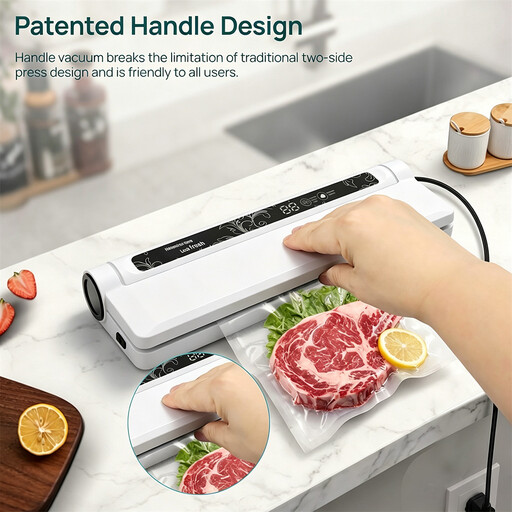
Why This Fits Their Persona: A practical starting point for UK households wanting to try vacuum storage bags without choosing a larger multi-function appliance. The built-in storage pocket and supplied 20 bags help simplify initial set-up.
The included bags make it easier to check the format before buying additional supplies, while the compact kit avoids paying for features you may not use.
Built-in storage pocket; supplied with 20 bags measuring 17 × 25cm.
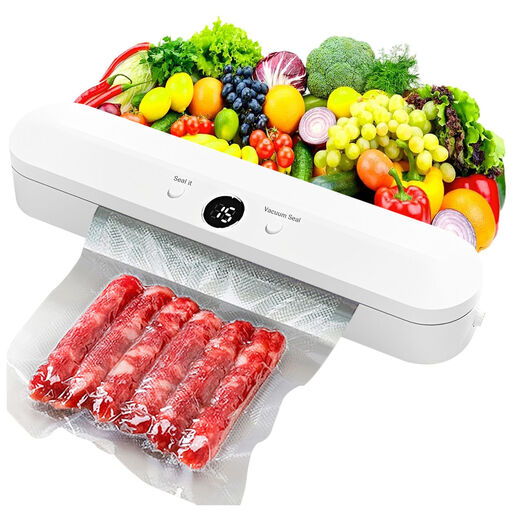
Why This Fits Their Persona: Suitable for households portioning meat, vegetables, leftovers or freezer meals during a normal weekly routine. The 28cm working width provides flexibility for standard food portions.
Its listed wet and dry modes address the common mistake of selecting a dry-only appliance for mixed household use.
120W power rating; LCD display; includes 10 vacuum bags.
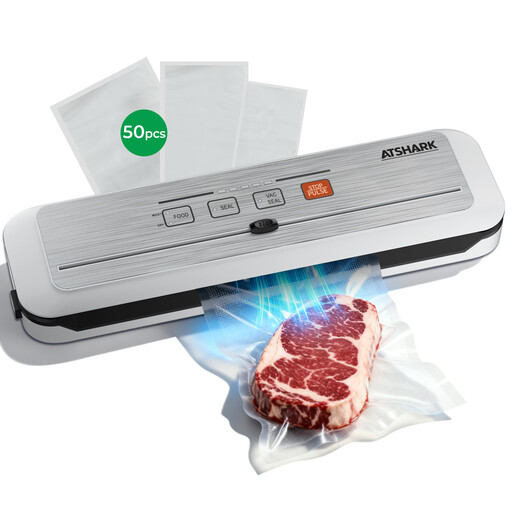
Why This Fits Their Persona: Designed for shoppers seeking broader control options, touchscreen operation and accessories for varied food storage or sous-vide preparation.
The separate seal, vacuum, wet/dry, pulse and jar/box functions provide more specific control than a single automatic setting.
-60kPa vacuum pressure and 5L/min suction speed; 50 bags in three sizes plus an external hose.
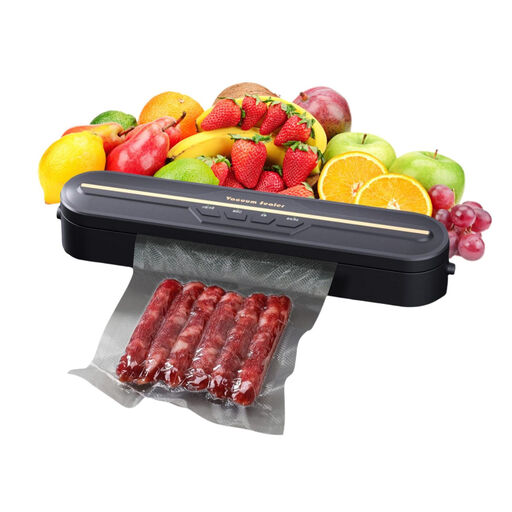
Why This Fits Their Persona: A suitable format for shoppers who want a dedicated food preservation machine with a full-width sealing area and support for both dry and wet ingredients.
The stated dry and wet food suitability reduces the need to rely on one generic setting for every type of ingredient.
120W power rating; 28cm sealing width; includes 10 vacuum bags.
We have compiled a complete, real-time list of products that fully satisfy these strict selection criteria and UK safety regulations.
Vacuum sealing can help reduce exposure to air, but it does not make food safe indefinitely. Chill cooked food before packing, keep perishable items refrigerated or frozen and follow the original use-by guidance. Do not use vacuum sealing as a substitute for correct cooking, cooling or storage.
Keep liquid-rich foods as level as possible and stop the cycle if liquid approaches the pump area. Leave enough space at the open end of each bag for a clean seal, and wipe the sealing channel after use. Regularly inspect the sealing strip and hose for food residue or damage.
For sous-vide cooking, use bags and temperatures suitable for the method, and follow reliable food-handling guidance. A sous-vide vacuum sealer is useful for removing air from sealed portions, but the machine itself does not determine safe cooking times.
Electricity use is generally limited to the short period when the pump and heat-sealing strip operate. Ongoing costs are more affected by replacement bags or rolls. Choosing reusable containers, buying compatible rolls and cutting bags to the correct size can help control spending.
Lifespan depends on usage frequency, cleaning and the condition of consumable parts such as sealing strips and hoses. Avoid continuous operation without following the manufacturer’s recommended rest periods. Store the appliance in a dry place and keep the sealing area free from crumbs, grease and moisture.
No. Check that the product specifically lists wet mode or wet-food suitability. For soups and very liquid mixtures, partially freeze the contents first or use a suitable container and external hose if supported. This helps reduce the risk of liquid entering the pump and makes a cleaner seal more likely.