
24/7 Customer Support

Free returns

Same-day & Next-day Delivery

Quality Guaranteed

Unlock Your Welcome Offers: FREE Delivery | Up to 80% OFF | Free 30-day JoyPlus trial
Download the APP
A vacuum sealer machine can help portion meat, protect dry foods and reduce freezer burn, but choosing the wrong model may leave you with wasted bags, weak seals or a device that takes up valuable cupboard space. UK households also need to consider compatible power requirements, cleaning and safe food-handling practices before buying.
The main marketing traps are easy to overlook:
For everyday home food preservation, look at both the stated vacuum pressure and extraction speed. Pressure is commonly shown in kPa, while extraction rate is listed in litres per minute.
For example, the ATSHARK models below specify -60kPa vacuum pressure and 5L/min extraction speed. These figures provide a useful comparison between machines, although actual results also depend on bag material, food shape and how cleanly the bag is positioned.
A pulse mode is useful for delicate items such as soft fruit, bread or biscuits because it gives you more control over the air removal. Without it, the machine may compress fragile food before the seal is complete.
A basic heat sealer for food bags may only close a bag’s opening. That can work for snacks, opened packets and simple storage, but it does not remove air.
A full food vacuum sealer should ideally offer:
Wet mode does not mean liquids can be poured freely into the pump. Keep sauces and marinades controlled, avoid overfilling and leave sufficient space above the contents. Chilling or partially freezing liquid foods first may also help prevent liquid entering the sealing channel.
Check the maximum bag width and the sizes supplied in the box. Larger bags are convenient for joints of meat or family meal portions, while smaller bags reduce material waste for individual servings.
A compact food sealer is more practical for a small kitchen or office if it can be stored easily between uses. Look for a removable or accessible sealing area, clear controls and straightforward cleaning instructions. Food residue around the heating strip or silicone seal can affect the finished seal.
For electrical appliances, check that the product includes a UK power cord and provides clear manufacturer and warranty information. Product safety markings and instructions should be reviewed before use; markings alone should not be treated as a substitute for following the supplied manual.
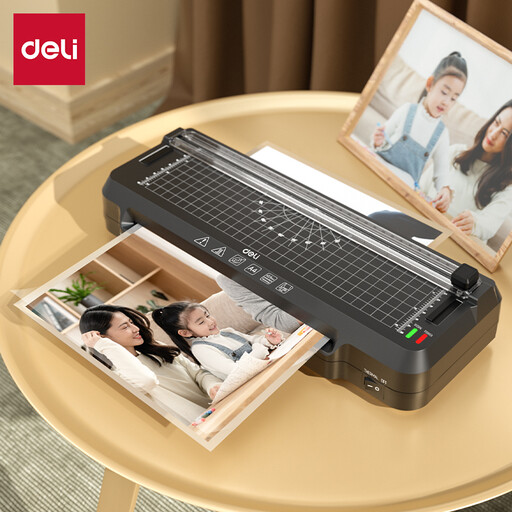
Why This Fits Their Persona: A straightforward option for households that mainly need to close opened packets or organise dry foods without the additional functions of a vacuum sealing machine.
Its product name clearly identifies it as a heat sealer, helping buyers avoid paying for vacuum functions they do not require.
Designed for home, kitchen and office use; the white finish may suit lighter worktops and storage areas.
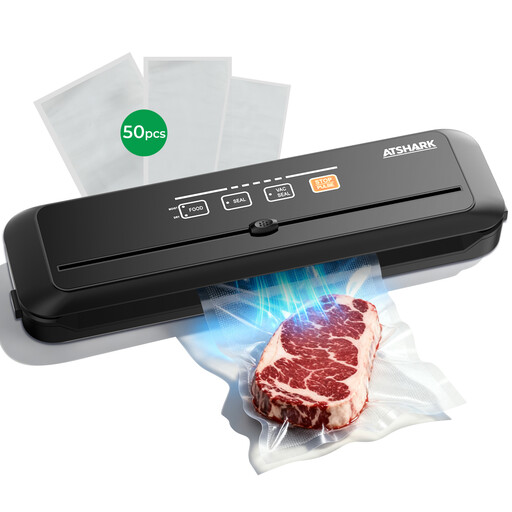
Why This Fits Their Persona: Suitable for home cooks wanting a touchscreen interface, multiple modes and a selection of bag sizes for regular meal preparation.
The specification lists its five modes, -60kPa pressure, 5L/min extraction and 50 included bags, making the feature set easier to verify.
Touchscreen controls; includes 15x20cm, 20x30cm and 28x40cm bags plus an external vacuum hose.
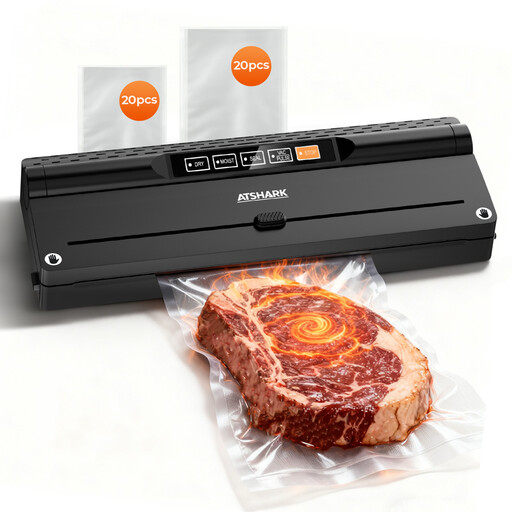
Why This Fits Their Persona: A practical match for batch cooking, freezer portioning and sous-vide preparation where repeated sealing and varied food types are common.
It specifies dry/wet, pulse and canister/box functions, while the built-in cutter helps prepare bags without separate cutting tools.
Lists -60kPa pressure and 5L/min extraction; supplied with 40 bags in two sizes and a one-year limited warranty.
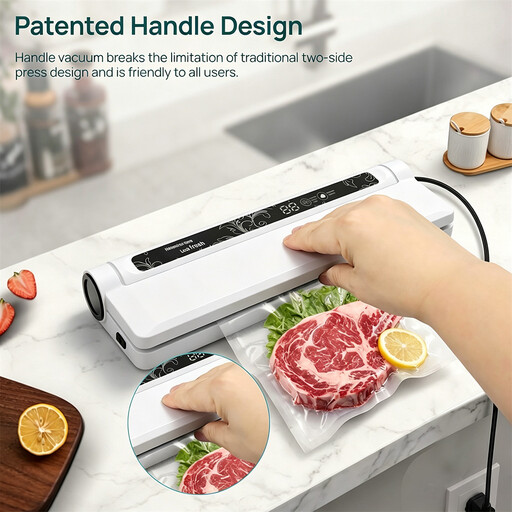
Why This Fits Their Persona: A space-conscious choice for flats, smaller kitchens and users who prefer keeping bags stored with the appliance.
The listed built-in storage pocket addresses a common small-kitchen problem: keeping the machine and consumables together.
Includes 20 bags measuring 17x25cm; household-focused format with integrated bag storage.
Place the kitchen vacuum sealer on a flat, dry surface and inspect the bag for a clean, open edge. Leave enough empty space for the heat seal, particularly when packaging foods with liquid or sharp edges.
After sealing:
A vacuum sealer can support home food preservation, portion control and freezer organisation, but it does not sterilise food. Follow current UK food-safety advice for storage temperatures and use-by periods.
We have compiled a complete, real-time list of products that fully satisfy these strict selection criteria and UK safety regulations.
It can be worthwhile if you regularly batch-cook, buy food in larger quantities, freeze portions or prepare sous-vide meals. If you only need to close opened crisp or cereal packets, a simple heat sealer may be more suitable and less costly.
Use bags designed for vacuum sealing and check the width supported by the machine. Smooth plastic bags may seal but often do not allow a channel-style vacuum sealer to remove air correctly. The supplied bags provide a convenient starting point, but replacement compatibility should be checked before purchase.
Lifespan depends on frequency of use, cleaning, storage and whether the machine is allowed to cool between cycles. Keep the sealing strip and silicone gasket free from residue, avoid overloading the pump and follow the manufacturer’s maintenance guidance. A stated warranty, such as the one-year limited warranty listed for selected ATSHARK models, provides a defined period of cover but does not guarantee a particular operating life.