Family rice portioners
If you buy larger packs of dry rice, sealing several meal-sized portions can avoid reopening one large bag each time. Bag length matters when your portion sizes vary.


For occasional dry-rice portions, a handheld pump with compatible bags or containers may be enough; if you routinely divide larger packs into differently sized family-meal portions, a roll-compatible countertop heat sealer offers more sizing flexibility. Consider additional dry/moist controls and meal-prep settings if you expect to use them for other foods, and check bag capacity and replacement compatibility before buying.
If you buy larger packs of dry rice, sealing several meal-sized portions can avoid reopening one large bag each time. Bag length matters when your portion sizes vary.
If you seal rice and other dried cupboard foods only occasionally, a compact handheld system may suit you, provided its compatible bags or containers hold the portions you use.
If rice is only one use for the appliance, compare dry/moist settings and compatible accessories for the other foods you intend to pack.
Decide how often you will portion rice and whether fixed-size bags fit those portions before comparing features for other foods.
Consider it: For occasional dry-rice storage when a compatible fixed-size bag or container fits your portion.
Trade-off: It cannot make custom-length heat-sealed bags and depends on system-specific bags or containers.
Consider it: For regularly dividing larger rice packs into portions of different sizes, if the model accepts rolls.
Trade-off: The machine needs storage space, and you will need compatible sealing material.
Consider it: When frequent family meal preparation calls for functions beyond sealing dry rice.
Trade-off: Extra settings and accessories add little to an occasional dry-rice-only task.
| Concern | What to check | Who this matters to |
|---|---|---|
| Flexible portion sizes | Check whether the sealer accepts rolls and lets you seal bags cut to the lengths you need. | When I split a large rice pack across family meals, I want each bag to fit its portion rather than reopening the whole pack. Around 42% of consumers put portion flexibility first. |
| Compact dry-food storage | Check compatible bag or container capacity and how the valve-sealing method works. | If I seal rice only occasionally, I would rather store a small pump than make room for a countertop machine. Compact, straightforward storage comes first for around 33% of consumers. |
| Other meal-prep uses | Check for dry/moist settings and the bags or accessories required for your intended foods. | I may also pack freezer portions or other ingredients, so rice should not be the only use that shapes my choice. Around 25% of consumers prioritise that wider flexibility. |
A handheld valve system cannot make bags to length, even if its pump is convenient to store.
Think through the rice portions you make in a typical month. If their sizes vary, check for a roll-compatible heat sealer; otherwise, check the capacity of the fixed-size bags first.
FoodSaver publishes a pantry storage comparison for rice and pasta, but its figures are a brand claim, not an expiry date for an individual pack. Vacuum packing also does not, by itself, make cooked or chilled food safe to store for longer.
Follow the rice pack's storage instructions, keep dry rice and its packaging dry, and inspect the seal. For cooked or chilled foods, follow the applicable food-storage instructions rather than extending a storage period because a pack has been vacuum sealed.
Handheld pumps use compatible valve bags or containers. Lakeland also instructs users to apply firm pressure while vacuuming its StayFresh bags.
Before choosing a system, check that replacement bags or containers fit it, hold your intended portions and suit the way you will seal them.
These product lines illustrate different sealing formats; a brand's inclusion does not establish that every model has the same features.
Countertop heat sealers with bags and rolls, from a compact model to a system with additional meal-prep settings.
A compact handheld pump for compatible StayFresh valve bags and containers, including dry-food storage.
A cordless pump system for compatible FRESH & SAVE valve bags and containers.
This household sealing machine is a potential option for dry-goods portions. Check its bag capacity, sealing workflow and included materials against the rice portions you plan to make.
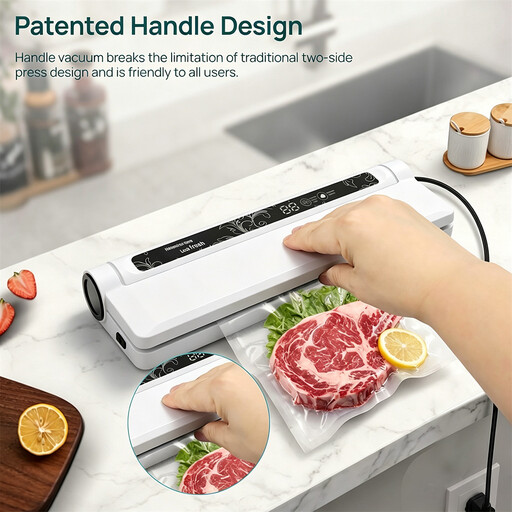 Image unavailable
Consider this machine if you want to portion dry goods and the listed 17×25 cm bag size suits the amount of rice you seal at a time.
The product name lists a built-in storage pocket and 20 bags measuring 17×25 cm. Confirm the package contents, compatible replacement bags and whether the machine accepts rolls if you need different bag lengths.
No: a handheld system can suit occasional portions if its compatible bag or container holds the amount you need. A roll-compatible countertop heat sealer offers more flexibility when you regularly make portions of different sizes.
Do not use vacuum sealing alone to set a new expiry date for your rice. FoodSaver's own pantry comparison gives 1–2 years for vacuum-sealed rice and pasta against 6 months for conventional storage, but those brand figures are not a guarantee for an individual pack. Follow the rice label's date and storage instructions, and reject packaging with a compromised seal or signs of spoilage.
Choose a bag that holds your intended portion rather than assuming one fixed size will suit every meal. Lakeland lists 2.5-litre StayFresh bags for dried foods; if your portions vary, check whether a countertop sealer accepts rolls you can cut to length.
Some sealers have settings for both dry and moist foods, but those settings do not make cooked or chilled food automatically safe for longer storage. GOV.UK guidance on vacuum packaging warns that C. botulinum may grow without oxygen; its chilled-food context is distinct from storing uncooked dry rice in a cupboard. Follow the storage instructions appropriate to each food.