What to check before buying
Compact external bag sealer
Choose it when: You want to make separate heat-sealed portions and put the appliance away between packing sessions.
Allow for: Compatible bags or rolls and enough worktop length to load each bag.
Pump with compatible storage
Choose it when: You expect to reopen a container or resealable bag for everyday coffee.
Allow for: Matching lids, valves, bags or containers; a pump does not make heat-sealed portions from bag roll.
Chamber sealer
Consider it when: Coffee is only one of several packing jobs and you also need to handle liquids, moist foods or larger quantities.
Allow for: A larger machine than the compact options considered for a small kitchen used mainly for dry beans.
For coffee beans in a small kitchen, settle on portions or repeat-access storage first. Then check roast guidance, the space your routine needs and the components you will use with the machine.
| Concern |
What to check |
Who this matters to |
| Freshly roasted beans |
Check the roast date, any one-way valve on the original pack and the roaster’s storage advice. Do not assume one waiting time suits every roast. |
If I portion recently roasted beans, I need a packing routine that accounts for gas continuing to leave them. Around 42% of consumers put that need first. |
| Limited kitchen space |
Compare stored dimensions with the worktop space needed to fill and align bags; check the permitted bag width if you plan to make portions. |
When cupboard and counter space are tight, I need to know where the sealer will go and whether I can use it comfortably. That is the primary concern for around 33% of consumers. |
| Repeated access |
Decide whether you want sealed portions or a store you reopen, and check the exact system’s compatible bags, lids and containers. |
If I take beans from the same store each day, I want to open and refill it without making another sealed bag. Around 25% of consumers prioritise that routine. |
Joybuy products for these routines
These choices cover two different ways to store coffee beans: making separate bagged portions with a household sealer, or using a manual vacuum canister that you can reopen. Choose the format before comparing the individual products.
 No image available
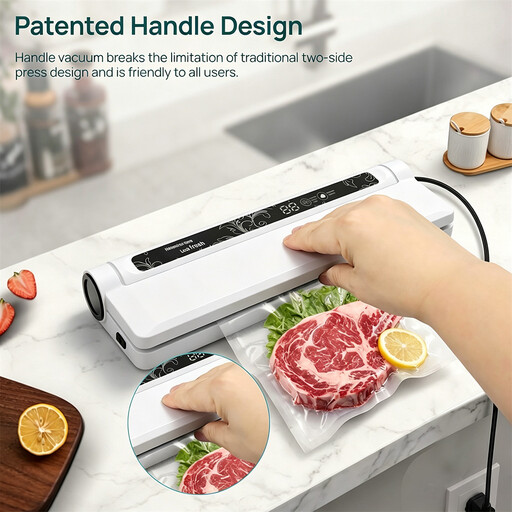
Huacan Vacuum Sealing Machine with Storage Pocket and 20 Bags
Consider this bag-based kit if you want to make separate portions of coffee beans. Its title specifies a built-in storage pocket and 20 pre-cut bags measuring 17 × 25 cm. Check the machine’s stored dimensions and the worktop space needed to load a bag against your kitchen before choosing it.
View on Joybuy
 No image available
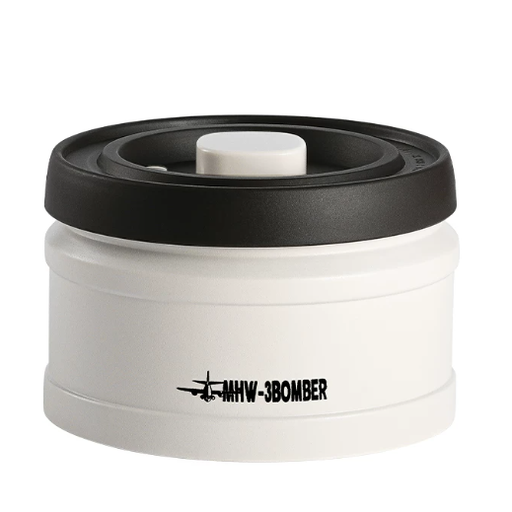
MHW-3BOMBER Coffee Manual Vacuum Storage Canister
Consider this manual vacuum canister if you prefer to reopen one coffee store rather than make heat-sealed bags. Check its capacity, dimensions and vacuum mechanism against the amount of beans you usually keep and the space available. For recently roasted beans, follow the roaster’s storage guidance regardless of the container you choose.
View on Joybuy
Common questions
Can I vacuum-seal coffee beans immediately after roasting?
Check the roaster’s advice for those beans rather than using a fixed waiting time. Research published in the Journal of Agricultural and Food Chemistry shows that roasted beans retain carbon dioxide and release it during storage, so the roast date and any one-way-valve packaging matter when deciding how to pack them.
Should I choose bags or a vacuum container for coffee beans?
Choose a bag sealer for separate heat-sealed portions, or a suitable container system if you will open and refill the same store often. Before buying a pump system, check that its pump, valves, lids, bags and containers are compatible with one another.
Which dimensions matter in a small kitchen?
Check both the space needed to store the appliance and the clear counter length needed to fill and seal a bag. FoodSaver UK lists the vertically stored VS0100 at 45 cm × 13.6 cm × 25.7 cm; LAICA lists its drawer-stowable VT3104 at 39 cm × 6.7 cm × 8 cm.
Does UK vacuum-packing food-safety guidance cover dry coffee beans packed at home?
GOV.UK’s vacuum-packing guidance addresses chilled raw and ready-to-eat foods, rather than giving a packing rule for dry coffee beans at home. Follow your coffee roaster’s storage advice for beans; if you also vacuum-pack chilled foods, use guidance appropriate to those foods.


