
24/7 Customer Support

Free returns

Same-day & Next-day Delivery

Quality Guaranteed

Unlock Your Welcome Offers: FREE Delivery | Up to 80% OFF | Free 30-day JoyPlus trial
Download the APP
Is your wardrobe bursting at the seams? Are seasonal duvets and winter coats taking over your cupboards? Whether you're trying to maximise space in a small flat, pack more into your luggage or organise your home for a move, finding effective storage solutions is a common challenge.
As a Joybuy Product Recommendation Officer, my role is to help you navigate the options. This guide cuts through the marketing clutter to offer practical advice on choosing the right vacuum storage bags. We will explore the key features to look for and present a selection of recommended products to help you reclaim your space efficiently.
Before you buy, consider these key points. The right choice depends entirely on what you plan to store and where.
Not all compression bags are created equal. The shape and design are tailored for specific purposes:
How you remove the air is a crucial factor that affects convenience and portability:
For long-term storage, durability is key. Look for bags made from a multi-layer composite of Polyamide (PA) and Polyethylene (PE). This combination offers good resistance to punctures and tears, ensuring the bags can be reused. A double-zip seal is also a critical feature, often with a sliding clip included, as it provides an extra layer of security against air leaks.
Here are our recommendations, selected to cover a range of common storage challenges faced by UK households.
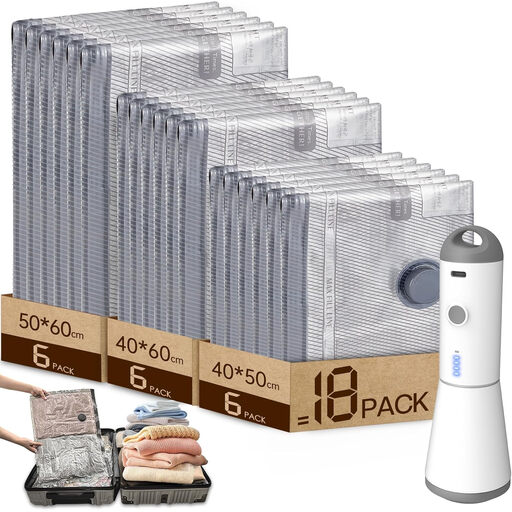
Why It Stands Out: This is an all-in-one solution. The inclusion of a compact, rechargeable wireless pump means you don't need a bulky vacuum cleaner, making it perfect for any home and especially convenient for travel.
Pros:
Who is it for? Ideal for frequent travellers, students in dorms or anyone who wants a complete kit without relying on a household vacuum cleaner.
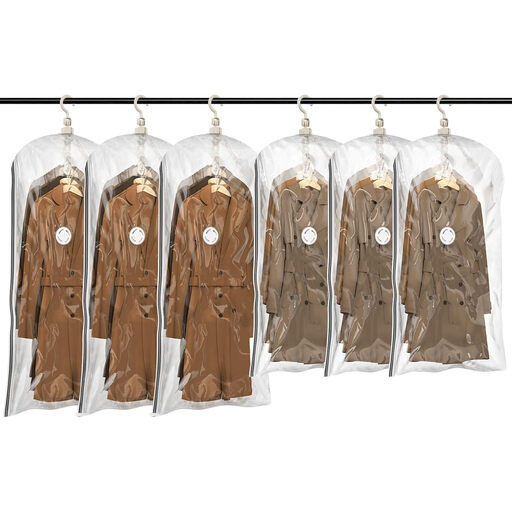
Why It Stands Out: These hanging vacuum bags are a game-changer for wardrobe space. By allowing you to store bulky garments vertically, they can instantly free up significant room on your closet rail while keeping clothes protected and organised.
Pros:
Who is it for? Anyone looking to maximise their wardrobe space and store seasonal coats, suits or formal dresses without them getting crushed or dusty.
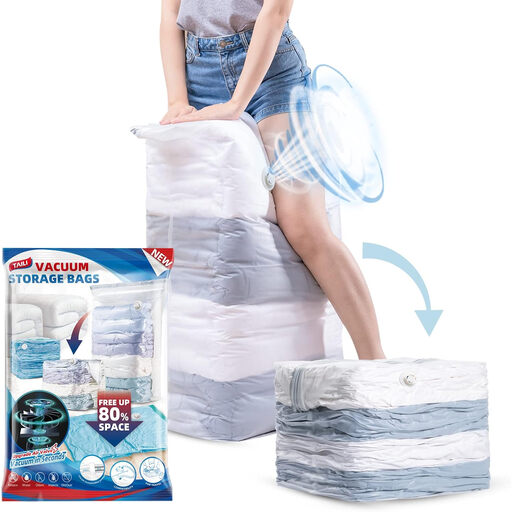
Why It Stands Out: The sheer volume and practical shape make these bags a superior choice for bulky vacuum bags for bedding. The cube design stands on its own for easy filling and creates a neat, stackable block once compressed, perfect for cupboards or lofts.
Pros:
Who is it for? Homeowners needing to store large quantities of bedding, cushions or seasonal clothing. They are also excellent storage bags for moving house.
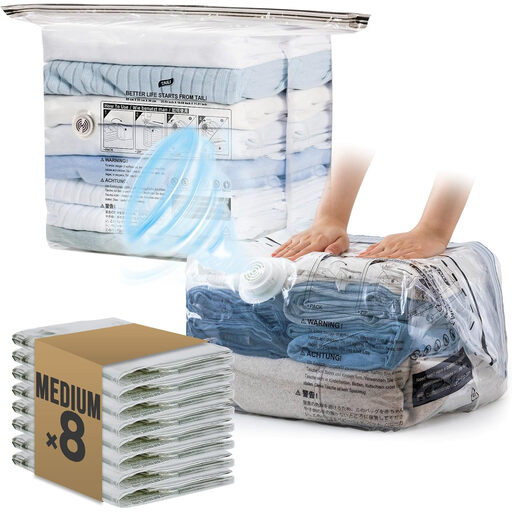
Why It Stands Out: These bags offer the ultimate convenience for travel. Thanks to a patented air valve, you can compress your clothes simply by pressing down with your hands—no pump or vacuum is required. The cube shape also helps maximise space inside a suitcase.
Pros:
Who is it for? Backpackers, holidaymakers and business travellers who need to pack efficiently without carrying extra accessories.
If your primary goal is to protect individual garments from dust or moths rather than compression, you may find other solutions more suitable. For a wider selection of garment protectors, explore our full range of wardrobe garment bag options.
1. Can you reuse vacuum storage bags? Yes, most high-quality vacuum seal bags for clothes are designed for multiple uses. Look for those made from durable, thick materials like a PA+PE blend. To prolong their life, avoid overfilling them and keep them away from sharp objects that could cause punctures.
2. Do vacuum storage bags damage clothes or bedding? For most items, they are perfectly safe. However, it is generally advised not to store natural fibres like wool or leather or high-loft items like down-filled duvets, in a highly compressed state for more than six months at a time. These materials benefit from being able to 'breathe'. For long-term storage, it's good practice to open the bags every 6-12 months to let the air circulate before re-sealing.
3. How much space do you really save? The amount of space saved can be significant, often reducing the original volume by up to 80%. The exact reduction depends on the items being stored. Bulky but lightweight items like duvets and pillows will compress the most, while denser clothing will see a more moderate but still very useful reduction in volume.