Buying priorities
Start with the format your household will actually use, then compare equivalent packs and read the label for the exact recipe.
| Priority |
What to check |
Your needs |
| Repeat-use value |
Compare equivalent wheat-biscuit packs per biscuit. Compare oats, flakes and muesli per kilogram. Check that the pack size suits how often it will be eaten. |
A large pack should lower the recurring cost of breakfast without relying on an incomparable unit measure. |
| Fibre and grain type |
Read fibre per stated serving alongside portion size. Check whether the precise product lists wholegrain wheat or oats. |
I want to compare the fibre contribution of the serving I am likely to eat, rather than assuming every cereal has the same profile. The NHS identifies plain wholewheat biscuits, plain shredded wholegrain cereal and porridge oats as higher-fibre breakfast choices. |
| Recipe and sugars |
Compare sugars on each pack’s labelled serving basis. Read the ingredients for dried fruit, milk, nuts, honey and other recipe differences. |
A familiar brand name or a larger box does not tell me whether the recipe is plain, sweetened, fruit-containing or nut-containing. |
| Allergen compatibility |
Check highlighted allergens and precautionary wording on the current pack. Look for an explicit free-from claim only where it is needed. |
A value pack is only useful if everyone who may eat it can do so safely. UK government guidance requires allergen information for prepacked foods. |
Joybuy cereal options
These Joybuy options cover bulk porridge oats, ready-to-eat muesli, wheat-square cereal and wheat biscuits for repeat breakfasts alongside a wider breakfast shop.
 No image available
Scotts Porage Old Fashioned Porridge Oats 1kg
A bulk porridge option for households willing to prepare a cooked breakfast.
100% rolled oats; the listing states 9g fibre and 1.1g sugars per 100g. It gives 4–5 minutes on the hob or 2–3 minutes in a microwave using water or milk.
May contain wheat and barley; check the current pack where gluten-containing cereals must be avoided.
Joybuy
 No image available
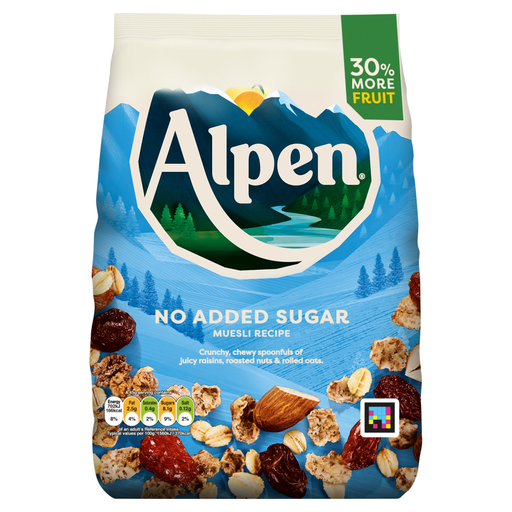
Alpen No Added Sugar Muesli 950g
A large ready-to-eat muesli option for breakfasts served with milk or yoghurt.
The listing specifies wholegrain wheat, rolled oats, raisins, almonds and hazelnuts, with 8g fibre and 18g sugars per 100g.
Contains wheat, oats, milk, almonds and hazelnuts, and may contain other tree nuts.
Joybuy
 No image available
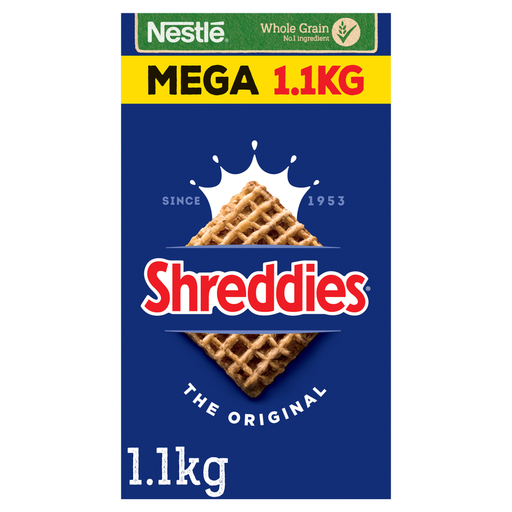
Nestlé Shreddies Original Malted Wheats 1.1kg
A large ready-to-eat wheat-square cereal for households wanting breakfast without cooking.
The listing states a 40g serving with 4.8g fibre and 5g sugars, and identifies wholegrain wheat as the main ingredient.
Contains wheat and barley malt extract and may contain peanuts and nuts; check the current pack for allergen needs.
Joybuy
 No image available
Weetabix Super Size 72 Pack 1.52kg
A large wheat-biscuit option for households that regularly serve a quick, ready-to-eat breakfast.
The listing identifies 72 biscuits, 1.52kg, 95% wholegrain wheat and a two-biscuit serving with 1.7g sugars.
Contains wheat and barley. Compare its per-biscuit figure only with equivalent biscuit packs.
Joybuy
 No image available
Flahavan’s Organic Porridge Oats 2kg (2 x 1kg)
A two-pack bulk oat option for households that regularly make porridge and have space to store it.
The listing specifies 100% organic wholegrain oat flakes; a 40g serving provides 3.3g fibre and 0.4g sugars.
This is a preparation-required oat route, and the listing declares oats containing gluten.
Joybuy
Frequently asked questions
How should I compare value between cereal packs with different labels?
Use the same price basis for comparable formats. Compare wheat biscuits per biscuit, and compare loose oats, flakes and muesli per kilogram; also check the pack’s stated serving size, as a serving may be two biscuits or a measured portion of dry oats.
Does cereal need to replace a full English breakfast?
No. Cereal can be a separate breakfast, a lighter alternative on other days or another option in the household shop. The NHS Eatwell Guide says dietary balance should be considered over a day or week rather than at every meal.
Which cereal formats are practical when I want more fibre?
Check the exact nutrition panel and serving size rather than relying on pack size. The NHS identifies plain wholewheat biscuits, plain shredded wholegrain cereal and porridge oats as higher-fibre breakfast choices; individual products can state different fibre amounts per serving.
What should I check if someone in the household has an allergy or needs to avoid gluten?
Read the current pack’s ingredients, highlighted allergens and precautionary statement every time. UK prepacked-food labels identify regulated allergens used as ingredients, but ordinary oats, muesli and cereal recipes can still contain or mention gluten-containing cereals, milk, peanuts or tree nuts.
How should a large cereal pack be stored after purchase?
Follow the storage instructions and best-before date on the exact pack. The cited Weetabix and Kellogg’s product information advises cool, dry storage, and Kellogg’s advises keeping the packaging sealed after opening.


