What to check before buying
Start with the cereal itself, then check whether the pack format and preparation fit the breakfasts your household actually serves.
| Priority |
What to check |
Your needs |
| Nutrition label |
Compare sugars and salt per 100g and per stated serving. Check the ingredient list and distinguish plain recipes from flavoured variants. |
I want to see what will be served repeatedly, not rely on child-oriented packaging. A 2025 UK study published by Cambridge University Press found that 81% of 133 child-appealing cereal products collected in 2023 exceeded its stated sugar-reduction guideline. |
| Pack format and storage |
Compare pack weight, biscuit or sachet count, likely number of breakfasts and storage instructions. Keep opened cereal dry and check the best-before information. |
A large pack only works for me if it will be used steadily before quality declines. Biscuit packs and porridge sachets are different breakfast formats, so count alone does not make them equivalent. |
| Allergens and policies |
Read the current ingredient and allergen declaration. Check named nuts, cereals containing gluten and any may-contain statement against nursery or school requirements. |
I need a pack that works with the child’s requirements and the destination’s food policy. GOV.UK explains that food businesses must identify any of the 14 listed allergens used as ingredients. |
| Texture and preparation |
Check for whole nuts, consider whether biscuits will be softened, and allow for safe cooling after hot porridge preparation. Match the texture to the child’s eating ability. |
I need a breakfast the toddler can manage safely. The NHS says whole nuts should not be given to children under 5 because they can cause choking. |
Joybuy product options
Joybuy product options for toddler-breakfast shopping, covering plain oat porridge, wheat-biscuit packs and portioned porridge formats. Check the current pack label and choose a format that matches the child’s needs and your household’s routine.
 No image available
Flahavan's Organic Porridge Oats 2kg (2 x 1kg)
A plain oat option for households serving warm breakfasts regularly and able to store a larger pack dry.
Two 1kg packs; stated 0.4g sugars and less than 0.01g salt per 40g serving. Check the current oat and gluten declaration, and prepare and supervise according to the child’s needs.
Joybuy
 No image available
Weetabix Super Size 72 Pack 1.52kg
A large wheat-biscuit format for households that already know the toddler accepts an appropriately prepared serving.
72 biscuits, or 36 stated two-biscuit portions; stated 1.7g sugars and 0.10g salt per serving. Contains wheat and barley; store dry and check that the texture and allergens suit the child.
Joybuy
 No image available
Quaker Oat So Simple Big Bowl Original 6 Pack 231g
A portioned plain-oat option when a warm breakfast and quick preparation are useful.
Six 38.5g sachets of wholegrain rolled oats; preparation is stated as about 2½ minutes. The record lists 0.4g sugars per dry sachet; verify the current salt and full allergen declaration on the pack, and allow safe cooling before serving.
Joybuy
 No image available
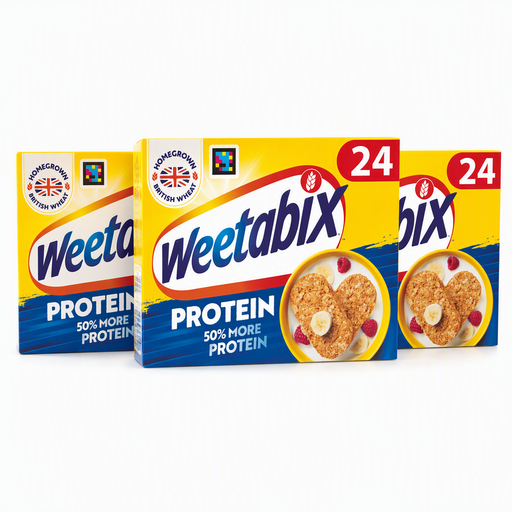
Weetabix Protein Cereal 72 Pack (3 x 24 Pack)
A large cereal supply for households that can use a 72-pack steadily and want to compare labels carefully.
The record states 4.7g sugars, 0.23g salt and 9.9g fibre per 100g. Contains wheat and barley-derived ingredients; check whether the crisp texture and serving size are appropriate for the individual toddler.
Joybuy
 No image available
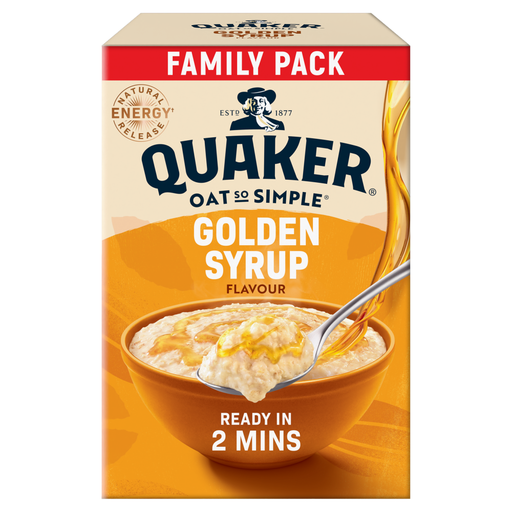
Quaker Oat So Simple Golden Syrup 20 Sachets 720g
A portioned warm-breakfast format for households that value sealed sachets and microwave preparation.
20 sachets; the record states 18g sugars and 0.56g salt per 100g. Contains oats and may contain barley, soya and wheat; prepare with adult handling and allow a standing period before serving.
Joybuy
Frequently asked questions
Are all value-pack breakfast cereals suitable for toddlers?
No. Suitability depends on the exact cereal’s ingredients, sugars, salt, allergens and texture. Whole nuts should not be given to children under 5 because of choking risk, according to the NHS, so nut-containing muesli should not be served as sold to a toddler.
Should I choose a large cereal box or portioned porridge sachets?
Choose a large box when the child already accepts the cereal, the household will use it consistently and storage is dry. Choose plain porridge sachets when a warm, soft breakfast and predictable portions are more useful, while allowing for preparation time and hot-liquid safety.
Does cereal marketed to children automatically have low sugar?
No. A 2025 UK study published by Cambridge University Press found that 81% of 133 cereals with child-appealing packaging collected in 2023 exceeded its stated sugar-reduction guideline of 12.3g per 100g. Compare the current nutrition panel for the specific pack.
What allergen information must UK food labels provide?
Food businesses must tell consumers when any of 14 listed allergens are ingredients, according to GOV.UK. This includes cereals containing gluten, such as wheat, rye, barley and oats, as well as milk, nuts, peanuts and soya; check the exact pack because recipes and cross-contact statements differ.
Can I rely on an online listing for a toddler’s allergy needs?
No. Use an online listing as a shopping lead, then check the physical pack’s current ingredients and allergen statement before serving. Kellogg's advises shoppers to check pack ingredient lists and nutrition declarations because recipes can change.


