Budget households serving muesli regularly
People who need a breakfast cereal in a larger pack and want to compare current unit prices rather than relying on the front-of-pack price.


For regular household use, begin with the largest suitable pack and compare the current unit price against like-for-like alternatives. Choose a no-added-sugar or ingredient-led recipe only when its documented ingredients, nutrition information and allergen statement matter more to your household than the lower-cost route.
People who need a breakfast cereal in a larger pack and want to compare current unit prices rather than relying on the front-of-pack price.
People prepared to choose a documented no-added-sugar recipe when its ingredients and nutrition information justify the difference for their household.
People who need to check wheat, oats, milk, nuts and precautionary allergen statements before putting a shared breakfast cereal on the table.
Choose the household requirement first, then compare only the packs that meet it on the same pack-weight and recipe basis.
| Priority | What to check | Your needs |
|---|---|---|
| Repeat-purchase value | Compare the current unit price, pack weight and any offer conditions. Compare standard and no-added-sugar recipes only after confirming they meet the same household needs. | A larger pack needs to keep regular breakfast servings manageable without mistaking a lower shelf price for better value. |
| Fibre and grains | Compare listed fibre per 100g and read the grain ingredients. Keep the comparison to the same measurement basis. | I want muesli to be one part of a balanced breakfast, rather than choosing only by pack size or marketing wording. |
| Sugars and recipe type | Read sugars per 100g alongside the ingredients list. A no-added-sugar claim is a recipe distinction, not a statement that the product contains no sugars. | I want to distinguish a no-added-sugar recipe from a standard fruit muesli before deciding whether the difference matters at breakfast. |
| Allergen suitability | Check the exact pack’s ingredients, highlighted allergens and precautionary statements. Recheck if the recipe, size or variant changes. | Everyone sharing the cereal needs a recipe that fits their dietary safety requirements. |
Different pack sizes can make a smaller pack appear cheaper even when it costs more for the same quantity.
Compare the current unit price for the exact standard, no-added-sugar and branded packs you are considering at checkout.
A smaller pack can mean more frequent repurchases for a household that serves muesli regularly.
Dried fruit contributes sugars even when a recipe has no added sugar, so the front claim does not show the full comparison.
Read the sugars-per-100g line and the ingredients list. Alpen No Added Sugar lists 18g sugars per 100g, while Alpen Original lists 21g per 100g.
Recipes can contain or carry precautionary statements for cereals containing gluten, milk and tree nuts, and these details can differ by variant.
Use the ingredients and allergen information on the exact current pack rather than relying on a general brand description.
A smaller premium recipe may suit a flavour or ingredient preference but is not directly comparable with a household-size pack.
Decide whether your priority is unit cost, a no-added-sugar recipe, organic ingredients, or a particular texture before comparing suitable products.
Smaller packs may need replacing more often for a household breakfast.
An own-label supermarket route with Swiss Style and Swiss Style No Added Sugar muesli in 1kg formats.
A mainstream muesli range with Original and No Added Sugar wholegrain recipes in 950g formats.
An ingredient- and flavour-led range represented here by Gloriously Nutty muesli in a 500g format.
An organic, plant-based and ingredient-led route represented by The Ultimate Muesli.
A cereal brand with muesli options alongside low-sugar, digestive-health and high-protein product lines.
A mainstream branded route with a Natural Muesli 1kg listing relevant to household pack-size comparisons.
Joybuy product options for households comparing large-pack branded muesli with a documented no-added-sugar recipe or a standard fruit muesli recipe.
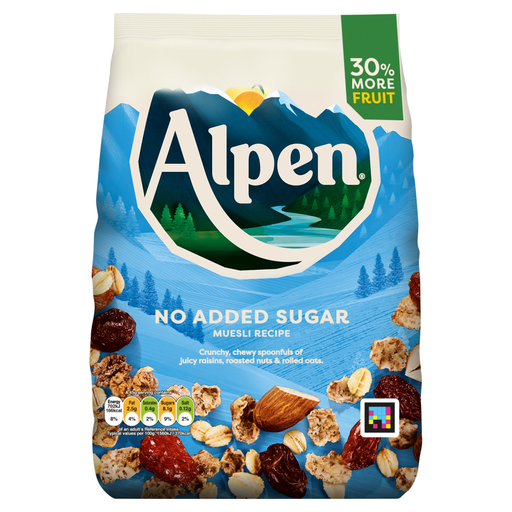 No image available
A large-pack option for households comparing a documented no-added-sugar recipe with other muesli packs.
Listed with 8.0g fibre and 18g sugars per 100g. Contains wheat, oats, milk, almonds and hazelnuts, and may contain other tree nuts; check the exact pack where allergies or intolerances apply.
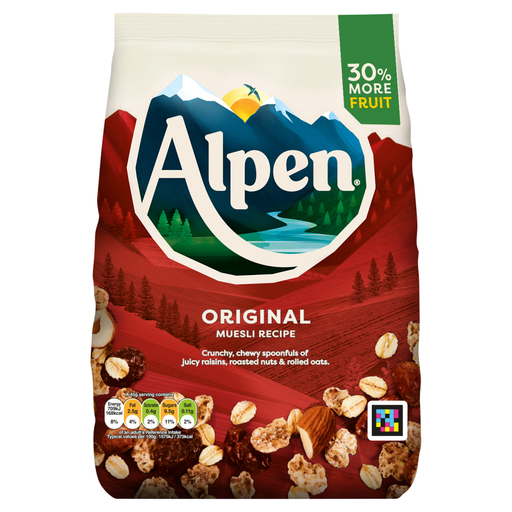 No image available
A 950g standard fruit muesli option for households that do not specifically require the no-added-sugar recipe.
Listed with 7.7g fibre and 21g sugars per 100g, with wholegrain wheat, rolled oats, raisins and roasted nuts. Contains wheat, oats, milk, almonds and hazelnuts, and may contain other nuts.
Compare the current displayed unit price rather than only the pack price. Confirm the pack weight and whether any temporary offer conditions apply before comparing products.
No. Alpen No Added Sugar lists raisins and 18g sugars per 100g, while Alpen Original lists 21g per 100g. Treat the claim as a recipe distinction, then read the sugars line and ingredients for the exact pack.
Check the exact product’s ingredients, highlighted allergen information and any precautionary statement every time you buy. UK government guidance says that regulated allergens used as ingredients in prepacked food must be clearly labelled in the ingredients list.
Not automatically. Compare fibre per 100g, the portion you plan to serve, ingredients and the wider breakfast, rather than treating one cereal as the nutritional measure of the whole meal.