Who this is for

Budget-focused cottage groups

Groups planning several shared breakfasts can compare price per kilogram and expected portions rather than choosing by the headline bag price. Retailer listings from Tesco Groceries, ASDA Groceries and Waitrose & Partners provide the pack-size examples.

Hosts catering for mixed dietary needs

Hosts and organisers can screen fruit-and-nut muesli for gluten-containing cereals, milk ingredients, named nuts and precautionary allergen statements before serving guests. The Food Standards Agency and the product labels highlight these checks.

Small groups with specific preferences

Couples and smaller groups may prefer a no-added-sugar, vegan or organic option without needing a full 1kg bag, provided the label suits the guests who will eat it.

Buying priorities

Plan the number of cereal breakfasts first, then check the pack label before choosing between a larger mainstream bag and a smaller preference-led option.

Priority What to check Your needs
Pack coverage Compare pack weight, the stated serving size and the number of planned breakfasts. Use the same serving basis when comparing bags. I want enough cereal for the stay without taking home an unnecessarily large amount. Jordans states about 22 portions from 1kg, while Dorset states about 15 portions from 650g.
Allergen information Read the exact ingredients and allergen declaration for gluten-containing cereals, nuts, milk ingredients and any “may contain” statement. A shared breakfast needs to work for the guests who will eat it. I would confirm requirements before travelling and keep a separately suitable option where needed.
Dietary claims Check what each claim actually covers. “No added sugar”, vegan and organic describe different product characteristics; review the nutrition panel and ingredients separately. I may be choosing for a stated preference, but that does not replace checking for allergens or deciding whether the pack size suits the group.
Opened-pack storage Follow the pack storage directions. Roll down and secure the inner bag where instructed, then keep it in a cool, dry place. I want the cereal to remain usable over several mornings, especially when a larger bag stays open for more than one breakfast.

Common buying pitfalls

  • Choosing by bag price instead of unit price and portions

    A smaller bag can appear cheaper at checkout while providing fewer breakfasts and a different cost per kilogram.

    Set the number of breakfast portions first, then compare the retailer’s price per kilogram alongside the stated serving size.

  • Assuming fruit-and-nut muesli suits every guest

    Mainstream fruit-and-nut mueslis commonly contain gluten-containing cereals and nuts, and some labels include precautionary allergen statements.

    Ask guests about allergies before the trip, read the pack label immediately before serving and choose a separately suitable alternative where required.

  • Treating no-added-sugar, vegan and organic claims as interchangeable

    These claims answer different questions: a no-added-sugar product can still contain sugars, while vegan or organic status does not establish allergen suitability.

    Choose the claim that matters to the group, then check ingredients, allergens, serving size and price per kilogram separately.

  • Leaving a large opened bag unsealed

    A large pack may be open for several days during a cottage stay.

    Roll down the inner bag, secure it and store it in a cool, dry place in line with the packaging instructions.

Relevant brand references

Jordans

A mainstream 1kg fruit-and-nut muesli option for groups wanting a large pack with wheat, oats, barley, dried fruit and nuts.

  • The ASDA Groceries listing states approximately 22 portions per pack.
  • The pack contains oats, barley, wheat, almonds and hazelnuts; Jordans also warns that people with a nut allergy should not eat it.

Alpen

A near-1kg mainstream range with Original and No Added Sugar variants for shoppers who want a familiar fruit-and-nut muesli.

  • The researched listings describe 950g packs in both Original and No Added Sugar variants.
  • Both variants contain wheat, oats, milk ingredients, almonds and hazelnuts. Waitrose & Partners lists 8.1g sugars per 45g serving for Alpen No Added Sugar.

Dorset Cereals

A 650g no-added-sugar muesli option for smaller groups and shoppers looking for a product listed as vegan.

  • ASDA Groceries states about 15 portions per pack and lists the product as suitable for vegans.
  • It contains Brazil nuts, hazelnuts, wheat, barley and oats; the product warning says it is unsuitable for people with any nut allergy.

Rude Health

An organic, plant-based muesli for shoppers prioritising an ingredient-rich mix rather than a large value pack.

  • Rude Health describes The Ultimate Muesli as organic, plant based and whole grain.
  • The 400g pack contains oats, barley, rye, almonds and hazelnuts, and may contain milk, soya and other nuts.

Tesco

A supermarket own-label route to check for 1kg Swiss Style and Swiss Style No Added Sugar muesli.

  • Tesco Groceries has listed 1kg own-label Swiss Style variants.
  • Check the current shelf label, ingredients and allergen information before choosing a pack for guests.

Lizi’s

A premium granola alternative rather than a directly comparable value-pack muesli option.

  • Lizi’s says its current range is granola and is sold through major UK supermarkets.
  • Granola is a different cereal category, so compare ingredients, pack size and intended use rather than treating it as like-for-like muesli.

Joybuy muesli options

Joybuy product options for a near-1kg mainstream muesli route for shared cottage breakfasts.
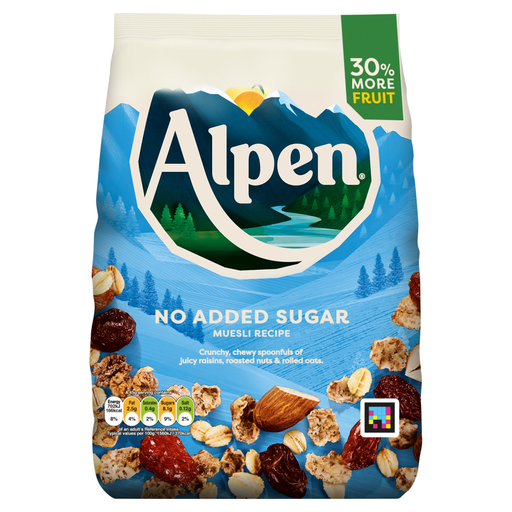
Alpen No Added Sugar Muesli 950g

Alpen No Added Sugar Muesli 950g

A near-1kg option for groups that want a no-added-sugar muesli for several shared breakfasts.

Contains wheat, oats, milk, almonds and hazelnuts, and may contain other nuts. No added sugar does not mean sugar-free; the comparable Alpen listing from Waitrose & Partners states 8.1g sugars per 45g serving.

Joybuy
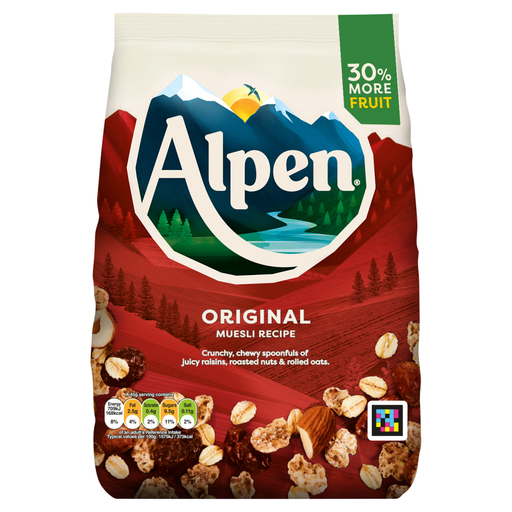
Alpen Original Muesli 950g

Alpen Original Muesli 950g

A near-1kg conventional fruit-and-nut muesli for several planned bowls during a cottage stay.

Contains wheat, oats, milk, almonds and hazelnuts. Store in a cool, dry place and check the pack label for the handling instructions if leftovers are expected.

Joybuy

Frequently asked questions

How much muesli should I buy for a holiday cottage stay?

Use the serving size on the pack and multiply it by the number of cereal breakfasts planned. Jordans states approximately 22 portions from 1kg at 45g each, while Dorset states about 15 portions from 650g; four people having one 45g bowl for five mornings would need about 900g before allowing for larger appetites or extra guests.

Does no added sugar mean the muesli is sugar-free?

No. A no-added-sugar claim does not mean that a product contains no sugars. Waitrose & Partners lists 8.1g sugars per 45g serving for Alpen No Added Sugar Muesli, whose ingredients include raisins.

Can I serve ordinary fruit-and-nut muesli to a gluten-free or nut-allergic guest?

Not without checking the exact pack and the guest’s individual requirements. The Food Standards Agency identifies wheat, rye, barley and oats as cereals containing gluten, while the researched mainstream products contain combinations of these cereals and named nuts; several also carry precautionary statements.

How should an opened value pack be stored in a cottage?

Follow the pack instruction. Jordans and Dorset advise rolling down and securing the inner bag, then storing it in a cool, dry place; do not rely on an unsealed bag for a multi-day stay.

Is a large muesli bag always better value?

No. A larger bag is only the more suitable choice when it covers the breakfasts you expect to serve and can be stored properly after opening. Compare the displayed price per kilogram, stated portions, ingredients and guest requirements at the retailer you choose.