Budget-conscious first-shop households
Choose a versatile breakfast staple with a manageable upfront cost, and compare packs by unit price rather than headline size.


For a first food shop, plain rolled oats in a manageable pack are usually the straightforward starting point: compare the unit price rather than the pack size alone. Choose a larger pack when you expect to use oats regularly and any delivery or minimum-order conditions fit your wider basket; if gluten-free suitability matters, choose a pack explicitly labelled gluten free.
Choose a versatile breakfast staple with a manageable upfront cost, and compare packs by unit price rather than headline size.
A larger pack or a traditional or jumbo format can make sense when oats will be used repeatedly for porridge, overnight oats and baking rather than occasional convenience breakfasts.
Choose an explicitly gluten-free oat product and check the individual pack label. Coeliac UK notes that standard oats can be contaminated with wheat, barley or rye during production.
Start with the pack size you can realistically use, then compare like-for-like oats by unit price and check any dietary requirements on the label.
| Priority | What to check | Your needs |
|---|---|---|
| Initial cost and unit value | Compare the price per kilogram for plain oats of different pack sizes. For direct orders, check delivery charges and any minimum basket requirement before treating a larger pack as better value. | I want enough oats for regular breakfasts without making my first basket unnecessarily expensive. |
| Texture and preparation | Check whether the oats are rolled, jumbo or quick-cook. Look at the pack directions if you plan to use a microwave, make overnight oats or bake. | For everyday porridge and flexible recipes, I want an oat format that suits how I actually cook. A thicker jumbo texture may matter more to me than convenience. |
| Gluten-free suitability | Look for an explicit gluten-free claim and read the individual allergen statement. UK food-labelling guidance sets a maximum of 20 mg/kg gluten for a gluten-free claim. | If I require gluten-free oats, I need a clearly labelled product rather than assuming ordinary oats will be suitable. |
A larger pack can look economical by unit price but may be less suitable for a small first shop when it is tied to delivery charges or a minimum order.
Compare the unit price first, then include the conditions that apply to your actual basket. A manageable pack can be the simpler choice for a small initial shop.
Direct-order packs may have a minimum basket requirement and delivery terms.
Convenience formats can carry a substantially different unit price from plain oat flakes, so they are not a like-for-like value comparison.
For routine breakfasts, compare plain oat flakes with other plain oat flakes. Choose sachets or pots when their portioning or speed matters to you.
Standard oats may be contaminated with wheat, barley or rye. Coeliac UK also notes that a small number of people with coeliac disease may remain sensitive to gluten-free oats.
When gluten-free suitability is necessary, buy an explicitly labelled gluten-free product and follow individual healthcare advice where relevant.
A higher-priced pack may reflect organic certification, a preferred texture or a brand preference, but this does not automatically make it better value for every household.
Decide whether a particular texture, organic certification or brand matters to you. If not, begin with a plain pack with a lower unit price and reassess after using it.
A relevant own-label route for a low-commitment first-shop pack, with plain rolled-oat options in 1kg packs.
Relevant when you want a larger direct-order pack or a choice of quick-cook, traditional, jumbo, organic and gluten-free oat formats.
Relevant for traditional rolled oats in several pack sizes, jumbo oats for a thicker texture, and convenience sachet and pot formats.
Relevant for shoppers looking for organic oats or a particular creamy traditional-oat texture, including organic and jumbo oat options.
Relevant for traditional wholegrain rolled oats and a chunky oat texture.
Relevant to breakfast-cereal shopping generally, with a range focused on granola and muesli.
Joybuy options for plain porridge oats, including explicitly gluten-free, traditional, jumbo and larger-pack choices for a first food shop.
 No image available
An option for porridge or baking when an explicitly gluten-free oat product is required.
The listing states 100% gluten-free oat flakes, a 1kg pack and 25 portions per pack.
Check the displayed unit price before deciding whether it suits a value-led first shop. For coeliac disease, follow individual healthcare advice because tolerance can vary.
 No image available
A traditional choice for shoppers who prefer thicker rolled oats and want to prepare porridge on the hob or in a microwave.
The listing specifies a 1kg pack of 100% rolled oats with stovetop and microwave methods.
The listing says it may contain wheat and barley, so choose an explicitly labelled alternative where gluten-free oats are required. Check the unit price before buying for a first-shop budget.
 No image available
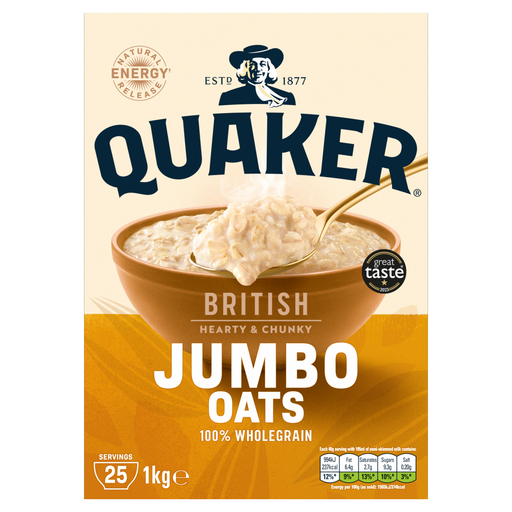
A jumbo-oat route for porridge, overnight oats or baking when a heartier texture is important.
The listing identifies a 1kg pack of wholegrain oat flakes and names porridge, overnight oats and baking as uses.
The listing says it may contain traces of wheat, so it is not a confirmed gluten-free choice. Check the current unit price before treating it as a value option.
 No image available
A larger option for households expecting to use oats regularly and wanting separate packs rather than one opened large bag.
The listing specifies two 1kg packs of 100% organic wholegrain oat flakes.
The listing identifies oats as containing gluten and does not make an explicit gluten-free claim. Compare the current unit price and upfront cost before choosing a larger quantity.
 No image available
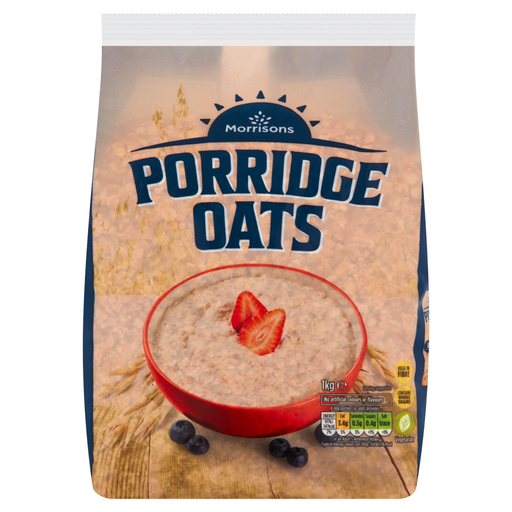
A manageable pantry-size option for basic everyday porridge in a first kitchen.
The listing identifies a 1kg porridge-oat product made from 100% oat biscuits, with no artificial colours or flavours stated.
Check the current pack for allergen and gluten-free labelling, and confirm texture and preparation instructions if those details matter to you. Compare the unit price before buying.
No. Compare the displayed price per kilogram and include any delivery or minimum-order conditions that apply to your basket. A 1kg pack can be the lower-commitment choice when you are only stocking a small first shop.
Plain rolled oats are a straightforward all-round option for porridge and baking. If you prefer more bite or plan to bake regularly, jumbo oats are a thicker whole rolled-oat format; Quaker describes its jumbo oats as suitable for hearty porridge and baking.
Quaker’s method uses 40g rolled oats with 300ml milk or water, brought to the boil and then simmered while stirred until thick and creamy. Follow the directions on your chosen pack because texture and microwave timings vary by product.
Do not assume so. Coeliac UK says many standard oats are produced alongside wheat, barley and rye and can become contaminated. Choose a product explicitly labelled gluten free when this is required; UK food-labelling guidance allows that claim only where the food contains no more than 20 mg/kg gluten as sold.
Yes, especially if you have an allergy or intolerance. Check the exact pack: for example, Jordans Chunky Traditional Porridge lists wholegrain rolled oats and states that it may contain other gluten sources and nuts.