Festival breakfast organisers on a tight food budget
Plan around a plain oat base with a clear unit price, pack size and cooking method for repeated servings, rather than relying on convenience pots or sachets.


For a general festival porridge station, plain rolled oats sold by weight are the practical starting point: current Waitrose & Partners listings place its Essential and Scottish plain-oat options below branded, organic and single-serve formats on unit cost. Pay more when the menu needs a thicker oat for flapjacks, a larger foodservice container, faster individual preparation or an explicitly gluten-free option; ordinary oats are not interchangeable with products carrying gluten or allergen warnings.
Plan around a plain oat base with a clear unit price, pack size and cooking method for repeated servings, rather than relying on convenience pots or sachets.
Jumbo rolled oats can suit thick porridge and flapjacks, while a resealable 4kg tub is intended for foodservice environments. Mornflake and Flahavan’s describe these uses for their respective products.
Distinguish ordinary oats from products explicitly labelled gluten-free, and check the exact pack’s allergen statement where wheat, barley or nuts may be relevant.
Set the menu and service method first, then compare products on the same weight basis and check the current pack information before ordering for a group.
| Priority | What to check | Your needs |
|---|---|---|
| Unit cost and volume | Compare displayed cost per kilogram; check pack weight and stated serving guidance; use plain oats where one base must cover porridge and flapjacks. | I want to budget for a group without a low shelf price disguising a high cost per kilogram. |
| Preparation and service | Check whether hob, microwave and batch preparation fit the equipment; confirm cooking instructions; compare individual portions with shared-batch service. | A quick queue matters, but I also need a format staff can prepare with the equipment available on site. |
| Texture and menu use | Choose jumbo rolled oats for a thicker texture and flapjacks; consider smaller cut flakes where quicker absorption and smoother porridge matter; keep toppings separate from the plain oat base. | I may be serving bowls of porridge and baking flapjacks from the same ingredient, so texture affects the choice. |
| Allergen and gluten-free service | Read the exact ingredient and allergen statement; select an explicitly gluten-free product only for a confirmed requirement; keep oat allergy information in view. | I need the product information to match the dietary requirement rather than assuming all oats are suitable. |
Individual pots and sachets can simplify preparation, but they can use more of a festival-food budget than plain oats bought by weight.
Compare the displayed cost per kilogram first, then decide whether portion convenience saves enough staff time to justify the difference.
Some standard oat products carry wheat or barley warnings, while other products disclose possible gluten-source or nut exposure. A gluten-free label does not remove oat allergy considerations.
For a declared dietary requirement, check the ingredient and allergen statement on the current pack and use an explicitly gluten-free product only where that requirement applies.
A large resealable tub may make storage and handling easier, but its operational format alone does not establish a lower cost per kilogram than smaller packs.
Ask for the delivered supplier price, then compare it by weight alongside expected wastage, packaging and storage labour.
The checked Waitrose Essential product advises against storing or reheating it once prepared, so oversized batches can create avoidable waste.
Cook manageable batches, monitor uptake during the first service period and adjust later quantities to match demand.
Overestimating demand can leave prepared food unused.
A retailer range covering plain, Scottish-style and explicitly gluten-free porridge oats for organisers comparing formats within one retailer.
An oat specialist with jumbo and superfast formats for menus where texture or preparation speed matters alongside cost.
A range including organic retail oats and a larger resealable foodservice tub for events handling more dry stock.
A branded rolled-oat option for organisers considering a familiar plain-oat product alongside portioned convenience formats.
A porridge range with organic and chunky traditional rolled-oat products for organisers considering an organic route or a chunkier style.
Joybuy product options for festival porridge service, including plain oats, organic packs, gluten-free oats and individual microwave sachets.
 No image available
A specialist option for a confirmed gluten-free festival service that still needs a plain oat base for porridge or baking.
1kg pack; 25 portions stated; 100% oat flakes. The listing identifies oat as an allergen, so check the current pack for the service requirement.
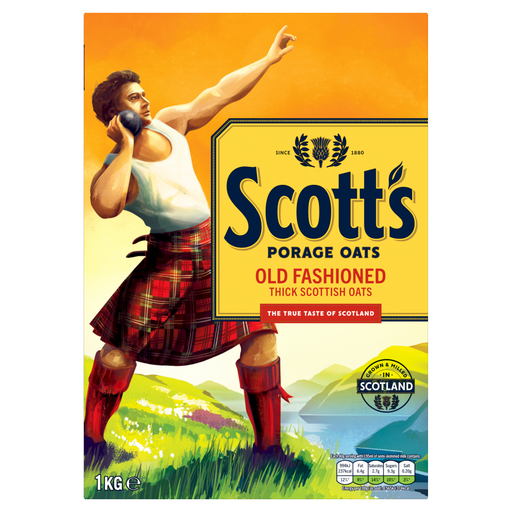 No image available
A plain rolled-oat option for organisers preparing batch porridge with toppings and sweetness controlled separately.
1kg pack; 100% rolled oats; stated stovetop and microwave preparation. It may contain wheat and barley, so it is not for gluten-free service.
 No image available
A larger plain-oat supply for organisers deliberately choosing an organic menu route.
Two 1kg packs; 100% organic wholegrain oat flakes. Check current cooking instructions and the allergen statement before planning rapid service.
 No image available
A convenience-led choice where individual microwave portions are more important than preparing a shared batch.
Six 38.5g sachets; stated microwave method takes about 2½ minutes after adding water or milk. Check unit cost against plain oats for larger events.
 No image available
A 1kg organic plain-oat option for a festival menu that specifically calls for organic oats.
1kg pack; 100% organic wholegrain oat flakes. Check current preparation instructions and allergen information before choosing it for batch service.
Not automatically. The Food Standards Agency states that food labelled gluten-free must contain no more than 20 mg/kg gluten as sold, while standard oat products can carry wheat or barley cross-contact warnings. Choose an explicitly gluten-free product only when needed and check the current pack statement; oats remain an allergen in their own right.
Mornflake describes jumbo oats as suitable for thick, textured porridge and flapjacks. Its Superfast oats use smaller flakes that absorb water or milk more quickly for smoother, quicker-cooking porridge, so they suit a speed-led service rather than a chunky menu.
The checked Waitrose plain-oat products use a 40g serving basis and state 25 servings in a 1kg pack. Use that as a planning starting point, then adjust for your menu, toppings and the people being served rather than treating it as a fixed serving size.
Do not assume it can. The checked Waitrose Essential product advises that it should not be stored or reheated once prepared. Follow the instructions on the exact product used and plan batches around expected service demand.
No. A large tub may simplify storage and service, but a foodservice format alone does not establish a lower cost per kilogram. Compare the delivered supplier price, storage needs and expected usage with the current unit prices of smaller retail packs before deciding.