Who might choose which format

Family-menu planners

If tuna is going into several Christmas-period meals, compare the drained amount in each format with the quantities your recipes call for. A larger tin is useful when one dish will use it promptly; separate tins may suit meals spread across several days.

Recipe-and-portion matchers

For sandwiches, salads, pasta bakes or jacket potatoes, decide whether chunks, a chunks-and-flakes mix or a steak format suits the dish. Check the packing liquid and portion size on the exact product.

Sourcing-and-convenience prioritizers

A no-drain format can simplify serving small portions. If a catch-method, certification or traceability statement matters more, read the current label for the particular tin you intend to buy.

What matters when choosing tuna

Start with the amount of drained tuna your meals need, then choose the cut, packing liquid and any serving or sourcing features that matter to your household.

Concern What to check Who this matters to
Usable quantity Compare drained weight, tin count and the quantities needed for planned meals. If I am making several dishes, I want enough usable tuna without opening more than I need. About 36% of consumers put usable quantity first.
Recipe and portion fit Match chunks, flakes or steaks and the packing liquid to the dish; check the size of each tin. For a sandwich filling or a plated salad, I want a cut and portion that work for that recipe. Recipe fit is the primary need for about 29% of consumers.
Sourcing information Read the exact tin’s current certification, catch-method or traceability wording. When I shop for the household, I want to know what sourcing claim applies to the tuna I will serve. That is the main concern for about 21% of consumers.
Ease of serving Check whether the product is labelled no-drain and whether its portions suit the planned meal. For quick individual servings, I would rather avoid draining a larger tin. Around 14% of consumers make serving convenience their first priority.

Buying checks that prevent a mismatch

  • Assuming more tins mean more usable tuna

    Pack count and stated tin size do not tell you the drained amount needed for a recipe. A large tin can also be awkward if the planned meal uses only a small portion.

    Compare drained weights where displayed, then match the amount to the meals you have planned.

  • Choosing no-drain or steak formats for every dish

    No-drain portions address preparation, while a steak format offers a different presentation. Neither feature necessarily changes a tuna filling mixed into a bake or sandwich.

    Choose the format for the preparation you will actually make; consider ordinary chunks for mixed dishes.

  • Applying one sourcing claim to an entire range

    Marks & Spencer describes its cited spring-water chunks as pole-and-line caught under its Forever Fish policy. Sainsbury's made a statement about its own-label canned tuna in 2023. Those statements should not stand in for the label on another product.

    Check the current wording on the exact tin if a particular certification or catch method matters to you.

  • Forgetting who will eat the tuna

    Tuna is fish: the cited ASDA and Princes product information identifies fish as an allergen. The NHS also advises people who are pregnant or trying for a baby to have no more than four cans of tuna or two tuna steaks a week.

    Check the selected product’s label and account for tuna served across the week when planning household meals.

Tuna brands and ranges to consider

Tesco

Tesco’s own-label range includes single tins, multipacks and a 400 g spring-water chunk tin. Compare their stated drained amounts with the size of the dish you are making.

  • The 400 g spring-water chunk format offers an option for a recipe using a larger amount at once.
  • A large opened tin may be less convenient when you need only separate small portions; follow the chosen product’s storage instructions.

Sainsbury's

Sainsbury's lists own-label tuna chunks in spring-water and brine multipacks.

  • Its 4 x 145 g formats allow shoppers to choose between those two packing liquids.
  • Sainsbury's 2023 statement about MSC certification and pole-and-line catching concerned its own-label canned tuna at that time; check the current product label for the claim you require.

ASDA

ASDA’s cited 4 x 145 g tuna-chunks multipack is packed in brine.

  • The cited listing identifies skipjack tuna, water and salt, and labels fish as an allergen.
  • If the packing liquid matters to your recipe, check the exact variant rather than treating brine and spring water as interchangeable.

Princes

Princes offers spring-water chunks in several pack sizes and a separate sandwich tuna made from chunks and flakes.

  • The chunks-and-flakes mix gives shoppers a distinct format to consider for sandwich fillings.
  • Princes’ statement that it can trace responsibly sourced fish back to the original boat is the brand’s own claim; check the wording for the selected product.

John West

John West appears in standard-chunk and no-drain tuna formats, including products packed in different liquids.

  • A no-drain variant can suit a meal assembled in individual portions.
  • Check each tin’s portion size and packing liquid; the no-drain description does not apply to every John West product.

M&S

M&S lists spring-water tuna chunks, steak tins and larger formats.

  • M&S describes its cited spring-water chunks as pole-and-line caught and responsibly sourced under its Forever Fish policy.
  • Treat that sourcing statement as specific to the cited product, not as a description of every tuna tin in the range.

Joybuy tinned tuna for different meal plans

These Joybuy selections cover chunk multipacks in spring water, brine and sunflower oil, a no-drain multipack, and a single spring-water tin. Match the stated format and amount to your planned meals.

John West tuna chunks in spring water, four 125 g tins

John West Tuna Chunks in Spring Water, 4 x 125 g

Four separate tins may suit meals planned across several days, such as sandwiches, salads or pasta. These are chunks packed in spring water; check the drained amount if a recipe calls for a particular quantity of tuna.

View on Joybuy

Princes tuna chunks in brine, four 145 g tins

Princes Tuna Chunks in Brine, 4 x 145 g

This four-tin pack suits a plan involving several separate tuna portions. Choose the brine-packed variant if it fits the intended dish, and check the exact label when the packing liquid or ingredients matter.

View on Joybuy
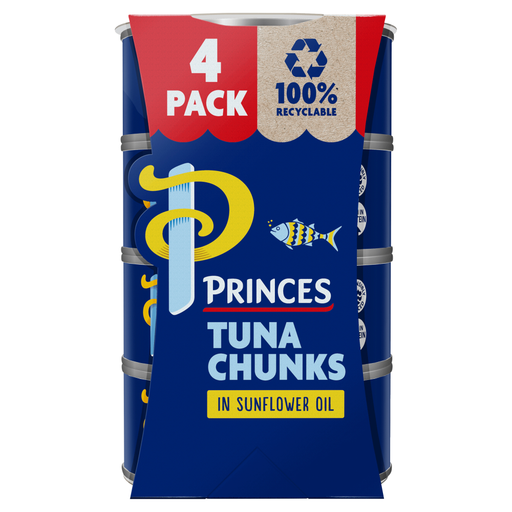
Princes tuna chunks in sunflower oil, four 145 g tins

Princes Tuna Chunks in Sunflower Oil, 4 x 145 g

Four separate tins offer portions for more than one planned meal. This variant contains tuna chunks packed in sunflower oil, so check that an oil-packed product suits the recipe.

View on Joybuy
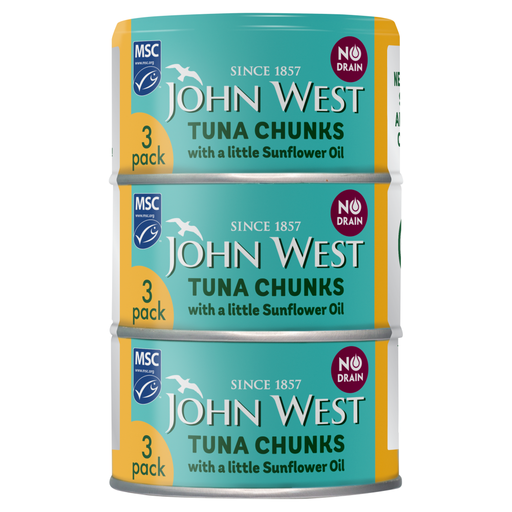
John West no-drain tuna chunks in sunflower oil, three 100 g tins

John West No Drain Tuna Chunks in Sunflower Oil, 3 x 100 g

The no-drain format and three smaller tins may suit separate servings that need little preparation. This is the sunflower-oil variant; its product information also cautions that some bones may remain, so take care when serving.

View on Joybuy

Morrisons Fad Free tuna chunks in spring water, 145 g tin

Morrisons Fad Free Tuna Chunks in Spring Water, 145 g

A single tin may suit a recipe needing a smaller amount rather than several separate tins. It contains tuna chunks in spring water; check the drained weight against the amount your dish requires.

View on Joybuy

Questions about choosing tinned tuna

How can I compare the amount of tuna in different packs?

Compare the declared drained weight, the number of tins and the amount your recipes need. A pack’s stated weight includes its packing liquid, so tin size alone does not establish how much drained tuna you will use.

Should I choose spring water, brine or oil for Christmas recipes?

Choose the packing liquid to suit the dish and read the exact product label. Princes lists tuna and spring water for its cited spring-water chunks, while ASDA lists tuna, water and salt for its cited brine multipack; do not assume the variants have identical ingredients.

What should I check if someone eating the tuna has a fish allergy?

Tuna is fish, and the cited ASDA and Princes listings identify fish as an allergen. Read the current label of each selected product, including any flavoured or prepared variant, for its complete ingredient and allergen information.

Does pregnancy guidance affect how I plan tuna meals?

The NHS advises people who are pregnant or trying for a baby to have no more than four cans of tuna a week or two tuna steaks a week. That weekly guidance concerns the person eating the tuna, so consider portions across planned meals rather than just the size of the pack.

Does a supermarket sourcing statement apply to every tuna tin it sells?

Check the exact product’s current label rather than assuming it does. M&S makes a pole-and-line and Forever Fish statement for its cited spring-water chunks; Sainsbury's statement about its own-label canned tuna was published in 2023.