
24/7 Customer Support

Free returns

Same-day & Next-day Delivery

Quality Guaranteed

Unlock Your Welcome Offers: FREE Delivery | Up to 80% OFF | Free 30-day JoyPlus trial
Download the APP
A proper cup of tea or coffee is one of life's simple pleasures, but the perfect brew is a science. The right water temperature can be the difference between a rich, aromatic coffee and a bitter disappointment, or a delicate green tea and a scorched, flavourless cup. While a standard kettle just boils water, a variable temperature kettle offers the precision needed to unlock the full potential of your favourite beverages.
However, the market is flooded with models that promise much but deliver little. Many UK households end up with a kettle that either fails to perform or introduces new problems. As your Joybuy Product Recommendation Officer, my role is to help you see past the marketing jargon. Before you invest, let's look at the common traps to avoid.
Navigating the options for a new temperature control kettle can be confusing. Many shoppers are drawn in by sleek designs and long feature lists, only to be let down by poor performance. Here are two major pitfalls to watch out for:
To ensure you get a kettle that enhances your daily routine rather than complicates it, focus on these non-negotiable specifications.
The materials that touch your water matter most. For purity of taste and long-term durability, insist on a kettle with an interior constructed entirely from food-grade 304 stainless steel. This includes the main body, the inside of the lid and the spout. This construction ensures no plastic comes into contact with the water during the heating cycle, eliminating the risk of a chemical taste and providing a robust, easy-to-clean surface. This is the defining feature of a high-quality stainless steel smart kettle.
A kettle's accuracy lives or dies by its temperature controller. This small, internal component is responsible for regulating the heating element and ensuring it stops at the selected temperature. Models equipped with higher-quality, often imported, controllers offer greater reliability and a longer operational lifespan.
Also, check the power rating, measured in watts (W). A higher wattage, typically between 1800W and 2200W, indicates a fast boil kettle. This not only saves you time but can also be more energy-efficient, as it spends less time drawing power to reach the target temperature.
For most households, a 1.7-litre electric kettle provides the ideal balance, offering enough capacity for multiple cups of tea or filling a large cafetière without being overly bulky. Beyond size, essential safety features like automatic shut-off (which turns the kettle off once the water reaches temperature) and boil-dry protection (which cuts power if the kettle is empty) are crucial for safe, everyday operation.
Based on these practical criteria, here are some recommendations matched to different user needs.
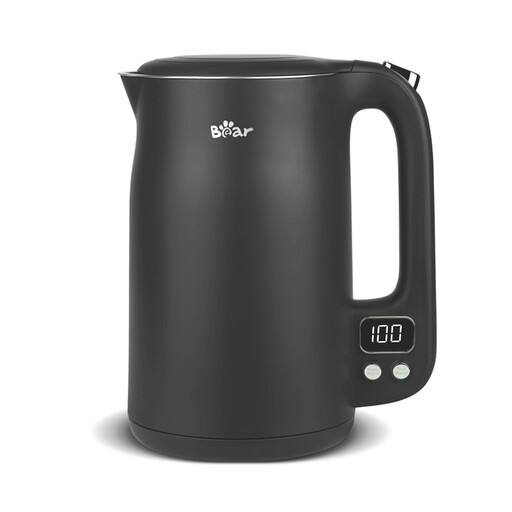
Why This Fits Their Persona: The multiple, precise temperature settings are ideal for those serious about their beverages. Whether brewing 80°C green tea, 90°C oolong or 95°C pour-over coffee, this kettle provides the control needed to extract the perfect flavour every time.
It features a high-quality imported temperature controller for reliable accuracy, avoiding the guesswork of cheaper models. The full 304 stainless steel interior prevents any plastic taste from tainting delicate brews.
Six precise temperature presets with a real-time digital display for complete control. The sleek microprocessor touch panel is integrated directly into the handle for ease of use.
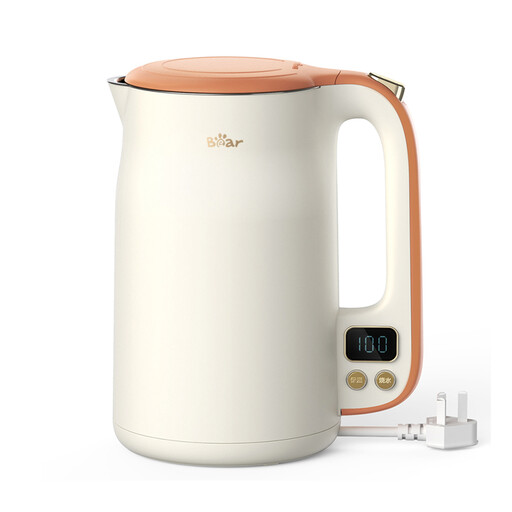
Why This Fits Their Persona: For new parents, precision is about safety. The 40°C setting is perfect for preparing baby formula to the correct temperature without the risk of overheating or the long wait for boiling water to cool. The clean, white finish fits well in a modern family kitchen.
It directly addresses health concerns by being a completely BPA-free kettle with a full stainless steel interior. This guarantees that no unwanted chemicals or tastes leach into the water used for formula or other drinks.
Features a specific low-temperature setting (40°C) for baby formula. The kettle with keep warm function holds the water at the desired temperature, ready for when you need it.
We have compiled a complete, real-time list of products that fully satisfy these strict selection criteria and UK safety regulations.
For most parts of the UK with moderate to hard water, descaling your kettle every 1-2 months is recommended. Limescale build-up on the heating element can impair its efficiency and affect the accuracy of the temperature sensor. A simple solution of one part white vinegar to one part water, brought to a boil and left to sit for an hour, usually does the trick.
While the initial purchase price may be higher, a quality temperature control kettle can be more energy-efficient. The ability to heat water to a lower temperature—for example, 80°C for green tea instead of a full 100°C boil—uses significantly less electricity. Furthermore, a powerful fast boil kettle (2200W) runs for a shorter period, which can reduce overall energy consumption compared to a slower, lower-wattage model.
A well-designed kettle with keep warm function is built specifically for this task and will not cause damage. It works by maintaining a set temperature rather than repeatedly re-boiling. To ensure safety and prevent damage, always choose a model with boil-dry protection. This feature automatically switches the appliance off if it detects there is not enough water, protecting the heating element from burning out.